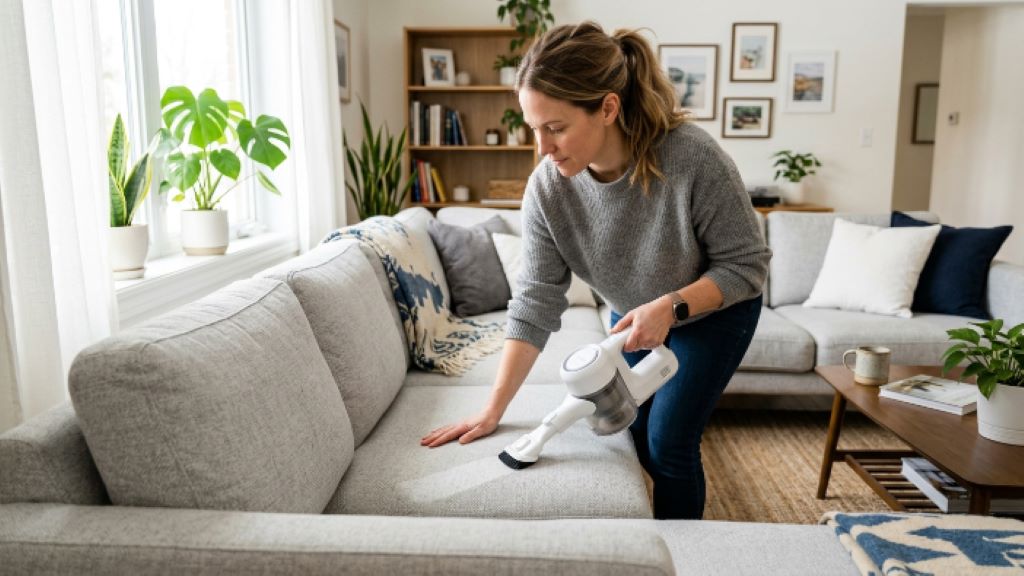

The fastest way to clean a mattress with a vacuum cleaner is to strip the bed, use an upholstery attachment, vacuum the surface in overlapping strokes, focus on seams and edges, and repeat weekly to remove dust mites, allergens, and debris.
Why should you vacuum your mattress regularly?
Most people wash their bedsheets every week but rarely clean the mattress underneath—even though it collects sweat, skin cells, dust mites, bacteria, and allergens daily. Over time, this hidden buildup affects sleep quality, triggers allergies, and shortens mattress lifespan.
Learning how to clean mattress with vacuum cleaner properly solves this problem quickly and safely without chemicals. Vacuuming removes up to 80% of surface dust particles when done correctly and reduces allergen exposure significantly, according to indoor air quality research.
A mattress can double in weight after years of accumulated debris. Regular vacuum cleaning keeps your sleeping environment hygienic, improves airflow through mattress fibers, and helps prevent odor buildup.
This step-by-step guide explains exactly how to vacuum your mattress efficiently, what tools to use, how often to do it, and how to handle stains, dust mites, and allergens for long-term cleanliness.
What tools do you need to vacuum a mattress properly?
You need a vacuum cleaner with an upholstery attachment, a clean brush nozzle, and optional baking soda for odor removal before vacuuming.
Using the correct attachments improves cleaning depth and prevents fabric damage. Standard floor heads are not suitable because they are too rough for mattress surfaces.
- Vacuum cleaner with HEPA filter (recommended for allergy control)
- Upholstery attachment
- Crevice tool for seams and edges
- Soft brush attachment
- Baking soda (optional for deodorizing)
- Clean microfiber cloth
A HEPA-filter vacuum traps microscopic allergens instead of releasing them back into the air, which is especially important for asthma sufferers.
How do you clean a mattress with a vacuum cleaner step by step?
Remove bedding, vacuum the entire mattress surface slowly using upholstery tools, focus on seams and edges, flip the mattress if possible, and repeat the process on the other side.
Step 1: Remove all bedding completely
Take off sheets, pillowcases, mattress protectors, and blankets. Wash them in hot water (at least 60°C) to kill dust mites before placing them back.
Step 2: Sprinkle baking soda if odor is present
Lightly sprinkle baking soda across the mattress surface and leave it for 20–30 minutes. This absorbs moisture and neutralizes odor.
Step 3: Use an upholstery attachment
Run the vacuum slowly across the mattress in overlapping strokes. Slow movement allows deeper extraction of debris embedded in fibers.
Step 4: Focus on seams and edges
Dust mites accumulate heavily along stitched seams. Use a crevice tool to clean these narrow areas thoroughly.
Step 5: Flip the mattress if possible
Vacuum both sides unless your mattress is single-sided memory foam or pillow-top.
Step 6: Vacuum the bed frame area
Cleaning nearby surfaces prevents dust from returning to the mattress quickly.
Following this process weekly keeps mattresses hygienic and extends their lifespan by several years.
How often should you vacuum your mattress?
You should vacuum your mattress every 1–2 weeks for allergy control and at least once per month for general maintenance.
Frequency depends on lifestyle factors:
- Weekly if you have allergies
- Biweekly if you own pets
- Monthly for standard households
- Immediately after illness recovery
Studies show mattresses can contain millions of dust mites after just two years without regular cleaning.
Does vacuuming remove dust mites from a mattress?
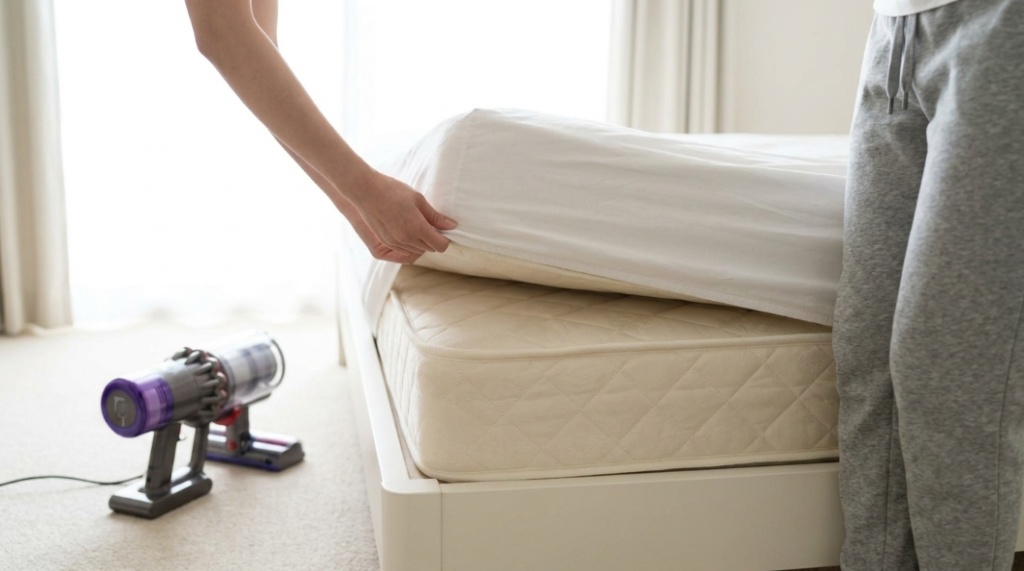
Vacuuming removes surface dust mites and allergens but works best when combined with washing bedding and using protective mattress covers.
Dust mites feed on dead skin cells trapped inside mattress fibers. While vacuuming alone cannot eliminate them entirely, it reduces their population significantly.
For stronger results:
- Use HEPA-filter vacuums
- Wash sheets weekly
- Use zippered mattress protectors
- Keep indoor humidity below 50%
Can you vacuum memory foam mattresses safely?
Yes, memory foam mattresses can be vacuumed safely using a soft brush attachment and low suction settings.
Avoid aggressive brushing because memory foam structure can tear under strong friction. Instead:
- Use gentle strokes
- Avoid liquid cleaners before vacuuming
- Never press deeply into foam layers
Proper vacuuming preserves foam elasticity and prevents internal particle buildup.
Should you sprinkle baking soda before vacuuming a mattress?
Yes, sprinkling baking soda before vacuuming helps remove odor, absorb moisture, and improve freshness.
Baking soda acts as a natural deodorizer by neutralizing acidic odor molecules trapped in mattress fibers.
Best practice:
- Spread evenly across surface
- Leave for 20–60 minutes
- Vacuum thoroughly afterward
This method works especially well after illness, sweating episodes, or humid weather conditions.
What areas of a mattress collect the most dirt?
The seams, edges, and center sleeping zones collect the highest concentration of dust mites, skin particles, and allergens.
These zones require extra cleaning attention:
- Stitched seams
- Pillow contact areas
- Hip and shoulder zones
- Mattress edges
- Under mattress protectors
Targeting these regions improves cleaning effectiveness significantly.
Is vacuuming enough to remove mattress stains?
No, vacuuming removes loose debris but must be combined with spot cleaning to remove stains completely.
However, vacuuming prepares the surface for safer stain removal by clearing dirt particles first.
| Problem Type | Vacuum Alone Works? | Additional Treatment Needed |
|---|---|---|
| Dust | Yes | No |
| Odor | Partially | Baking soda |
| Sweat stains | No | Mild detergent solution |
| Urine stains | No | Enzyme cleaner |
| Allergens | Yes (partial removal) | HEPA vacuum recommended |
Can vacuuming extend mattress lifespan?
Yes, regular vacuum cleaning reduces fiber breakdown and prevents debris accumulation that weakens mattress structure.
Dust particles act like microscopic sand inside mattress layers. Over time, they compress support materials and reduce comfort.
Routine cleaning helps:
- Maintain structural support
- Prevent odor buildup
- Reduce allergen exposure
- Improve airflow inside layers
- Extend usability by 2–4 years
Should you vacuum a new mattress before using it?
Yes, vacuuming a new mattress removes packaging dust and manufacturing residue before first use.
Even factory-sealed mattresses may contain microscopic particles from storage environments.
Quick vacuuming ensures a cleaner sleeping surface from day one.
Does vacuuming help reduce mattress odor naturally?
Yes, vacuuming removes odor-causing particles and improves airflow inside mattress materials.
For best odor control:
- Use baking soda treatment
- Allow sunlight exposure when possible
- Keep bedroom ventilated
- Use breathable mattress protectors
These steps create a long-term freshness routine without chemical sprays.
Can vacuuming improve sleep quality?
Yes, removing allergens and dust mites improves breathing comfort and reduces nighttime irritation.
Cleaner mattresses contribute to:
- Reduced sneezing
- Lower skin irritation
- Improved airflow
- Better sleep hygiene
Sleep environment quality directly affects recovery, productivity, and long-term health.
Conclusion: What is the best routine for keeping your mattress clean long term?
The most effective routine is vacuuming every 1–2 weeks, washing bedding weekly, using mattress protectors, and applying baking soda monthly for odor control.
Learning how to clean mattress with vacuum cleaner properly protects your health, improves sleep quality, and extends mattress durability. It takes less than 15 minutes but delivers long-term hygiene benefits.
Start with a simple weekly vacuum routine today. Over time, your mattress stays fresher, your bedroom air improves, and your sleep becomes noticeably more comfortable.
If you want a healthier sleeping environment with minimal effort, consistent mattress vacuuming is one of the easiest habits to adopt.
FAQ: How to clean mattress with vacuum cleaner
Can I vacuum my mattress without removing sheets?
No. Always remove sheets before vacuuming so the vacuum can reach dust mites, allergens, and debris trapped inside mattress fibers.
Which vacuum attachment works best for mattresses?
An upholstery attachment works best because it removes dirt gently without damaging fabric surfaces.
Is daily mattress vacuuming necessary?
No. Weekly or biweekly cleaning is sufficient unless severe allergies require more frequent maintenance.
Can vacuuming remove bed bugs from mattresses?
Vacuuming helps remove visible bed bugs but must be combined with professional treatment for complete elimination.
Should I vacuum both sides of my mattress?
Yes, if the mattress is double-sided. Single-sided pillow-top mattresses only require cleaning on the top surface.
Does vacuuming replace mattress protectors?
No. Mattress protectors prevent contamination, while vacuuming removes existing debris. Both are necessary.
Can sunlight improve mattress cleaning results?
Yes. Sunlight reduces moisture levels and helps kill bacteria that contribute to odor and allergen buildup.
Read More Also: Cheap DIY Garden Path Ideas: Transform Your Yard on a Budget
Discover More: How to Build a Smart Cleaning Routine with a Sofa Vacuum Cleaner