
You vacuum the living room, and within a day the couch is coated again. Pet hair and dander don’t just look messy — they change how you clean, how often you clean, and what equipment actually works. Dander particles are microscopic and sticky, while hair clumps and wraps around brush rolls, which is why standard sweeping rarely solves the problem. If you’re weighing your options, a practical Shark Navigator vacuum review can help you judge whether a lift-away upright suits homes with shedding pets. This article explains how pet hair and dander affect indoor cleanliness, and what to do about it.
Quick Answer
Pet hair and dander affect indoor cleanliness on two levels. Hair is visible and collects on floors, furniture, and fabric, while dander — microscopic skin flakes, saliva, and urine proteins — becomes airborne and settles into soft surfaces. Dander is the bigger health concern for allergy sufferers, but hair is what stresses your vacuum, clogging brush rolls and filters. Effective control means targeting both: frequent vacuuming with strong filtration, washing pet bedding, and managing airflow, not just cleaning floors.
Key Takeaways
- Pet hair is a surface problem; dander is an airborne problem that settles deep into carpet, upholstery, and bedding.
- Dander particles are extremely small and can stay suspended in air for extended periods, so floor cleaning alone doesn’t solve it.
- Hair wraps around brush rolls and clogs filters, which reduces suction and spreads dander back into the room.
- Vacuum selection matters less than filtration, brush-roll design, and consistent cleaning frequency.
- Controlling dander requires a combined approach: vacuuming, washing soft items, airflow management, and pet grooming.
What Pet Hair and Dander Actually Are
Pet hair is the visible strand that sheds from a pet’s coat. Dander is different — it’s a mixture of tiny skin flakes, dried saliva, and protein particles shed continuously by dogs, cats, and other animals. Dander particles are small enough to remain airborne and can travel through a home’s air, settling on surfaces you rarely think to clean, like curtains, wall trim, and mattress seams.
The distinction matters because each requires a different cleaning response. Hair is handled by mechanical pickup: a vacuum, lint roller, or brush. Dander is handled by filtration and air management, because if your vacuum pushes fine particles back out through a weak filter, you’re redistributing the problem rather than removing it.
Why Dander Is the Bigger Concern
Dander proteins are a common trigger for allergy and asthma symptoms. Because they’re so light, they stay airborne longer than dust and can be inhaled deep into the lungs. This is why someone can clean a room thoroughly and still experience symptoms within minutes — the dander was never fully removed, only disturbed.
How Pet Hair and Dander Spread Through a Home
The spread pattern is predictable: hair and dander start where the pet rests, then move outward through foot traffic, air currents, and fabric contact. Furniture acts as a reservoir, and hard floors act as a transit route. Understanding this cycle helps you prioritize where to clean first.
- Primary zones: pet beds, favorite couch cushions, and grooming spots collect the highest concentration.
- Secondary zones: carpet edges, area rugs, and stair treads trap hair that gets walked outward.
- Airborne zones: HVAC filters, ceiling fan blades, and shelves collect fine dander over time.
Cleaning the primary zone without addressing secondary and airborne zones is why many pet owners feel like they never get ahead. The source keeps replenishing what the visible surfaces lose.
Why Standard Cleaning Falls Short
Brooms and dusters lift particles into the air instead of capturing them. A broom can actually make dander worse in the short term because it re-suspends settled particles without filtering them. Similarly, a vacuum with a clogged filter or weak seal can exhaust fine dust back into the room.
The practical rule: if your cleaning tool doesn’t capture fine particles, it’s rearranging them. For pet owners, this means filtration and airflow are more important than raw suction power alone.
What to Look For in a Pet-Friendly Vacuum
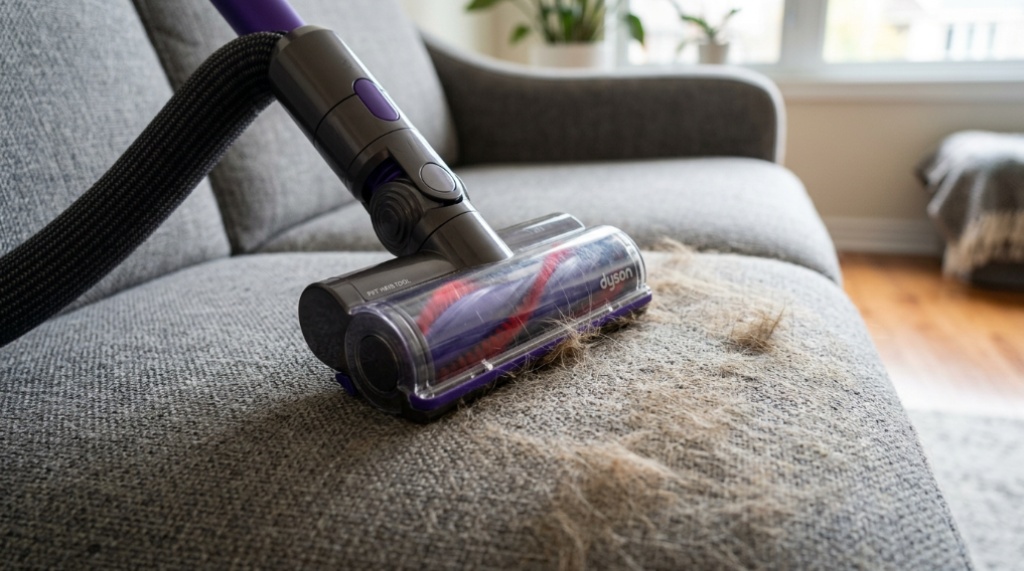
A vacuum suited to pet hair and dander needs more than strong suction. It needs a sealed system, effective filtration, and a brush roll designed to handle wrapped hair without constant maintenance. Here’s how the main features compare.
| Feature | Why It Matters for Pet Hair and Dander | Practical Consideration |
|---|---|---|
| Sealed filtration system | Prevents fine dander from leaking back into the room | Look for HEPA or multi-stage filtration |
| Brush-roll design | Reduces hair wrap that kills suction | Self-cleaning or removable rolls are easier to maintain |
| Lift-away or portable mode | Reaches stairs, upholstery, and pet beds | Useful if pets sleep on furniture |
| Bag vs. bagless | Affects how cleanly you empty collected debris | Bagless needs careful emptying to avoid re-releasing dander |
| Weight and maneuverability | Determines how often you’ll actually vacuum | A vacuum you avoid using helps no one |
No single feature solves the problem. A sealed HEPA system with a poorly maintained brush roll still loses effectiveness, and a great brush roll with a leaking filter still spreads dander. The combination is what matters, keeping your floors spotless gets much easier when you use the best shark vacuum for your home this year to trap microscopic dander and loose fur.
A Practical Cleaning Routine for Pet Homes
Consistency beats intensity. A short, frequent routine removes more total hair and dander than an occasional deep clean, because it interrupts the accumulation cycle before particles spread. Below is a realistic sequence.
- Vacuum high-traffic areas two to three times per week. Focus on entry paths, pet resting spots, and the areas around furniture.
- Use attachments on upholstery weekly. Cushions and pet beds hold the most concentrated dander.
- Wash pet bedding every one to two weeks. Hot water and a thorough dry cycle reduce the protein load significantly.
- Replace or clean HVAC filters on schedule. A clogged filter recirculates dander through the whole home.
- Groom pets regularly. Brushing outdoors or in a contained area removes loose hair before it lands indoors.
Adjust frequency based on shedding level, number of pets, and whether anyone in the home has allergies. Homes with multiple heavy-shedding pets typically need the upper end of this range.
Common Mistakes to Avoid
- Emptying a bagless canister indoors without care, which releases fine dust back into the air.
- Ignoring the brush roll until performance drops noticeably.
- Vacuuming only visible floors and skipping upholstery and bedding.
- Relying on air fresheners or sprays, which mask odors but don’t remove dander.
When Cleaning Alone Isn’t Enough
If someone in the home has persistent allergy symptoms despite regular cleaning, the issue may not be cleaning frequency at all. It could be a filtration gap, an aging vacuum with worn seals, or an HVAC system that needs servicing. In those cases, improving filtration and ventilation often produces more noticeable results than simply cleaning more often.
It also helps to be realistic: you can significantly reduce pet hair and dander indoors, but you can’t eliminate them entirely while a pet lives in the home. The goal is management, not perfection.
Frequently Asked Questions
Does vacuuming actually reduce pet dander?
Yes, but only if the vacuum captures fine particles rather than releasing them. A vacuum with a sealed system and effective filtration removes dander from carpet and upholstery. A vacuum with a leaking seal or clogged filter can redistribute it.
How often should I vacuum with a shedding pet?
Two to three times per week in high-traffic areas is a reasonable baseline. Homes with multiple heavy-shedding pets or allergy sufferers may need daily vacuuming in key rooms.
Is pet hair or dander worse for allergies?
Dander is generally the bigger allergen concern. Hair itself is less likely to trigger reactions, but it carries dander and other particles, so the two are closely linked in practice.
Do air purifiers help with pet dander?
They can help by capturing airborne particles, but they work best alongside regular vacuuming and washing of soft items. An air purifier doesn’t remove dander already settled in carpet or bedding.
Why does my vacuum lose suction so quickly with pet hair?
Hair wraps around brush rolls and clogs filters faster than typical dust. Checking the brush roll and filter regularly — not just when performance drops — keeps suction consistent.
Conclusion
Pet hair and dander affect indoor cleanliness in ways that go beyond appearance. Hair stresses your equipment, while dander affects air quality and allergy comfort. The most effective approach combines frequent vacuuming with proper filtration, regular washing of pet bedding, and attention to airflow through your home. If your current vacuum is leaking fine dust or clogging constantly, that’s usually the first thing worth fixing — better filtration and maintenance often deliver more improvement than simply cleaning more often.