
Key Takeaways
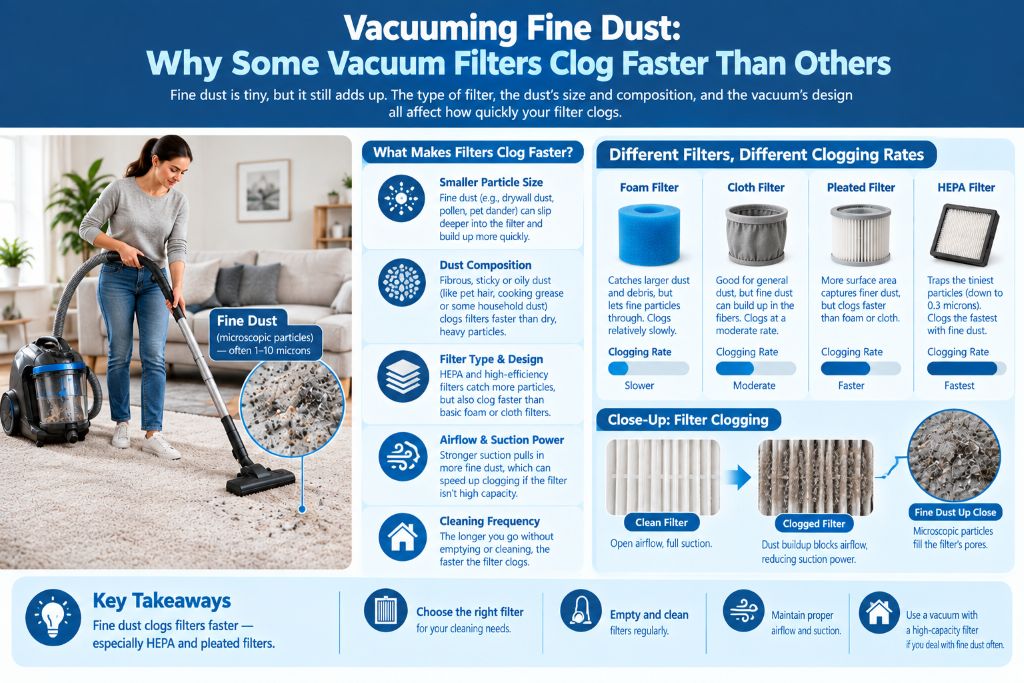
- Fine dust like drywall or plaster clogs filters faster than sawdust or dirt.
- Surface area determines how much dust a filter can hold before clogging.
- Pleated filters resist clogging better than flat or thin filters.
- Bagless systems often clog faster than bagged systems on fine dust.
- Regular cleaning and the right filter type prevent most clogging problems.
Some vacuum jobs feel harder than others, even with the same machine. Drywall dust and plaster powder often clog filters within minutes. Meanwhile, sawdust or dirt barely affects the same filter. According to the filtration specialists at Best Vacuum Cleaner bestvacuumcleaner.us, fine dust behaves fundamentally differently inside collection systems. This guide explains why fine dust causes faster clogging and how to choose and care for filters that resist it.
Why Fine Dust Clogs Filters So Quickly
Not all dust behaves the same way inside a vacuum. Particle size changes how dust interacts with filter material. Therefore, fine dust causes very different problems than larger debris.
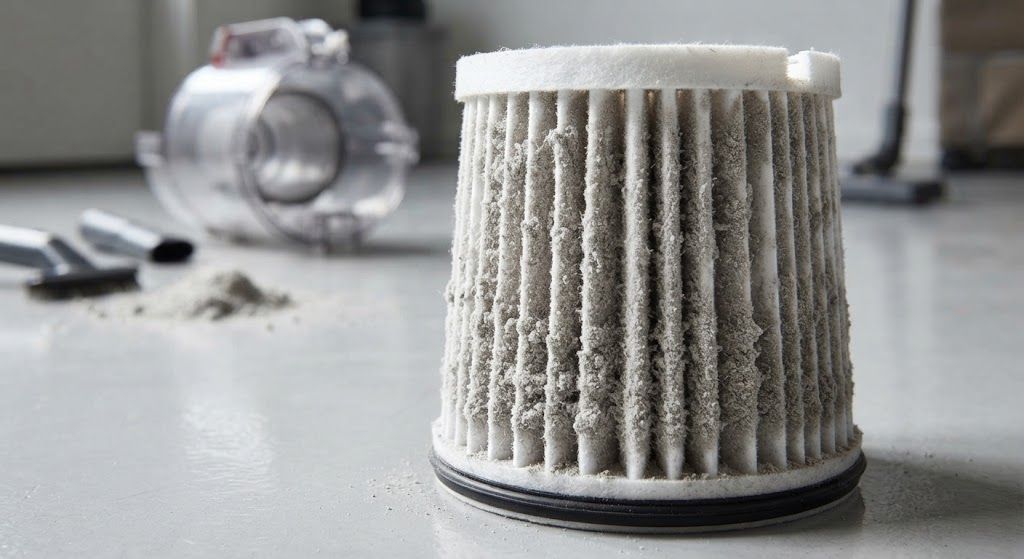
Coarse debris like sawdust or dirt tends to sit on top of a filter. Air can still pass around and through these larger pieces easily. However, fine dust behaves differently. Extremely small particles work their way deep into filter fibers. As a result, they block airflow much faster than bigger material.
One workshop forum thread describes this problem clearly. A user reported that a vacuum’s filters performed perfectly with wood dust for years. However, the same setup quickly clogged when handling plaster and filler dust. This example shows how particle type matters as much as particle amount.
Fine construction dust also tends to be lightweight. This property lets it bypass some pre-filtration stages meant to catch heavier debris. Another builder’s forum notes that fine dust “zips past” cyclone separators that normally trap coarser material. Consequently, more of it reaches the main filter than expected.
Density plays a role too. A small volume of very fine dust contains far more individual particles than the same volume of coarse debris. Therefore, fine dust fills the gaps between filter fibers much faster. This is why users report clogging even when the collected dust “seems empty” by weight.
The Role of Filter Surface Area
Surface area is one of the biggest factors in clogging speed. A filter with more usable surface holds more dust before airflow suffers.
According to WORKSHOP’s filter guidance, more surface area available to filter the air means the filter takes longer to clog. This principle explains why flat, small filters clog faster than larger, folded ones. Simply put, more material means more room to trap particles.
This is also why pleated designs dominate fine-dust filtration. A pleated filter folds material into an accordion shape. WORKSHOP explains that this pleating method allows for increased filter material within a reduced amount of space. The folds pack far more surface area into the same physical footprint.
Manufacturers sometimes publish exact numbers to show this advantage. One commercial fine dust filter lists a total filtration area of 903 square inches within a compact cartridge. This large number, fit into a small housing, illustrates why pleated filters last longer under fine dust.
Airflow efficiency also depends on this design. A Milwaukee HEPA filter description notes that a high-surface pleated design increases airflow efficiency and extends the interval between cleanings. Distributing dust across more area means each section absorbs less load. Therefore, the whole filter clogs more slowly and evenly, maximizing overall filtration efficiency—as detailed in this guide on HEPA filter vacuum benefits for allergies bestvacuumcleaner.us/vacuum-cleaner/hepa-filter-vacuum-benefits-for-allergies
Bagged vs. Bagless Systems With Fine Dust
System design also affects how quickly fine dust causes problems. Bagged and bagless vacuums respond very differently to this challenge.
Bagged systems often handle fine dust better in demanding situations. One professional forum discussion recommends using a vacuum with disposable paper bags for heavy plaster or drywall work. The user explains that bags can be tossed and replaced once clogged, even before they feel full. This flexibility keeps the vacuum running during long jobs.
Bagless systems face a bigger risk with fine construction dust. A forum discussion on shop vacuum forums warns against running certain models bagless when handling plaster dust. It states plainly that doing so would permanently clog or destroy the main filter. Once plaster dust packs into filter media this way, cleaning cannot fully restore it.
This happens because bagless systems rely more heavily on the filter itself. Without a bag acting as first-stage protection, more fine dust reaches the filter directly. Therefore, the filter bears the full load of separation and containment together.
Some users adopt workaround habits for tough jobs. One woodworking forum member describes intentionally vacuuming a can of sawdust onto a cloth filter before starting plaster work. This coats the filter and adds surface area, which the poster says increases filter life significantly. While clever, this trick works better as an occasional fix than a permanent solution.
Choosing the Right Filter for Fine Dust Work
Filter material and rating matter as much as filter shape. Choosing correctly prevents many clogging problems before they start.
- Fine dust or HEPA-rated filters for drywall, plaster, or powder
- Standard filters for wood shavings, dirt, and general debris
- Pleated paper filters for maximum surface area in tight spaces
- Multi-layer filters for capturing both coarse and fine particles
- Disposable paper bags as first-stage protection for messy jobs
Filter labeling matters more than shoppers often realize. According to WORKSHOP, dry wall dust or fine powder needs a filter labeled Fine Dust or HEPA Material. Standard filters allow this fine material to pass straight through and back into the air.
Multi-layer filters offer added protection for mixed debris types. One fine dust cartridge filter example uses a three-layer design specifically built to capture drywall and sawdust particles together. This layered approach balances fine capture with reasonable airflow.
Micron rating provides a useful comparison point between filter options. One fine dust filter product captures particles down to one micron at 99 percent efficiency. Compare this rating to your specific job before choosing a filter. Finer particles need a correspondingly finer-rated filter.
Maintaining Filters During Fine Dust Jobs
Even the best filter needs proper care during demanding cleanup work. Regular maintenance keeps airflow strong throughout a project.
- Check the filter often during continuous fine dust cleanup.
- Tap or knock loose dust off the filter between uses.
- Use compressed air to clear pleats when tapping is not enough.
- Replace paper filters once tapping no longer restores airflow.
- Keep spare filters on hand during large drywall or plaster jobs.
- Avoid soaking fine dust filters unless the manufacturer allows it.
A Milwaukee HEPA filter listing describes its filter as dry cleanable, meaning users can tap off debris or use compressed air to restore airflow. This maintenance method works well for many pleated paper filters. However, always confirm your specific filter allows this treatment.
Timing your checks matters during large jobs. One professional forum notes that heavy sanding work can clog filters within a single job. Therefore, check filters more often during continuous fine dust generation than during routine cleaning.
Manufacturers often recommend scheduled replacement regardless of visible condition. One fine dust filter product suggests replacement at least twice a year under regular use. Heavy or frequent fine dust jobs may require even more frequent changes.
Preventing Clogs Before They Start
Prevention often works better than mid-job maintenance. A few habits reduce how quickly fine dust affects your filter.
- Use a pre-separator or cyclone attachment before fine dust jobs
- Choose bagged vacuums for heavy plaster or drywall cleanup
- Match filter rating to the specific dust type you expect
- Avoid mixing fine dust jobs with your everyday household filter
- Keep a dedicated fine-dust filter for construction cleanup tasks
Pre-separators add real value for demanding jobs. One professional discussion calls a pre-separator a must when handling large volumes of dust from tools like sanders. This attachment catches heavy material before it ever reaches your main filter.
Dedicating a separate filter for fine dust work also helps long term. Switching between a everyday filter and a fine-dust filter prevents cross-contamination of debris types. This habit also extends the life of your regular household filter.
Choosing the right vacuum system from the start saves the most trouble. If you know a project involves plaster, drywall, or sanding dust, plan for it. Select bagged systems or HEPA-rated filters before you begin, rather than during a mid-job struggle.
Conclusion
Fine dust clogs filters faster because tiny particles pack deep into filter fibers rather than sitting on the surface. Surface area, filter design, and bagged versus bagless systems all affect how quickly this happens. Pleated, fine-dust-rated filters resist clogging far better than standard options. Regular maintenance keeps airflow strong throughout demanding cleanup jobs. Additionally, understanding how pet hair and dander affect indoor cleanliness can help you choose filtration and maintenance features that keep indoor spaces cleaner.
Choosing the right filter before you start saves time and frustration later. Match your filter type to the dust you expect, and keep spares ready for big jobs. Check your current vacuum’s filter rating today, and upgrade it if fine dust work is in your future.
Frequently Asked Questions
Why does drywall dust clog filters faster than sawdust?
Drywall dust particles are much finer and pack deep into filter fibers. Sawdust particles are larger and sit more on the surface.
Are pleated filters better for fine dust?
Yes, pleats increase surface area within a compact space. This design holds more dust before airflow drops significantly.
Can I use a regular vacuum filter for plaster dust?
Not recommended, since standard filters clog quickly and may let dust pass through. Use a fine dust or HEPA-rated filter instead.
Should I use a bagged vacuum for drywall cleanup?
Bagged vacuums often work better for heavy fine dust jobs. You can toss a clogged bag rather than damaging the main filter.
How often should I clean a filter during a dusty job?
Check it frequently during continuous fine dust work. Tap, clean, or replace it as soon as airflow noticeably drops.
You May Like