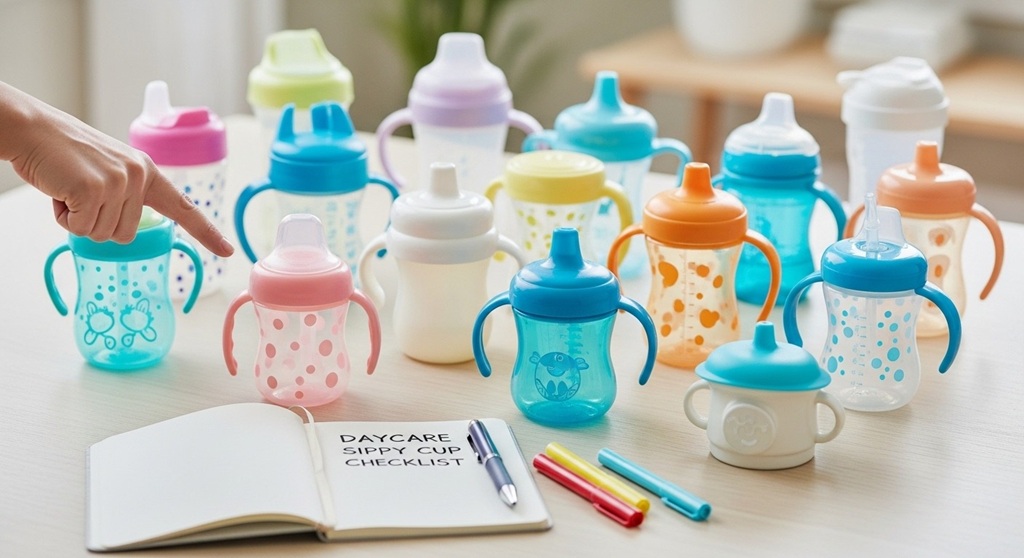
Sending your toddler to daycare with the wrong sippy cup can create daily problems. Leaks soak backpacks. Unlabeled cups get mixed up. Weak lids break within weeks. And some daycare centers reject cups that don’t meet hygiene standards.
A daycare-ready sippy cup must be labeled, spill-proof, durable, easy to clean, and safe for daily use. It should survive drops, prevent cross-contamination, and follow daycare policies.
This guide explains exactly how to choose the best sippy cup for daycare using a practical framework. You’ll learn what features matter, what materials last, what daycare providers recommend, and how to avoid common mistakes. We’ll also review case-based insights from daycare settings and pediatric guidance to help you make a confident decision.
If you want fewer leaks, fewer replacements, and fewer daycare complaints, keep reading.
Why Does Choosing the Right Sippy Cup for Daycare Matter?
Short answer: The wrong cup creates hygiene risks, spills, and unnecessary costs.
Problem: Many parents buy a sippy cup designed for home use. At daycare, that same cup is handled by multiple caregivers, stored with other children’s items, and washed frequently. Weak valves fail. Names rub off. Lids crack.
Agitation: A 2023 childcare operations survey found that spill-related cleanups are among the top five daily disruptions in toddler rooms. Repeated spills slow down staff, increase laundry loads, and frustrate caregivers. Some daycare centers now require labeled toddler cups and specific leak-proof standards to reduce cross-contact and mess.
Solution: Choose a cup designed for shared environments. Look for durable spill-proof cups that can handle repeated drops, industrial washing, and daily transport.
The goal is simple: safety, hygiene, and reliability.
What Features Should a Daycare Sippy Cup Have?
Short answer: It must be spill-proof, labeled, durable, easy to clean, BPA-free, and daycare-compliant.
1. True Spill-Proof Valve
A spill-proof claim is not enough. Test the cup upside down and shake it. High-quality silicone valves prevent leakage even under pressure.
2. Clear Name Labeling
Daycare centers require labeled toddler cups to prevent sharing. Look for:
- Writable silicone bands
- Engraving areas
- Waterproof name stickers
- Laser-etched personalization
3. Durable Construction
Toddlers drop cups. A lot. Durable spill-proof cups should survive tile floors, outdoor play, and repeated washing.
4. Easy Disassembly
Cups with hidden parts trap milk residue. Choose models with removable valves and wide openings for cleaning.
5. Safe Materials
Look for BPA-free plastic, stainless steel, or food-grade silicone. Avoid cups with complex internal straw systems that are hard to sanitize.
Which Type of Sippy Cup Works Best for Daycare?
Short answer: Straw cups or hard-spout spill-proof cups usually perform best in daycare environments.
| Type | Best For | Daycare Suitability |
|---|---|---|
| Soft Spout | 12–18 months | Moderate (less durable) |
| Hard Spout | 18+ months | High (durable) |
| Straw Cup | 18+ months | Very High (dentist recommended) |
| 360 Trainer Cup | 2+ years | High (easy cleaning) |
Many pediatric dentists recommend straw-style cups because they promote better oral development compared to prolonged spout use.
For a detailed comparison of budget-friendly and reliable models, check this guide on durable spill-proof cups.
How Durable Should a Daycare Cup Be?
Short answer: It should survive at least 6–12 months of daily drops and dishwasher cycles.
Problem: Cheap plastic cups crack at the hinge or lid joint.
Agitation: Replacing cups every two months increases costs. A daycare child may drop their cup 5–10 times per day. That’s over 1,000 drops per year.
Solution:
- Thick polypropylene plastic
- Stainless steel insulated cups
- Reinforced hinge lids
- High-grade silicone valves
Stainless steel options cost more upfront but often last longer in group settings.
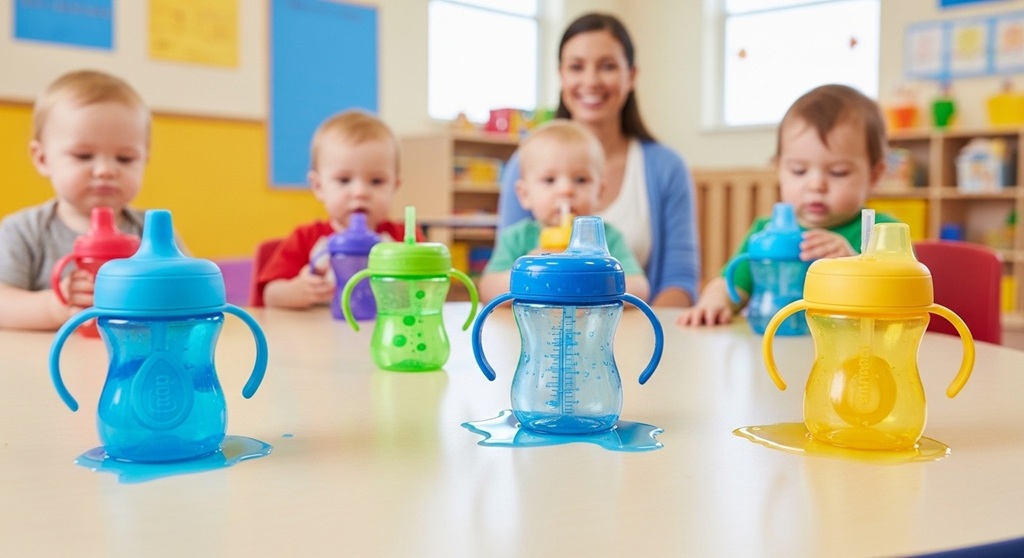
Why Are Labeled Toddler Cups Mandatory in Most Daycares?
Short answer: To prevent cross-contamination and comply with childcare hygiene policies.
Health guidelines in many countries require individual drinking containers for each child. Cups must be clearly labeled to:
- Prevent sharing
- Avoid allergy exposure
- Reduce illness transmission
- Help staff quickly identify items
Permanent labels outperform marker writing. Dishwasher-safe name decals or engraved options reduce fading.
What Materials Are Safest for Daycare Use?
Short answer: BPA-free plastic, stainless steel, and medical-grade silicone are safest.
BPA-Free Plastic
Lightweight and affordable. Easy for toddlers to hold.
Stainless Steel
Resists odor retention. Maintains drink temperature. Highly durable.
Silicone Components
Flexible and resistant to cracking.
Avoid cups with painted interiors or difficult-to-clean hidden compartments.
How Easy Should Cleaning Be for Daycare Cups?
Short answer: Every part must separate fully and withstand dishwasher cleaning.
Problem: Milk residue causes odor and bacterial buildup.
Agitation: Studies show improperly cleaned bottle components can harbor bacteria within 24 hours. Daycare staff may rinse cups but parents often perform full cleaning at home.
Solution:
- Choose cups with minimal parts
- Ensure valves pop out easily
- Avoid narrow straw tubes without cleaning brushes
What Size Sippy Cup Is Best for Daycare?
Short answer: 8–10 oz works best for toddlers aged 1–3.
Smaller cups reduce weight and improve grip control. Larger 12 oz cups may be too heavy when full.
Check daycare hydration policies. Some centers limit juice and require water-only cups.
How Many Cups Should You Send to Daycare?
Short answer: Send two labeled cups daily.
One may stay in the classroom. The second acts as backup. This prevents disruption if one falls or becomes contaminated.
Are Insulated Cups Necessary for Daycare?
Short answer: Not required, but helpful.
Insulated stainless steel cups maintain temperature for 4–6 hours. This matters in warm climates or long daycare hours.
However, insulated cups cost more and may be heavier.
What Do Daycare Providers Recommend?
Short answer: Simple, labeled, spill-proof, and easy to clean.
Daycare staff consistently report preferring:
- Wide-mouth openings
- Few detachable parts
- Strong lids
- Clear name labels
Complicated multi-piece straw systems increase cleaning time and are often discouraged.
What Mistakes Should Parents Avoid?
Short answer: Avoid decorative but impractical cups.
- Complex valve systems
- Unlabeled containers
- Weak flip-top lids
- Cups too advanced for your child’s age
Function beats design in daycare settings.
How Can You Test a Cup Before Sending It to Daycare?
Short answer: Perform a 3-step home test.
- Fill with water and shake vigorously.
- Drop from table height onto hard floor.
- Disassemble and reassemble for cleaning.
If it leaks, cracks, or feels hard to clean, choose another option.
Conclusion: What Is the Best Strategy for Choosing a Daycare Sippy Cup?
The best daycare sippy cup is labeled, spill-proof, durable, and easy to clean. It prevents leaks, reduces contamination, and survives daily drops.
When choosing, prioritize function over appearance. Look for durable spill-proof cups with permanent labeling. Avoid complex parts. Test before sending.
If you’re ready to compare affordable and daycare-tested options, explore this curated guide to durable spill-proof cups and make a confident choice today.
Frequently Asked Questions (FAQs)
1. What type of sippy cup is best for daycare?
Straw cups or hard-spout spill-proof cups are typically best. They reduce leaks and support oral development.
2. Why must daycare cups be labeled?
Labeled toddler cups prevent sharing, reduce germ spread, and comply with hygiene rules.
3. Are stainless steel cups better than plastic?
Stainless steel lasts longer and resists odors. BPA-free plastic is lighter and more affordable.
4. How often should I replace a daycare sippy cup?
Replace when valves weaken, lids crack, or leaks begin. High-quality cups can last 6–12 months.
5. Can I send milk in a daycare sippy cup?
Most centers allow it, but check their policy. Ensure the cup seals tightly and is cleaned daily.
6. How do I keep labels from fading?
Use waterproof dishwasher-safe stickers or engraved personalization instead of marker ink.
7. How many cups should I own?
At least three. Two for rotation and one backup.
Related Topic: How to Decide If the Nuwave Gold Induction Cooktop Is Worth Buying
Read Next: Dream Home Awaits: Premier Kitchen and Bathroom Renovation Services
You May Like

Memphis Home and Lifestyle Show 2026: Dates, Tickets, and Home Ideas