Your sofa is one of the most used pieces of furniture in your home. Every day, people sit on it, pets sleep on it, and crumbs fall into its cushions. Over time, dust, allergens, and debris build up deep in the fabric. Regular surface cleaning simply is not enough.
That is where a sofa vacuum cleaner becomes essential. It is a tool designed specifically to reach deep into upholstery fibers and pull out what regular cleaning misses. However, owning the tool is only half the story. To get real results, you need a smart cleaning approach that fits your lifestyle and keeps your home fresh consistently.
This guide will show you how to build a structured home cleaning routine around your sofa vacuum cleaner. By the end, you will have a clear, practical plan that saves time and delivers better results.
Why Your Sofa Needs More Attention Than You Think
Most people vacuum their floors regularly. However, the sofa often gets overlooked. This is a mistake. Studies have shown that upholstered furniture can harbor more dust mites per square meter than carpets. Additionally, fabric sofas trap pet dander, food particles, skin cells, and pollen.
These particles do not just sit on the surface. They work their way into the weave of the fabric. Once deep inside, they become harder to remove and can affect indoor air quality. People with allergies or asthma are especially vulnerable.
Therefore, treating sofa cleaning as a core part of your household routine is not optional. It is a practical step toward a healthier living environment.
What Makes a Sofa Vacuum Cleaner Different
A sofa vacuum cleaner is not simply a smaller version of your floor vacuum. It is engineered with specific features that make it far more effective on soft surfaces.
First, these devices often use motorized brush heads or vibrating plates. These break up embedded debris before suction removes it. Standard vacuums do not have this capability on soft surfaces.
Second, many sofa vacuum cleaners use UV light technology. UV light kills bacteria, dust mites, and other microorganisms that live in your upholstery. This makes the cleaning process genuinely sanitary, not just visually clean.
Additionally, these devices are lightweight and designed to maneuver around cushions, armrests, and tight seams. Their compact design allows you to clean areas that larger vacuums simply cannot reach.
Building Your Smart Cleaning Schedule
The foundation of any good home cleaning routine is consistency. Without a schedule, cleaning tends to happen only when things look visibly dirty. By that point, the buildup is already significant.
Here is a simple framework you can adapt to your lifestyle:
Daily Maintenance: Two Minutes Is All It Takes
A daily habit does not have to be time-consuming. Spend just two minutes each evening removing visible crumbs and fluffing cushions. This prevents debris from pressing deeper into the fabric overnight. Additionally, it keeps your sofa looking tidy without much effort.
Weekly Deep Vacuuming
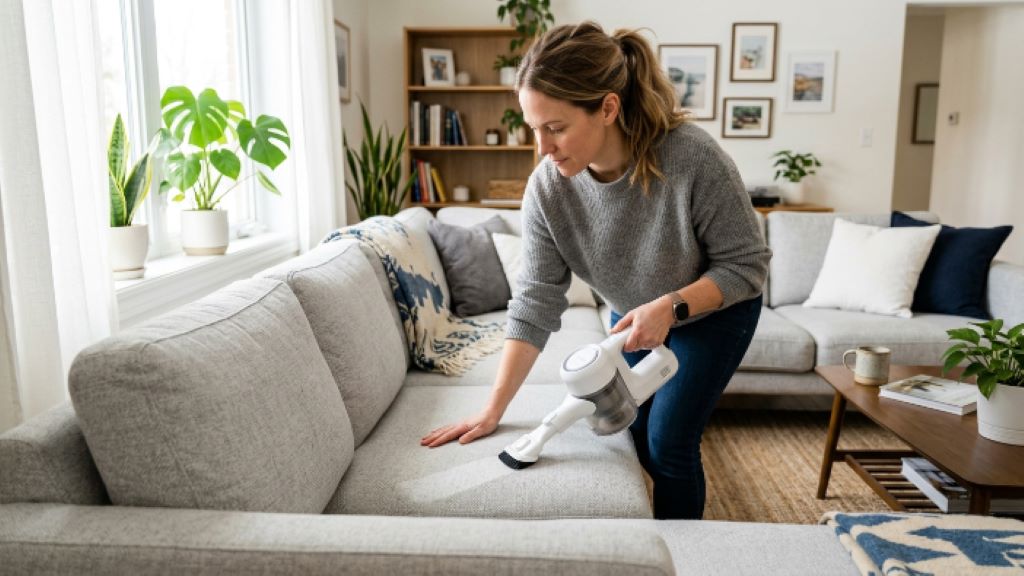
Once a week, use your sofa vacuum cleaner for a thorough session. Remove all cushions first. Vacuum the base of the sofa where debris collects heavily. Then work your way across each cushion, using slow, overlapping strokes.
Pay special attention to seams, crevices, and underneath the armrests. These areas trap the most dust and are often skipped. Therefore, giving them focused attention makes a noticeable difference.
Monthly Sanitizing Session
Once a month, run a deeper sanitizing session. If your sofa vacuum cleaner includes a UV mode, activate it during this session. UV light destroys the DNA of bacteria and mites, preventing them from reproducing. This monthly step is especially important if you have children or pets.
Additionally, consider using an upholstery-safe fabric spray after vacuuming. This neutralizes odors and adds a light layer of protection against future staining.
Choosing the Right Sofa Vacuum Cleaner for Your Needs
Not all sofa vacuum cleaners are the same. Choosing the right one will make your smart cleaning efforts far more effective. Here are the key features to look for:
- Suction power: Look for models with strong, consistent suction. Weak suction leaves embedded particles behind.
- Motorized brush roll: This agitates fabric fibers to loosen debris before suction picks it up.
- UV-C light: Essential for killing mites and bacteria at a microscopic level.
- HEPA filtration: A HEPA filter traps fine particles inside the device rather than releasing them back into the air.
- Cordless design: A cordless model gives you freedom to move around the sofa without repositioning a power outlet.
However, you do not need every feature to get started. Even a basic model with good suction and a brush roll will dramatically improve your sofa’s cleanliness compared to doing nothing.

Step-by-Step Guide to Vacuuming Your Sofa Properly
Using your sofa vacuum cleaner effectively requires a little technique. Following these steps will help you get the best results every time.
Step 1: Clear the Surface
Remove all throws, pillows, and cushions before you begin. Set them aside to be cleaned separately. Starting with a clear surface ensures you do not miss any part of the sofa.
Step 2: Start from the Top
Begin at the top of the sofa backrest and work downward. Gravity pulls debris downward, so cleaning from top to bottom means you are not pushing dirt into areas you have already cleaned.
Step 3: Work Slowly and Overlap Your Strokes
Move the vacuum slowly across the fabric. Quick passes miss embedded particles. Overlap each stroke slightly to ensure full coverage. Additionally, go over high-traffic areas like the center seat cushion twice.
Step 4: Target the Seams and Crevices
Use a crevice tool or the narrow attachment to clean along seams, between cushions, and around the base of armrests. These spots collect the most debris and are often neglected.
Step 5: Clean the Underside and Base
Lift each cushion and vacuum underneath. Then vacuum the sofa frame itself. Dust and pet hair accumulate heavily here. Therefore, skipping this area means leaving a significant portion of the mess behind.
Integrating Sofa Cleaning into Your Broader Home Routine
A good home cleaning routine works best when tasks are connected. Sofa vacuuming should not exist in isolation. Instead, pair it with other cleaning tasks to create an efficient flow.
For example, vacuum your floors immediately after vacuuming the sofa. Any debris that fell from the sofa during cleaning will be picked up at the same time. This saves you from having to go back and re-clean.
Additionally, schedule your sofa vacuuming on the same day each week. Routine reduces decision fatigue. When cleaning happens automatically on a set day, you are far less likely to skip it.
Finally, keep your sofa vacuum cleaner in an accessible location. If it is buried in a cupboard, you are less likely to use it. Visibility encourages action.
Tips for Households with Pets and Children
Homes with pets and young children require more frequent sofa cleaning. Pet hair mats into fabric quickly. Children leave crumbs and sticky residue that attract bacteria.
In these households, a twice-weekly vacuuming session is a reasonable standard. Additionally, consider using a sofa cover on your most-used seat. Covers are machine washable and provide an extra barrier against mess.
If your pet sheds heavily, invest in a vacuum with a dedicated pet hair attachment. These tools use rubber bristles that attract and bundle pet hair for easier removal. Standard brush rolls can struggle with long pet hair and clog frequently.
Signs It Is Time to Replace or Upgrade Your Sofa Vacuum Cleaner
Even a reliable appliance has a lifespan. Knowing when to replace your device ensures your cleaning efforts stay effective.
Watch for these signs that your vacuum is no longer performing well:
- Reduced suction despite a clean filter and empty dustbin.
- Unusual noise or vibration during use.
- Brush roll that no longer spins freely.
- UV light that no longer activates.
If your model is more than three to four years old and showing these signs, upgrading to a newer model will likely deliver significantly better results. Technology in this category has advanced considerably in recent years.
Conclusion
A sofa vacuum cleaner is one of the most practical tools you can add to your cleaning arsenal. However, its value depends entirely on how consistently and correctly you use it.
By building a structured routine around daily maintenance, weekly vacuuming, and monthly sanitizing, you create a home cleaning routine that keeps your sofa genuinely clean rather than just surface-level tidy. Choosing the right device, using proper technique, and integrating sofa cleaning into your broader household schedule are all steps that compound over time.
The result is a healthier home, better air quality, and a sofa that looks and feels fresh every single day. Start small, stay consistent, and let the routine do the work for you.
Frequently Asked Questions
1. How often should I vacuum my sofa?
For most households, once a week is the ideal frequency. However, if you have pets or young children, twice a week is more appropriate. Daily light maintenance such as removing crumbs and fluffing cushions keeps the sofa presentable between deeper sessions.
2. Can I use a regular vacuum cleaner on my sofa?
A regular vacuum with an upholstery attachment can remove surface-level debris. However, it lacks the motorized brush roll and UV sanitizing features that a dedicated sofa vacuum cleaner offers. For a thorough, hygienic clean, a purpose-built device delivers far better results.
3. Is UV light safe to use on sofa fabric?
Yes. The UV-C light used in sofa vacuum cleaners is designed to be safe on most fabric types. It is enclosed within the device and directed downward toward the surface during use. Therefore, it does not pose a risk to your skin as long as you use the device normally.
4. What is a HEPA filter and why does it matter?
A HEPA filter traps particles as small as 0.3 microns, including dust mite fragments, pet dander, and pollen. Without a HEPA filter, a vacuum can pick up debris and then release fine particles back into the air through its exhaust. For allergy sufferers, a HEPA-equipped vacuum is especially important.
5. How do I maintain my sofa vacuum cleaner?
Empty the dustbin after every use to maintain strong suction. Clean or replace the filter according to the manufacturer’s schedule. Regularly check the brush roll for tangled hair and debris. Keeping your device well-maintained ensures it stays effective and extends its useful life as part of your smart cleaning setup.
Related Topics:
Is Eco-Cleaning Effective? Unveiling the Green Cleaning Revolution