
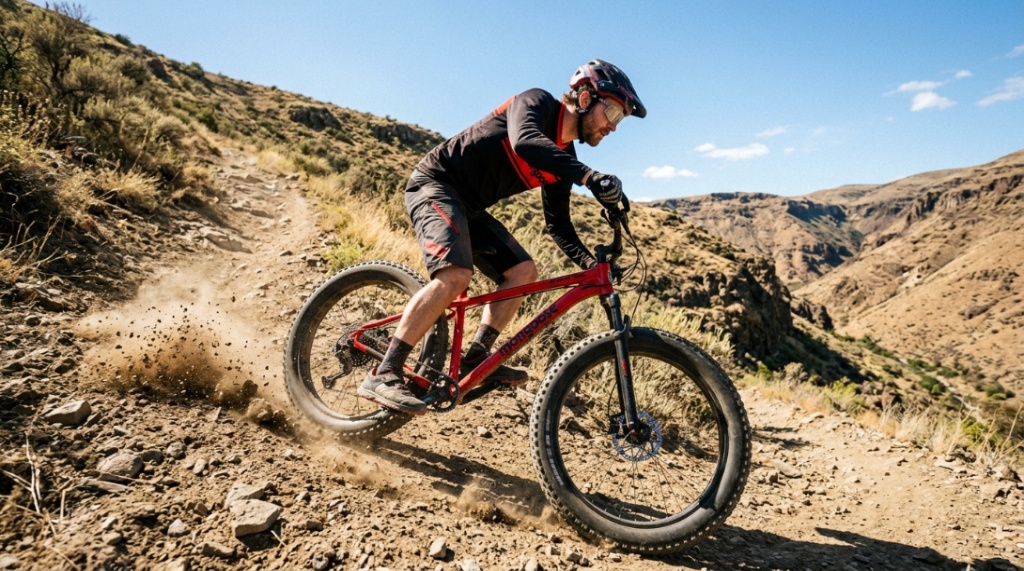
You’ve decided to buy a fat tire bike, but you’re on a budget. The choices are overwhelming, and every brand claims to be the best. The real problem? You don’t want to waste money on a bike that feels heavy, breaks down, or can’t handle trails. In the crowded budget fat tire market, the Mongoose Argus Trail stands out, but how does it actually compare to the competition?
What Makes the Mongoose Argus Trail a Unique Budget Fat Tire Bike?
The Mongoose Argus Trail is a true entry-level fat tire mountain bike designed for riders who want to explore snow, sand, and rough terrain without spending over a thousand dollars. It features a 6061 aluminum frame, 4-inch wide tires, and a basic suspension fork. The key differentiator is its aluminum construction, which is lighter than the steel frames found on many bikes at the same price point. This makes it easier to maneuver and pedal, especially for beginners. It is not a high-performance machine, but it is a reliable, capable platform for casual trail riding and winter commuting.
Frame Material: Aluminum vs. Steel
Most budget fat tire bikes under $800 use heavy high-tensile steel frames. The Mongoose Argus Trail uses 6061 aluminum. This immediately saves you 4–6 pounds. While steel is durable, aluminum resists rust better and is much easier to lift onto a rack or carry over an obstacle.
Tire Specs and Versatility
The 26” x 4” tires on the Argus Trail provide excellent flotation on soft surfaces like sand and fresh snow. They are knobby enough for loose dirt but roll relatively well on pavement. You don’t get the premium Kenda or Vee tires found on bikes costing $1,500, but the stock tires are adequate for mixed-terrain exploration.
How Does the Mongoose Argus Trail Compare to the Schwinn Bonafide Fat Tire?
The Schwinn Bonafide is often the closest competitor to the Mongoose Argus Trail. While both are budget-friendly and from major department store brands, the Mongoose has a slight edge in frame quality. The Mongoose Argus Trail features an aluminum frame and a 7-speed drivetrain, whereas the Schwinn Bonafide also uses an aluminum frame but typically ships with a 7-speed twist shifter. The Mongoose’s trigger shifter is generally preferred by riders for its precision and tactile feedback.
- Mongoose Argus Trail: Aluminum frame, trigger shifters, 100mm travel fork (basic coil).
- Schwinn Bonafide: Aluminum frame, twist shifters, 60mm travel fork.
- Verdict: The Mongoose offers a better shifting experience and slightly more suspension travel, making it better for actual off-road bumps.
Is the Mongoose Argus Trail Better Than the Kent Trouvaille?
Yes, the Mongoose Argus Trail is generally a better option than the Kent Trouvaille for most riders. The primary difference comes down to frame material and tire quality. The Kent Trouvaille typically uses a heavy steel frame, making it significantly heavier (often over 40 pounds). The Mongoose Argus Trail’s aluminum frame keeps weight closer to 35 pounds. Additionally, the Kent Trouvaille’s tires are often lower quality and prone to punctures on sharp rocks. The Mongoose’s tires are more robust for trail conditions.
Weight Comparison Table
| Feature | Mongoose Argus Trail | Kent Trouvaille |
|---|---|---|
| Frame Material | Aluminum (6061) | Steel (Hi-Tensile) |
| Approx. Weight | 35-37 lbs | 40-44 lbs |
| Drivetrain | 7-speed Shimano Tourney | 7-speed generic |
| Trail Readiness | Moderate | Low |
What Are the Key Components on the Mongoose Argus Trail?
The Mongoose Argus Trail is equipped with entry-level components that prioritize value over performance. The key parts are a Shimano Tourney 7-speed rear derailleur, a 100mm suspension fork, and linear-pull brakes. The Shimano Tourney derailleur is the most basic model in Shimano’s lineup, but it is reliable and easy to adjust. The linear-pull brakes (V-brakes) provide adequate stopping power for casual riding and dry conditions, though they are inferior to disc brakes in wet or muddy environments.
Drivetrain Details
The 7-speed system with a 14-28 tooth freewheel is very limited. You will spin out on descents and struggle on steep climbs. However, for flat trails and gentle hills, it works fine. Upgrading to a wider-range cassette is not possible without changing the hub.
Braking System
Linear-pull brakes are a notable weakness. While they are simple to maintain, they lack the stopping power of mechanical or hydraulic disc brakes. If you ride in wet conditions frequently, you will notice a significant reduction in braking performance.
Which Budget Fat Tire Bike Has the Best Suspension Fork?
At this price point, no suspension fork is truly great, but the Mongoose Argus Trail’s 100mm coil fork is better than most competitors’ 60-80mm forks. The extra travel helps absorb larger bumps and roots. However, it is heavy, non-adjustable (no lockout or rebound), and prone to stiction (sticking) over small bumps. For pure trail comfort, the Mongoose offers the most travel in its class, but for climbing efficiency, a rigid fork (like on the Gravity Bullet) would be lighter.
This article provides an honest, detailed mongoose argus trail review comparison, breaking down the exact differences in components, ride quality, and value so you can make the right call.
How Do the Tires Compare on Budget Fat Tire Bikes?
Tire quality varies wildly among budget fat tire bikes. The Mongoose Argus Trail uses 26” x 4” knobby tires with a moderate tread pattern. They are decent for snow and sand but less grippy on wet rocks. Compared to the Hyper Explorer, which uses cheap, hard rubber that slips easily, the Mongoose tires offer better traction. Compared to the Mongoose Dolomite (which uses huge, heavy 4.9-inch tires), the Argus Trail’s tires are lighter and more agile, but they offer less flotation in deep powder.
Why Is the Mongoose Argus Trail a Good Option for Beginners?
The Mongoose Argus Trail is an excellent starting point for new riders because of its forgiving geometry and approachable price. The fat tires provide immense stability, making it almost impossible to tip over at low speeds. This builds confidence. The aluminum frame keeps the bike manageable to handle and pedal. For under $600, you get a bike that will allow you to ride immediately without feeling intimidated. It is not a bike for aggressive downhill runs, but it is perfect for learning the basics of off-road riding on groomed trails and bike paths.
Ease of Assembly
Most units come partially assembled (about 85%). You will need to install the front wheel, handlebars, seat, and pedals. A basic set of Allen wrenches and a wrench for the pedals are required. Expect to spend 30–60 minutes on assembly if you are new to bikes. Always check and tighten all bolts before the first ride.
What Are the Common Complaints About the Mongoose Argus Trail?
Owners frequently report three main issues: the brakes are weak, the bike is heavy for its class, and the components wear quickly under heavy use. The linear-pull brakes are the most common complaint, especially for riders who weigh over 200 pounds or ride hilly terrain. The bike is also heavier than entry-level hardtail mountain bikes with standard tires. Finally, the freewheel and chain are low-quality and may need replacement after one season of regular riding. These are trade-offs for the low price, not deal-breakers.
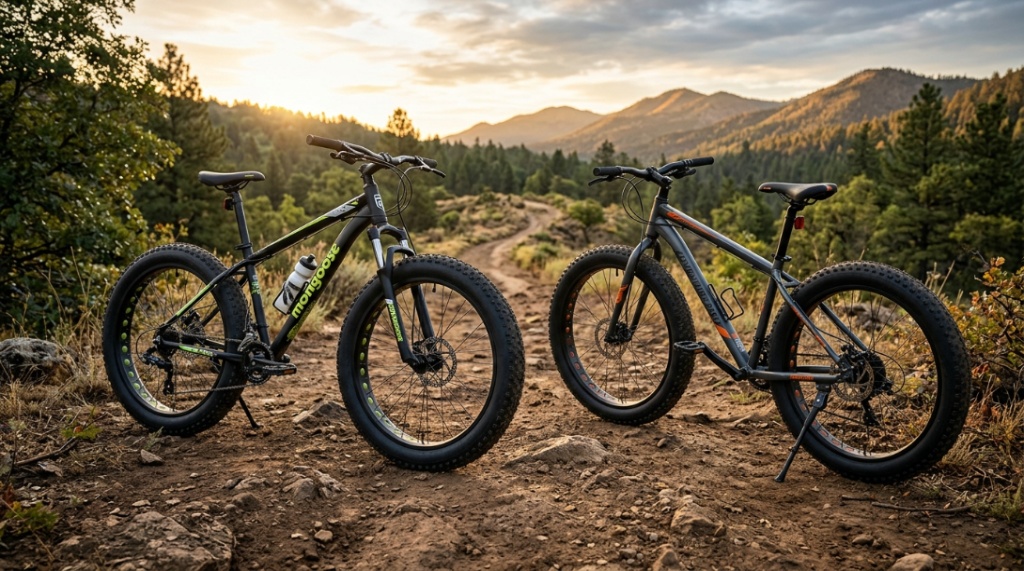
How to Upgrade the Mongoose Argus Trail on a Budget?
You can transform the riding experience of the Mongoose Argus Trail with a few smart upgrades. The most impactful change is swapping the brakes. Installing a set of mechanical disc brakes (like the Avid BB5 or Shimano M375) requires replacing the wheels or adding a disc adapter, but it dramatically increases stopping power. Another great upgrade is replacing the tires with tubeless-compatible ones (like Maxxis Minion FBF) to reduce weight and punctures. Finally, a wider range 7-speed freewheel (like the SunRace 11-34T) will help with climbing.
- Brakes: Upgrade to mechanical disc brakes ($60-$100).
- Tires: Swap to lightweight, tubeless-ready tires ($50 each).
- Gearing: Install a wider range freewheel ($25).
- Pedals: Replace plastic pedals with metal platform pedals ($20).
Just like maintaining a clear pathway requires heavy-duty Professional Pruning Tools for Landscaping Work, keeping your fat tire bike’s components clean after a rough trail ride ensures long-term durability.”
Which Budget Fat Tire Bike Is Best for Commuting?
For commuting, the Mongoose Argus Trail is a solid choice because of the aluminum frame and decent tire tread. However, if your commute is entirely on pavement, a bike like the Gravity Bullet with a rigid fork is lighter and faster. The Hyper Explorer is heavier and less efficient. The Mongoose Argus Trail excels if your commute includes gravel paths, light snow, or packed dirt. The suspension fork is nice for potholes but adds drag on flat roads. If you can lock out the fork (which the stock Mongoose cannot), it would be better.
Can You Ride the Mongoose Argus Trail on Advanced Trails?
Technically, you can ride the Mongoose Argus Trail on blue and black diamond trails, but you will be severely limited by the components. The V-brakes will overheat on long descents, the suspension fork will bottom out on drops, and the drivetrain will struggle on steep climbs. It is not a safe or enjoyable choice for rough, technical enduro-style riding. This bike is best suited for green and easy blue trails, gravel paths, and bike parks. Pushing it beyond its design limits risks component failure and injury.
Frequently Asked Questions
Is the Mongoose Argus Trail good for snow riding?
Yes, it is very good for snow riding. The 4-inch wide tires provide excellent flotation on packed snow and light powder. The aluminum frame resists rust from road salt. However, the brakes lose effectiveness in wet snow, so ride cautiously.
How much does a Mongoose Argus Trail weigh?
The Mongoose Argus Trail weighs approximately 36 to 38 pounds depending on the specific model year and size. This is lighter than many steel-frame fat tire bikes but heavier than standard mountain bikes.
Can I add a rear rack to the Mongoose Argus Trail?
Yes, the Mongoose Argus Trail has mounting eyelets on the rear dropouts for a standard rear rack. This makes it suitable for light bikepacking or commuting with panniers. Check your specific model for exact mounting points.
Is the Mongoose Argus Trail easy to assemble?
Assembly is moderate. The bike ships about 85% complete. You need to attach the front wheel, handlebars, seat, and pedals. Basic mechanical skills and a set of Allen keys are required. A bike shop can assemble it for around $50–$75.
What is the weight limit for the Mongoose Argus Trail?
Mongoose does not officially publish a strict weight limit, but the general guideline for this class of fat tire bike is 250–300 pounds. The heavy-duty wheels and frame are robust, but the V-brakes may struggle under heavier loads.
How does the Mongoose Argus Trail compare to the Mongoose Dolomite?
The Mongoose Dolomite is heavier, with a steel frame and 4.9-inch tires. The Argus Trail is lighter, more agile, and better for general trail riding. The Dolomite is better for extreme deep snow or sand. The Argus Trail is the better all-rounder.
Should I buy the Mongoose Argus Trail or a used higher-end fat bike?
If you have a budget of $600, you can often find a used fat bike from brands like Surly or Salsa that is far superior in components and ride quality. If you want a new bike with a warranty and immediate availability, the Mongoose Argus Trail is a reasonable choice.
Conclusion
The Mongoose Argus Trail is a fantastic entry-level fat tire bike that offers genuine value for the budget-conscious rider. Its aluminum frame, decent tire size, and approachable geometry make it a winner for beginners exploring snow, sand, and easy trails. However, it is not a performance machine. The weak V-brakes and basic suspension are its biggest limitations. If you recognize these trade-offs and plan accordingly, it is one of the best ways to get into fat biking without breaking the bank. For serious trail riding or heavy commuting, consider saving for a model with disc brakes and a better drivetrain. But if you just want to get out and ride without a huge investment, the Mongoose Argus Trail is a solid bet that won’t let you down on the beginner trails.
You May Like

Memphis Home and Lifestyle Show 2026: Dates, Tickets, and Home Ideas