

In our modern lives, balance is often the first casualty. We spend hours hunched over computers, cradle phones on one shoulder, and carry heavy bags on the same side every day. Consequently, these habits create subtle yet persistent imbalances in our bodies. We may notice one shoulder sits higher than the other, our hips feel tight, or we experience nagging lower back pain. These are often symptoms of physical asymmetry. While the West often approaches this with chiropractic care or physiotherapy, Japan offers a unique, holistic perspective on restoring the body’s natural alignment. For those seeking true wellness, resources like Sweet Healthy Living often highlight this connection between ancient wisdom and modern health.
The Japanese approach to wellness is deeply rooted in the concept of Chowa or harmony. The body is not seen as a collection of separate parts, but as an interconnected system. Therefore, an imbalance in one area—like a tilted pelvis—is believed to affect the entire structure, from the feet to the jaw. This pursuit of harmony is why a specialized spa treatment by Japanese to help with balance often addresses more than just sore muscles; it aims to reset the body’s entire energetic and physical framework.
These natural body symmetry treatments in Japan are not about forceful adjustments. Instead, they are about gentle guidance, energy work, and encouraging the body to find its own center. Let’s explore these profound methods for achieving true physical balance.
The Philosophy of Symmetry: Ki and Seitai
Before diving into specific treatments, it is essential to understand the philosophy behind them. In traditional Japanese thought, a symmetrical and aligned body allows for the smooth flow of Ki (気), or life-force energy. When the body’s structure is misaligned, this flow is blocked or disrupted, leading to pain, stiffness, and even illness.
Therefore, the goal of Japanese bodywork is not just to straighten the spine. It is to release these blockages and restore the natural flow of Ki. This is the foundation of Seitai a term that literally translates to “coordinated body.” Seitai is a holistic system of bodywork developed in the 20th century by Haruchika Noguchi. It is less of a single technique and more of a philosophy that observes the body’s natural intelligence and its capacity to heal itself.
A Seitai practitioner does not “fix” you. Instead, they “listen” to your body’s tensions and use subtle movements, pressure, and guidance to help your body recognize its own imbalances and initiate a self-correction process.
Shiatsu: Realigning Through Pressure
One of the most well-known Japanese treatments for balance is Shiatsu, which means “finger pressure.” While many experience Shiatsu as a relaxing massage, its traditional purpose is deeply therapeutic and directly related to body symmetry.
A Shiatsu therapist works along the body’s meridians, which are the pathways Ki is believed to flow through. By applying steady, deep pressure with thumbs, palms, and sometimes even elbows and knees, the therapist can achieve several things:
- Release Deep Muscle Tension: Chronic postural imbalances create knots of deep, stubborn tension. Shiatsu can access and release these muscles in a way a general massage cannot.
- Dissolve Energy Blockages: Pressure on specific points (tsubo) can dissolve the stagnation that contributes to postural pulling.
- Improve Body Awareness: The focused pressure helps the recipient become more aware of where they are holding tension, which is the first step to correcting it.
When these “pulls” on the skeletal structure are released, the body can naturally settle back into a more symmetrical alignment. A skilled Shiatsu practitioner can feel the imbalances in your body’s energy and structure, applying pressure to encourage a return to center.
Seitai-ho: The Gentle Art of Body Realignment
While Shiatsu works on the meridian system, Seitai-ho (the practical application of Seitai) works more directly with the musculoskeletal structure, but with a uniquely gentle approach. It is perhaps the most direct “body symmetry treatment” in Japan.
Unlike the often forceful “cracking” associated with some Western spinal adjustments, Seitai is typically very gentle. A practitioner might guide your body through specific, subtle movements, hold a joint to encourage a release, or use gentle rocking motions.
The core of Seitai-ho is to identify the primary distortion. For example, your right shoulder pain might be a compensation for a misaligned left hip. A Seitai practitioner seeks the root cause. They understand that the body is a “tensegrity” structure, where tension in one part affects the whole.
A key part of Seitai is also Katsugen Undo, or “regenerating movement.” This is a practice, sometimes guided, where you allow your body to move spontaneously. It may look like stretching, shaking, or gentle twisting. The idea is to bypass the conscious mind and let the body’s innate intelligence—what they call the “internal physician”—make the precise adjustments it needs to unwind and realign itself.
Sotai-ho: Finding Balance Through Comfortable Movement
Another fascinating Japanese therapy for symmetry is Sotai-ho. This method, developed by Dr. Keizo Hashimoto, is based on a simple yet profound principle: move your body in the direction that feels good.
If a movement in one direction is painful or restricted (for example, twisting to the left), a Sotai-ho practitioner will ask you to move in the opposite, comfortable direction (twisting to the right) and then add a gentle resistance as you relax.
This process essentially “resets” the neuromuscular patterning. It sends a message to your brain that the “stuck” area is now safe and can release its protective guarding. By focusing on comfortable, pleasurable movement, Sotai-ho coaxes the body out of its patterns of distortion. It is a very safe and effective method for resolving asymmetries that are held in place by chronic muscle tension and dysfunctional movement habits.
This treatment is often described as a form of “re-education” for the nervous system, teaching it to let go of the patterns that create imbalance.
The Role of Onsen and Thermal Therapy
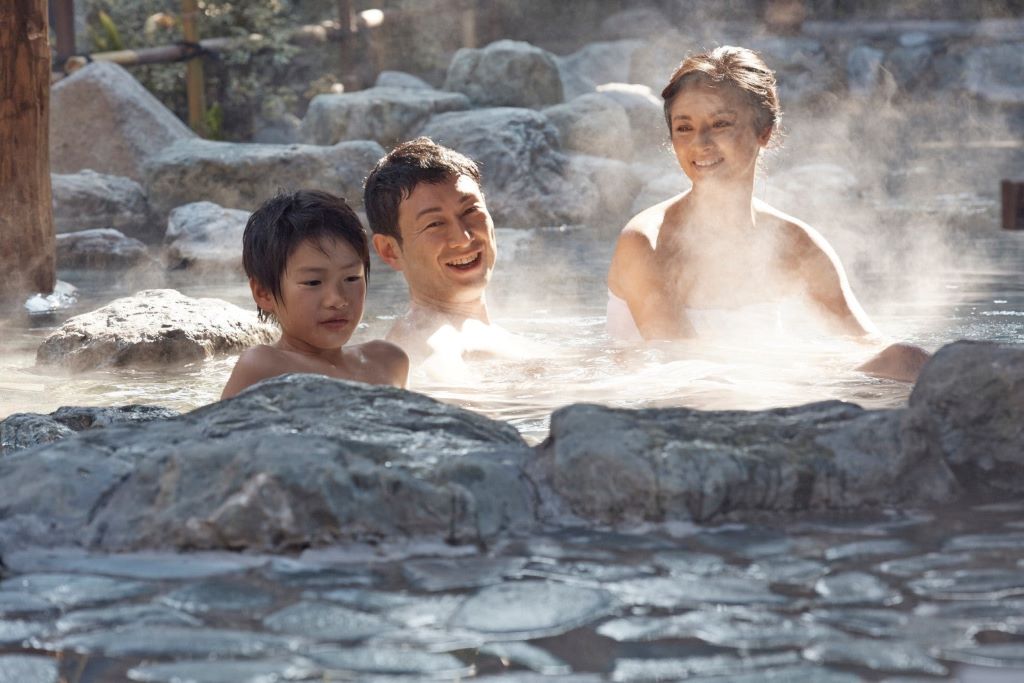
No discussion of Japanese healing is complete without mentioning the Onsen, or natural hot springs. While not a manual therapy, Onsen is a critical complementary treatment for restoring body symmetry.
The therapeutic benefits of soaking in mineral-rich volcanic water are twofold:
- Physical Relaxation: The intense, penetrating heat relaxes muscles at a very deep level. This prepares the body for manual treatments like Shiatsu or Seitai, making adjustments easier and more effective. The relaxation of tight psoas or back muscles can, by itself, allow the pelvis and spine to settle into a more neutral position.
- Nervous System Regulation: Soaking in a quiet, natural Onsen calms the sympathetic nervous system (our “fight or flight” response). Chronic stress is a major contributor to muscle guarding and postural asymmetry. Calming the nervous system is essential for allowing the body to accept and hold new, more balanced alignments.
Many therapeutic spas in Japan, known as Toji, are designed around this very principle. Visitors will soak, receive manual therapy, and then rest, allowing the body to integrate the changes in a profoundly relaxed state.
Modern Japanese Spas: Blending Tradition and Technology
Today, many high-end spas and clinics in Japan, particularly in cities like Tokyo and Kyoto, blend these ancient traditions with modern technology. A “body symmetry” package might begin with a sophisticated digital postural analysis. This can identify, down to the millimeter, pelvic tilt, spinal curvature, and leg-length discrepancies.
Following the analysis, a custom treatment plan is created. This plan will almost certainly draw from the traditional toolbox. It may include:
- Kyosei: A general term for realignment, often involving specialized pelvic or spinal correction techniques derived from Seitai.
- Kogao (“Small Face”) Massage: Interestingly, many facial symmetry treatments in Japan are, in fact, full-body treatments. Practitioners understand that a tilted jaw or uneven eyes are often linked to tension in the neck, shoulders, and even the pelvis.
- Deep Tissue Massage: A modern application of Anma (the predecessor to Shiatsu) to specifically target the muscle groups identified in the postural analysis.
These modern clinics offer a bridge for those who appreciate data-driven analysis but still want the holistic, non-invasive, and deeply respectful touch of traditional Japanese bodywork.
Conclusion: A Holistic Path to Alignment
Natural body symmetry treatments in Japan offer a profound alternative to simply managing symptoms. They are based on a deep respect for the body’s innate wisdom and its constant striving for harmony, or Chowa.
Whether through the meridian-clearing pressure of Shiatsu, the gentle structural guidance of Seitai, or the comfortable neuromuscular re-education of Sotai-ho, the goal is the same. It is not to force the body into a rigid “correct” posture. Instead, it is to release the tensions, blockages, and habits that pull it out of its natural, graceful alignment.
By treating the body as an interconnected whole and calming the nervous system, these Japanese therapies help restore not just physical symmetry, but also a deeper senseLIfe of balance, well-being, and energetic flow.
Frequently Asked Questions (FAQs)
-
What is the difference between Japanese Seitai and Western chiropractic?
While both aim to correct structural alignment, their philosophies and methods differ. Chiropractic care often focuses on specific spinal adjustments (subluxations) to restore nerve function, sometimes using high-velocity thrusts. Seitai is generally a gentler, whole-body approach that includes energy work, subtle movements, and guiding the body to “self-correct” rather than receiving a direct adjustment.
-
Is Shiatsu effective for treating postural problems like scoliosis?
Shiatsu can be very effective for managing the symptoms associated with postural problems, including the pain and muscle tension from scoliosis. It helps release the tight muscles that are pulling on the spine, improving comfort and mobility. However, it is not considered a “cure” for structural scoliosis, but rather a powerful management tool for improving quality of life and balance.
-
Are these Japanese body symmetry treatments painful?
Most of these treatments, particularly Seitai and Sotai-ho, are designed to be gentle and non-painful. In fact, Sotai-ho is based on moving away from pain. Shiatsu involves deep pressure, which can sometimes be intense on a tight “tsubo” (pressure point), but it should feel like a “good hurt” or a releasing sensation, not a sharp pain. You should always communicate with your therapist.
-
How many sessions are needed to see results?
This depends entirely on the individual, the chronic nature of the imbalance, and your lifestyle. Some people feel a significant release and improved alignment after just one session. However, for long-standing postural habits, a series of 3-6 sessions is often recommended to help the body learn and hold the new, more balanced alignment.
-
Can I practice any of these principles at home?
Yes. You can incorporate the philosophy of Japanese wellness easily. This includes practicing mindful movement, gentle stretching, and self-massage. The principles of Sotai-ho (finding comfortable movements) can be applied to your daily stretches. Additionally, taking hot baths with Epsom salts can mimic some of the muscle-relaxing benefits of an Onsen.
Related Topics:
DIY Garage Door Spring Maintenance Tricks
Embrace Nature’s Touch: Your Essential Guide to Natural Hygiene and Personal Care Products
You May Like

Practical Ways to Improve Productivity While Working From Home