Composting in Florida, southern Texas, or the Caribbean can feel like a different sport than the tidy process described in most gardening books. Heat and humidity accelerate decomposition dramatically, but they also bring scorching sun, torrential rain, fire ants, and relentless moisture swings. If you are deciding whether a tumbler fits that environment, it helps to read the Vivosun compost bin review for one real-world data point before you buy. The practices below, however, apply to any bin or pile in a hot, humid climate.
Quick Answer
In tropical and subtropical climates, compost faster by using a 50/50 to 60/40 mix of browns to greens by volume, keeping pile moisture at roughly the consistency of a wrung-out sponge, and turning every 3–5 days. Shade your bin, cover it during heavy rain, and bury food scraps at least 6–8 inches deep to discourage pests. Expect finished compost in 4–8 weeks instead of the 2–6 months typical in cooler zones.
Key Takeaways
- Heat speeds up decomposition, but it also dries piles quickly, so check moisture more often than you would in a temperate climate.
- Excess rain is a bigger threat than drought in most subtropical summers, so drainage and a lid matter more than insulation.
- Skipping the “browns” layer is the most common cause of smell, flies, and slime in hot, humid conditions.
- Pest pressure from ants, roaches, and rodents rises sharply with heat, so bury food scraps and avoid adding greasy or meaty items to open systems.
- Finished compost in tropical zones tends to be lower in nitrogen than you expect because heavy rain leaches nutrients, so mix it into soil promptly.
Why Tropical Composting Is Different
Composting relies on the same biology everywhere: microorganisms break down organic matter when they have the right balance of carbon, nitrogen, oxygen, and water. What changes in the tropics is the speed and the stressors. Warmth keeps microbial activity high nearly year-round, so piles that would stall in a cold winter keep working. That sounds ideal, and it often is, but it also means problems appear faster. A pile that goes anaerobic in a cool climate might take a week to smell. In July in Miami or Manila, it can turn sour in a day.
The other major difference is water. Subtropical summers deliver heavy, sudden rainfall that can flood a pile and wash out soluble nutrients. Meanwhile, the dry season and intense midday sun can bake the top layer of a pile into a crust that sheds water and traps dry, dormant material underneath. Managing both extremes in the same year is the core challenge.
What Actually Changes Versus Temperate Composting
- Turning frequency rises: every 3–5 days instead of weekly.
- Shade becomes a tool, not an afterthought.
- Browns may need to be stored dry and added more often.
- Pest control is a routine task, not an occasional one.
- Finished compost matures faster and should be used faster to avoid nutrient loss.
Getting the Carbon-to-Nitrogen Ratio Right
The ideal starting ratio is roughly 25:1 to 30:1 carbon to nitrogen by weight, which in practice translates to about two to three parts browns to one part greens by volume. In hot climates, many gardeners push slightly browner, closer to 60/40 browns to greens, because the extra carbon buffers against moisture swings and odors.
Browns include dried leaves, shredded cardboard, paper, straw, wood chips, and sawdust. Greens include kitchen scraps, coffee grounds, grass clippings, and fresh plant trimmings. In tropical climates, fresh grass clippings are especially problematic because they mat down and go anaerobic almost immediately. Spread them thin or dry them first.
A Practical Layer Recipe
- Add a 3–4 inch layer of coarse browns at the bottom for drainage and airflow.
- Add 1–2 inches of greens, chopped small if possible.
- Cover with 2–3 inches of browns.
- Repeat until the bin is about three-quarters full.
- Turn to mix thoroughly after the first week.
Managing Moisture in Wet and Dry Seasons
Target moisture is often described as a wrung-out sponge: damp enough to glisten, not dripping. In a subtropical climate you will likely chase this target in both directions across the year.
During the rainy season, the priority is drainage and cover. A lid, tarp, or roofed bin keeps rain from saturating the pile. If the bin sits on bare ground, ensure the base allows excess water to escape. Tumbler-style bins, including most models reviewed in the Vivosun review mentioned earlier, are typically closed and drain better than open piles, which is one reason they perform well in Florida summers.
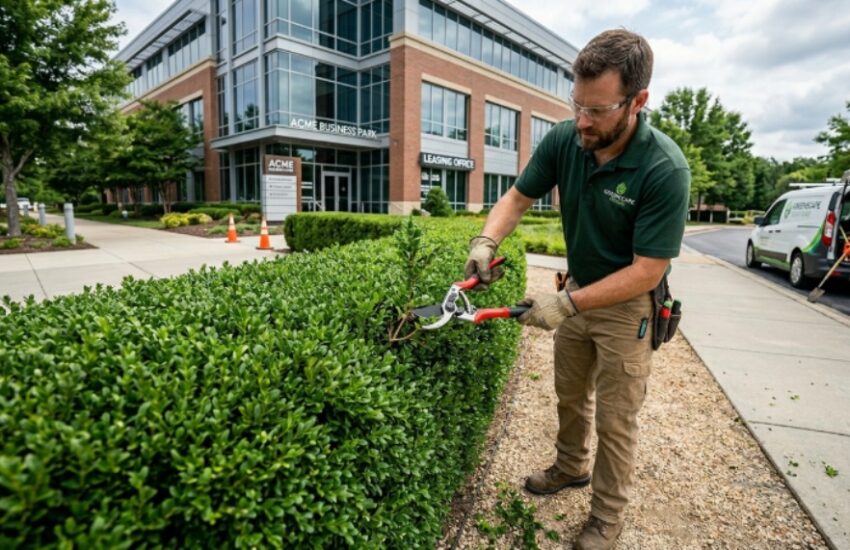
During dry spells, water the pile when you turn it, and consider adding moisture-rich greens like melon rinds or fresh trimmings. Avoid relying on a single deep soak; small, frequent additions work better because tropical sun dries the surface quickly,For more garden maintenance tips, learn how to choose professional pruning tools for landscaping work before tackling overgrown plants.
Signs Your Pile Is Too Wet or Too Dry
| Condition | Signs | Fix |
|---|---|---|
| Too wet | Sour smell, slimy texture, flies, water pooling | Add browns, turn, cover, improve drainage |
| Too dry | Pale color, no heat, ants nesting, dust when turned | Add water while turning, add fresh greens, shade the bin |
| Balanced | Earthy smell, warm center, visible fungal threads | Continue turning every 3–5 days |
Aeration and Turning Frequency
Anaerobic conditions are the enemy in hot, humid climates because they produce hydrogen sulfide and ammonia odors that attract pests and annoy neighbors. Turning introduces oxygen and redistributes moisture. In the tropics, turn every 3–5 days for fast results, or every 7–10 days if you are not in a hurry.
Tumblers make this easier because you can rotate the whole drum in seconds, but they have a limit: once the drum is more than about two-thirds full, the contents stop mixing well. Plan to empty partially finished compost into a secondary curing bin so the primary tumbler keeps working efficiently.
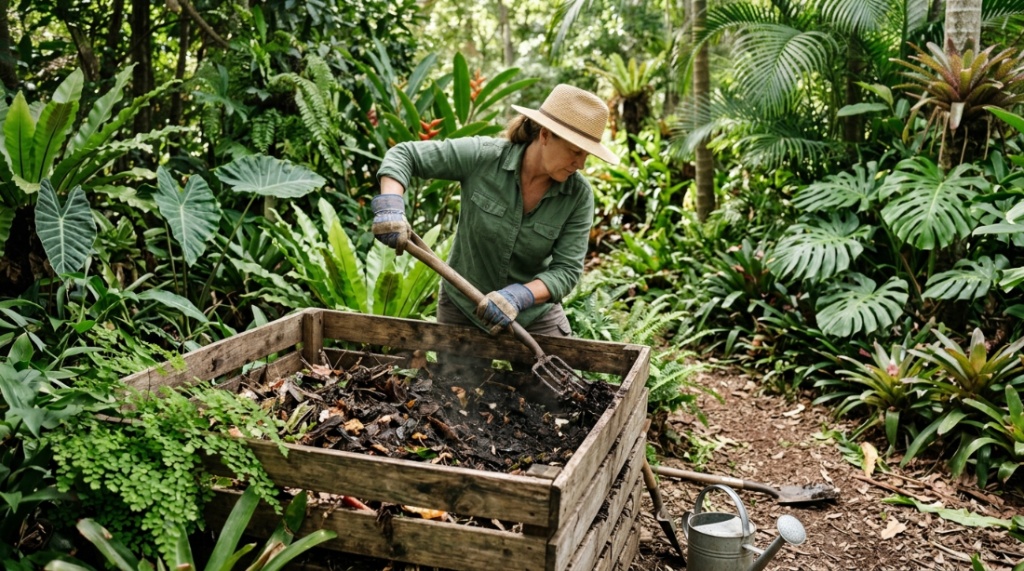
For open piles, a pitchfork turn where you move the outside to the inside and the bottom to the top is more effective than stirring in place. Aim for the pile to reach at least 3 feet cubed to hold heat, but not so large that the center goes anaerobic.
Pest and Odor Control
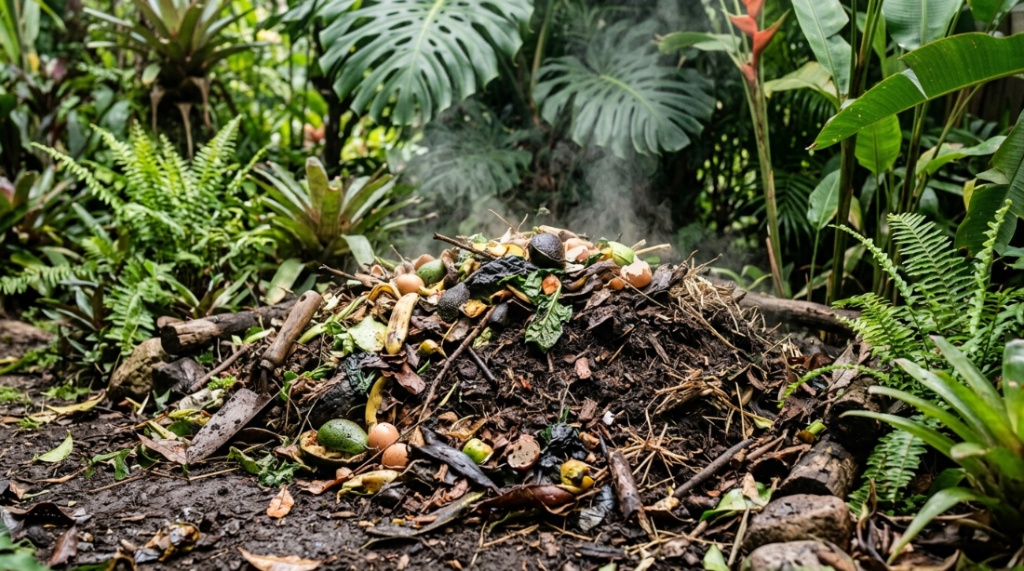
Heat and moisture make tropical climates a paradise for ants, cockroaches, fruit flies, and rodents. The single most effective habit is to bury every food scrap under at least 6–8 inches of browns or finished compost. Never leave scraps on the surface, even for an hour.
What to Avoid Adding
- Meat, fish, dairy, and greasy foods, which attract rodents and create foul odors fast in heat
- Pet waste, which can carry pathogens
- Diseased plant material, unless your pile reliably reaches 130–150°F
- Invasive weed seeds, which may survive a cool pile
- Large unchopped items, which slow decomposition and create anaerobic pockets
If ants colonize the pile, it is usually a sign the pile is too dry. Moisten and turn. If fruit flies swarm, you likely have exposed greens; bury them deeper and add a fresh brown layer on top.
Shade, Temperature, and Bin Placement
Counterintuitively, full sun is not ideal for a tropical compost pile. Intense midday sun dries the surface, kills the microbial crust, and can push internal temperatures past the point where beneficial organisms thrive. Partial shade, such as under a tree canopy or on the east side of a building, keeps moisture stable and temperatures in the productive 110–140°F range.
Place the bin on well-drained ground, ideally soil rather than concrete, so excess water can escape and worms and beneficial microbes can migrate in. Keep a 2–3 foot clearance from fences and structures to allow airflow and reduce pest harborage.
Common Mistakes in Hot, Humid Climates
- Adding too many greens at once, especially grass clippings, which mat and go anaerobic.
- Leaving the bin uncovered during the rainy season, which leaches nutrients and creates sludge.
- Turning too rarely, letting the pile sit compacted through the hottest weeks.
- Ignoring the dry season, letting the pile bake into a crusted, inactive mass.
- Adding food scraps to the surface, inviting ants and rodents within hours.
- Using finished compost too late, after rains have washed out much of its nitrogen.
Frequently Asked Questions
How long does composting take in a tropical climate?
With regular turning and balanced moisture, finished compost can be ready in 4–8 weeks. Without turning, expect 2–4 months. The heat accelerates decomposition but also accelerates moisture loss and pest pressure.
Can I compost during the rainy season?
Yes, but you need a covered bin or tarp to prevent saturation. Drainage is essential. If the pile stays waterlogged for more than a few days, it will turn anaerobic and smell. Add browns generously and turn after every heavy rain.
Why does my compost smell bad in summer?
Bad smells almost always mean anaerobic conditions from too much moisture, too many greens, or poor aeration. Turn the pile, add dry browns, and check that the bin drains. Odor usually resolves within 2–3 days of corrective action.
Is a tumbler better than an open pile in subtropical heat?
Tumblers handle rain and pests better and are easier to turn, which suits hot, humid conditions. Open piles can work well but require more attention to drainage, cover, and pest exclusion. The best choice depends on your space, climate season, and how often you can tend the pile.
Should I add water to my compost in summer?
Only if the pile is dry. Check by squeezing a handful: it should feel like a wrung-out sponge. If it crumbles, add water while turning. If it drips, add browns instead.
What temperature should my tropical compost pile reach?
A healthy active pile reaches 110–140°F in the center. Above 160°F, beneficial microbes decline and the pile may go anaerobic. If it exceeds 150°F, turn it to release heat and redistribute material.
Conclusion
Composting in tropical and subtropical climates rewards attention more than patience. Heat does most of the work for you, but only if you keep moisture balanced, add enough browns, turn regularly, and protect the pile from both deluge and drought. Shade the bin, bury food scraps deep, and use finished compost promptly before rains leach its value. If you are still choosing equipment, weigh a closed tumbler against an open pile based on how much rain and pest pressure you actually face. Get those basics right and you can produce rich compost in weeks, not seasons.