
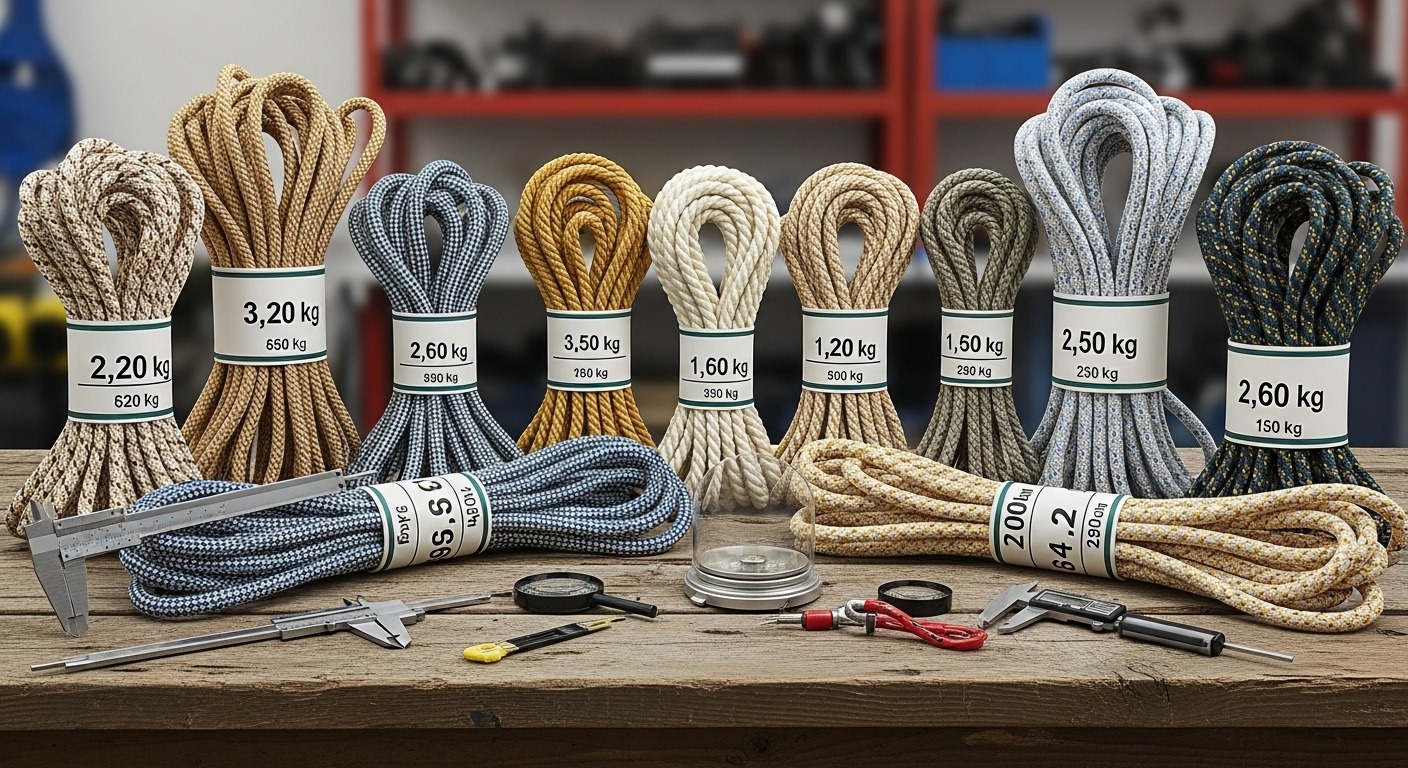
Rope strength ratings show the maximum load a rope can handle before it breaks under controlled lab conditions. These ratings are usually expressed in pounds (lbs), kilonewtons (kN), or both.
If you ignore this number, you risk buying a rope that fails under pressure. And failure does not give warnings. It happens instantly.
Most buyers see numbers like “22 kN” or “6,000 lb tensile strength” and assume bigger is better. That’s not always true. The right strength depends on your application—climbing, towing, rigging, marine use, or industrial lifting.
Understanding rope ratings protects your equipment, your investment, and in some cases, your life.
This guide breaks down tensile strength charts, explains kN ratings, and shows how to compare ropes properly before buying.
Why Is Understanding a Tensile Strength Chart Important Before Buying?
A tensile strength chart helps you compare rope performance across diameters, materials, and constructions.
Here’s the problem.
Many buyers choose rope based on diameter alone. They assume thicker rope equals stronger rope. That is outdated thinking.
Modern materials like HMPE (Dyneema), nylon, polyester, and polypropylene have very different strength-to-weight ratios. A 10mm synthetic rope can outperform a thicker traditional rope.
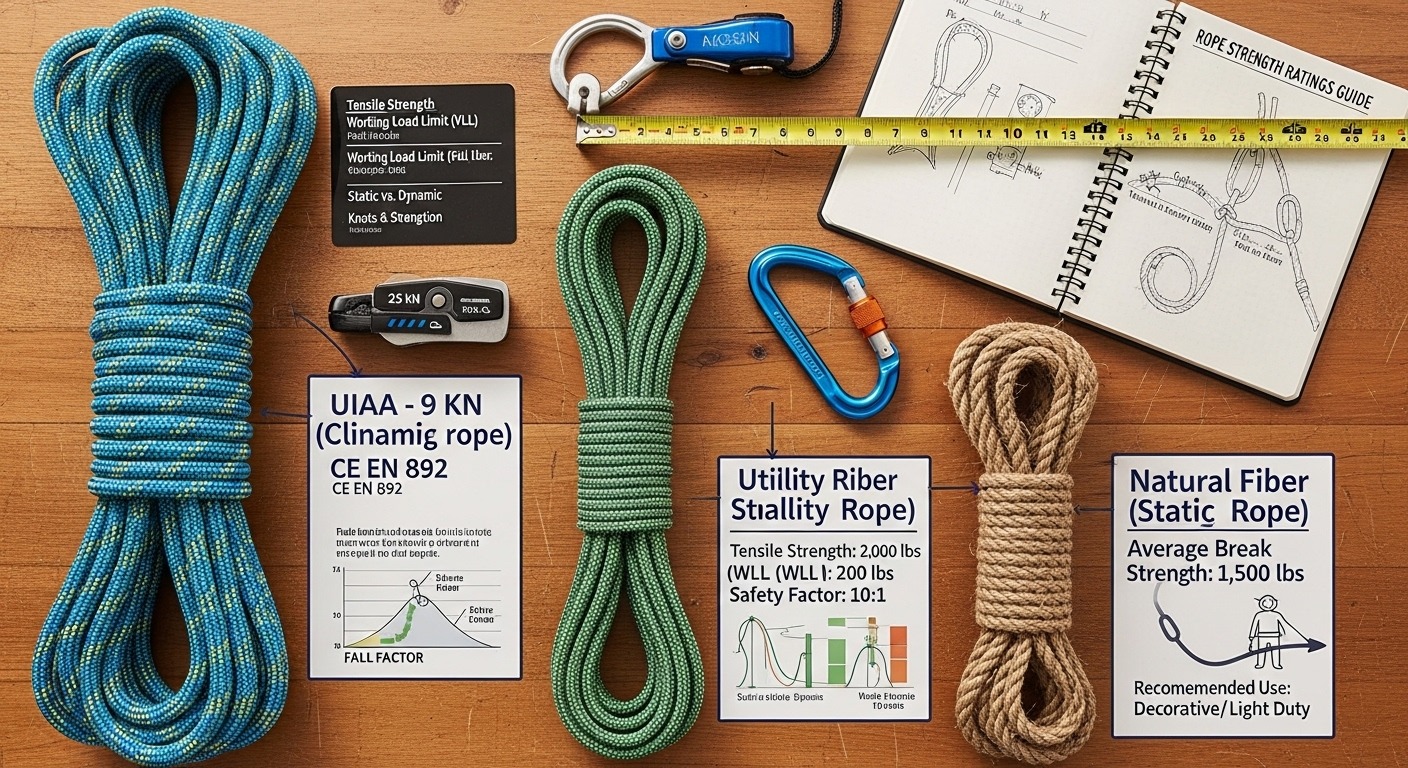
What Does a Tensile Strength Chart Show?
- Rope diameter (mm or inches)
- Breaking strength (lbs or kN)
- Working load limit (WLL)
- Material type
- Construction (braided, twisted, kernmantle)
For example:
| Diameter | Material | Breaking Strength (lbs) | kN Rating |
|---|---|---|---|
| 10mm | Nylon | 5,500 lbs | 24 kN |
| 10mm | Polyester | 4,800 lbs | 21 kN |
| 10mm | HMPE | 8,500 lbs | 38 kN |
Same diameter. Different performance.
This is why reading a tensile strength chart is critical before purchasing.
What Does “kN Rating Explained” Really Mean?
kN stands for kilonewton. One kilonewton equals 224.8 pounds of force.
To convert:
- 1 kN ≈ 224.8 lbs
- 22 kN ≈ 4,946 lbs
- 30 kN ≈ 6,744 lbs
When you see “kN rating explained” on product pages, it refers to the rope’s minimum breaking strength measured in kilonewtons.
Why use kN instead of pounds?
- It’s standard in climbing and industrial safety
- It provides universal measurement across countries
- It aligns with CE and UIAA certifications
For example, dynamic climbing ropes are often rated between 20–30 kN. That doesn’t mean you can hang 30 kN worth of static weight. Dynamic ropes are designed to absorb impact force.
Understanding kN rating explained helps you compare ropes across international brands.
What Is the Difference Between Breaking Strength and Working Load Limit?
Breaking strength is the maximum force before failure. Working Load Limit (WLL) is the safe operating load.
This distinction is critical.
Breaking strength is tested in laboratory conditions. Real-world factors reduce strength:
- Knots reduce strength by 20–40%
- Abrasion weakens fibers
- UV exposure degrades synthetic rope
- Shock loading multiplies force
Most industries apply a safety factor:
- General use: 5:1 safety factor
- Overhead lifting: 10:1 safety factor
- Life safety applications: Strict certified standards
Example:
If rope breaking strength = 5,000 lbs
Safe working load (5:1) = 1,000 lbs
Never use breaking strength as your working load.
How Do Knots and Real-World Conditions Affect Rope Strength?
Knots can reduce rope strength by up to 40%, depending on the knot type.
That is not marketing. That is physics.
Case Study Insight:
Testing published in rope engineering evaluations shows:
- Figure-eight knot retains ~75–80% strength
- Bowline retains ~60–70%
- Overhand knot can reduce strength to ~50%
Now add abrasion and moisture.
Nylon absorbs water. Wet nylon can lose 10–15% strength temporarily. UV exposure over time degrades polypropylene faster than polyester.
This is why you must buy rope with a margin above your expected load.
How Do Different Rope Materials Compare in Strength?
Material choice directly impacts tensile strength, stretch, and durability.
Nylon Rope
- High elasticity
- Good shock absorption
- Strong under load
- Weakens slightly when wet
Polyester Rope
- Lower stretch than nylon
- Better UV resistance
- Maintains strength when wet
Polypropylene Rope
- Lightweight
- Floats on water
- Lower tensile strength
- Degrades under UV
HMPE (Dyneema / Spectra)
- Extremely high strength-to-weight ratio
- Very low stretch
- Common in winch lines
For high-performance rope comparisons, review detailed breakdowns like this guide on tensile strength chart examples across professional-grade ropes.
How Do Certifications Affect Rope Strength Ratings?
Certifications verify that rope meets tested safety standards.
Look for:
- UIAA (climbing ropes)
- CE EN standards (European conformity)
- OSHA compliance (industrial use)
For example, single dynamic climbing ropes must withstand multiple standardized fall tests under UIAA protocols.
Certification does not increase strength. It validates the rating.
How Do You Choose the Right Rope Strength for Your Use Case?
Choose rope strength based on maximum load, safety factor, and environmental exposure.
Climbing
- Look for 20–30 kN rating
- Certified dynamic rope
Towing
- Calculate vehicle weight
- Apply minimum 2–3x safety factor
Arborist Work
- Low stretch preferred
- High abrasion resistance
Marine Use
- UV resistance critical
- Polyester preferred
Never guess. Calculate your maximum possible load, not average load.
What Are Common Mistakes Buyers Make When Reading Rope Ratings?
The most common mistake is confusing diameter with strength.
Other mistakes:
- Ignoring working load limits
- Not accounting for knot strength loss
- Buying based on price only
- Overestimating safety margins
Another issue: assuming static load equals dynamic load. A sudden jerk multiplies force significantly.
Shock load can double or triple effective force instantly.
How Can You Verify a Rope’s Strength Before Buying?
Check manufacturer data sheets, certification marks, and independent testing results.
Reliable manufacturers publish:
- Minimum breaking strength
- Construction details
- Material composition
- Test standards used
If that information is missing, reconsider the purchase.
Conclusion: How Do You Buy Rope with Confidence?
Rope strength ratings are not marketing numbers. They are engineering data.
Understand the tensile strength chart. Know how kN rating explained converts to pounds. Apply proper safety factors. Factor in knots and real-world conditions.
When you do this, you stop guessing. You start buying based on data.
If you want a deeper comparison of professional-grade rope options and performance metrics, review detailed breakdowns before your next purchase.
Take five minutes to verify strength ratings before buying. It can prevent equipment failure and serious risk.
Frequently Asked Questions (FAQs)
1. What does 22 kN mean on a rope?
22 kN means the rope can withstand approximately 4,946 pounds of force before breaking under lab conditions.
2. Is higher kN always better?
No. Higher kN means higher breaking strength, but the right rating depends on your application and required safety factor.
3. How much strength does a knot reduce?
Most knots reduce strength by 20–40%. Some simple knots may reduce it by up to 50%.
4. What is a safe working load limit?
Working Load Limit is the maximum safe load after applying a safety factor, often 5:1 or greater.
5. Does rope lose strength over time?
Yes. UV exposure, abrasion, chemicals, and moisture can reduce rope strength gradually.
6. Should I rely only on tensile strength charts?
No. Also consider material, construction type, certification, and environmental conditions.
7. What material has the highest strength-to-weight ratio?
HMPE fibers like Dyneema offer one of the highest strength-to-weight ratios in modern synthetic ropes.
Related Topic: Roof Vent Installation: Step-by-Step Guide for Existing Roofs (DIY & Pro Tips)
Read Next: Cheap DIY Garden Path Ideas: Transform Your Yard on a Budget
You May Like

Why Alkalinity Crashes in San Diego, CA