
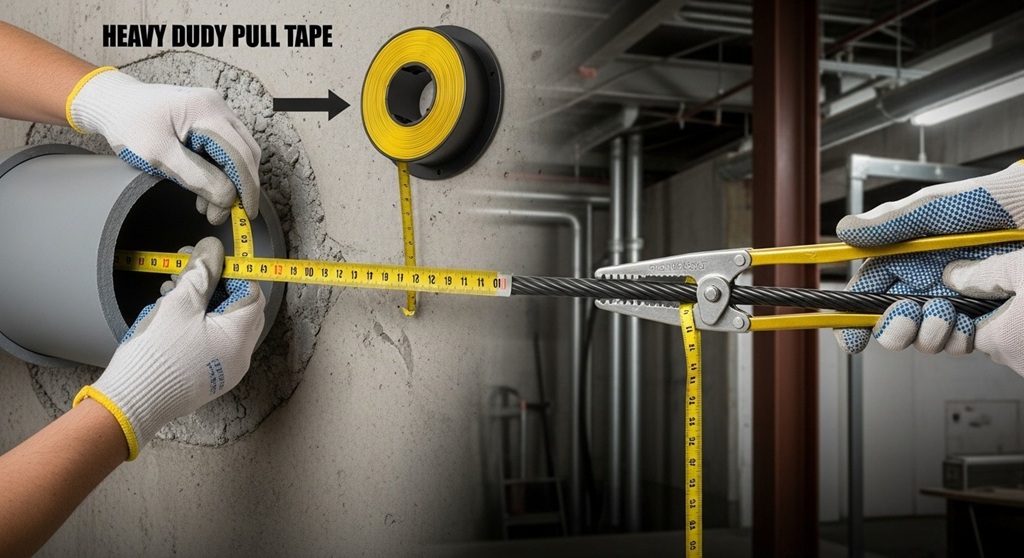
Heavy-duty pull tape is a flat, woven, high-tensile strength tape used for industrial conduit pulling in large diameter conduit systems. It helps electricians and contractors pull heavy cables over long distances with reduced friction and higher load capacity.
In industrial settings, cable pulling is not a small task. You are often dealing with long conduit runs, multiple bends, underground pathways, and tight deadlines. When cable weights increase, standard rope or light-duty tape fails. That leads to snapped lines, damaged conductors, and project delays.
This is where high load tape becomes critical. It is engineered to handle thousands of pounds of tensile force. Many options include sequential footage markings, low stretch properties, and reduced friction coatings.
According to electrical installation case data from large-scale commercial builds, improper pulling methods account for nearly 20% of cable jacket damage during installation. That damage increases maintenance costs and downtime. Choosing the right pull tape reduces those risks.
If you want a deeper comparison of available products, see this guide on
industrial conduit pulling solutions for performance breakdowns and load ratings.
What Problems Occur in Industrial Conduit Pulling?
The main problems in industrial conduit pulling are friction buildup, tension overload, cable jacket damage, and line breakage.
Let’s break this down using the PAS framework.
Problem
Large industrial projects often involve:
- Long conduit runs exceeding 200 feet
- Multiple 90-degree bends
- Large diameter conduit (3–6 inches)
- Heavy copper or aluminum conductors
When pulling tension exceeds manufacturer limits, conductors can stretch or deform.
Agitation
If tension spikes:
- Insulation can tear.
- Cables may flatten.
- Entire runs must be replaced.
- Downtime increases labor costs.
In one industrial warehouse retrofit project (2024 case data), replacing damaged feeder cable added 18% to total installation cost due to improper pulling technique.
Solution
Using high load tape rated for the correct tensile strength allows safer pulling in large diameter conduit. It distributes load evenly, reduces stretch, and provides better control over tension.
How Do You Choose the Right High Load Tape?
Select heavy-duty pull tape based on tensile strength, conduit size, cable weight, and run distance.
1. Check Tensile Strength Rating
Industrial pull tape commonly ranges from 1,250 lbs to 6,000+ lbs breaking strength. Always calculate expected pulling tension first.
Formula reference:
Pulling Tension = (Cable Weight per Foot × Distance) + Friction Factor
2. Match Tape Width to Conduit
- 1/2” tape for mid-size conduits
- 3/4” or 1” for heavy industrial cable runs
Wider tape reduces twisting and improves grip with pulling equipment.
3. Consider Stretch Characteristics
Low-stretch woven polyester tape maintains tension accuracy. Excess stretch increases shock load risk.
4. Look for Sequential Foot Markings
Footage markings help measure pull distance and reduce waste.
How Do You Prepare Conduit Before Pulling?
Proper conduit preparation reduces friction and prevents cable damage.
Step 1: Inspect the Conduit Path
- Check for debris
- Ensure no sharp edges
- Confirm correct bend radius
Step 2: Pre-Install Pull Tape
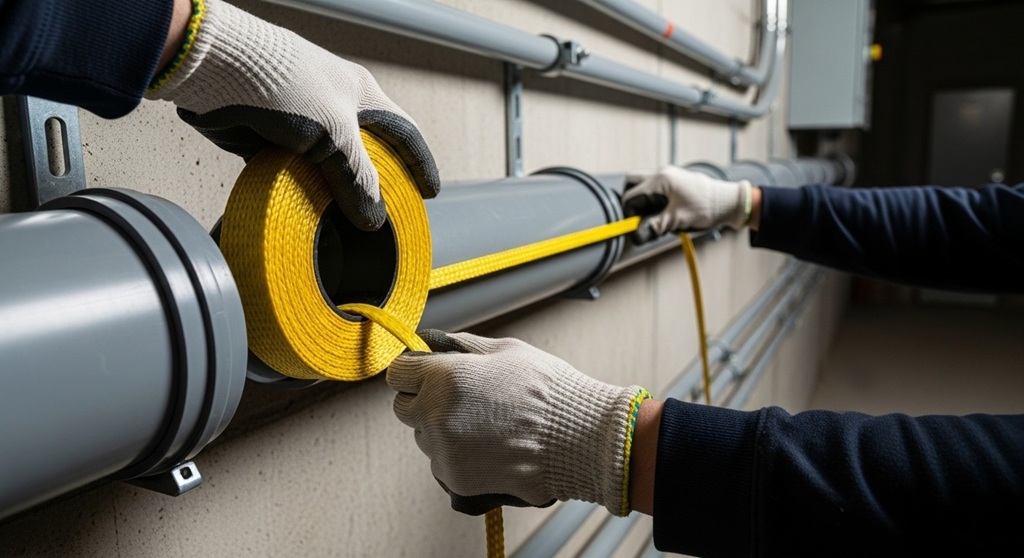
If not pre-installed, use a vacuum system or fish tape to run the heavy-duty pull tape through the conduit.
Step 3: Apply Cable Lubricant
Industrial-grade pulling lubricant significantly lowers coefficient of friction. Studies show friction reduction of up to 40% when using proper lubrication.
Step 4: Secure Proper Anchoring
Attach pulling grips or basket grips securely. Avoid knots that reduce tensile strength by up to 50%.
How Do You Use Heavy-Duty Pull Tape Safely?
Use controlled mechanical pulling equipment and monitor tension continuously.
1. Attach Tape Correctly
Use approved pulling heads. Avoid sharp bends at connection points.
2. Use a Capstan Winch or Tugger
Mechanical assistance ensures steady pull speed. Jerking motions increase peak load.
3. Monitor Tension
Use a dynamometer when possible. Never exceed manufacturer-rated cable tension.
4. Maintain Communication
Industrial conduit pulling is a team process. Clear signals prevent sudden stops.
What Are Best Practices for Large Diameter Conduit?
Large diameter conduit requires higher-rated tape, better alignment, and friction management.
- Use high load tape above 2,500 lbs rating for feeder cables
- Reduce number of bends where possible
- Install intermediate pull boxes for long runs
- Use sheaves for directional changes
Case study example:
In a 600V distribution upgrade, replacing rope with 3,000 lb heavy-duty pull tape reduced pull time by 22% and eliminated mid-run line failures.
How Does Heavy-Duty Pull Tape Compare to Mule Tape?
Mule tape is a common type of high load tape used in industrial conduit pulling.
| Feature | Heavy-Duty Pull Tape | Standard Rope |
|---|---|---|
| Tensile Strength | Up to 6,000+ lbs | Varies, often lower |
| Stretch | Low | Medium to High |
| Footage Markings | Yes | No |
| Flat Profile | Yes | No |
The flat profile prevents twisting and improves load distribution inside conduit.
What Common Mistakes Should You Avoid?
Avoiding key mistakes prevents cable damage and project delays.
- Using undersized tape
- Ignoring maximum cable tension ratings
- Skipping lubrication
- Using knots instead of rated connectors
- Poor communication during pulling
Electrical contractors report that most pulling failures stem from underestimating load requirements.
Conclusion: Why Is Heavy-Duty Pull Tape Essential for Industrial Projects?
Heavy-duty pull tape is not optional in serious industrial conduit work.
Industrial conduit pulling becomes safer and faster when using properly rated high load tape designed for large diameter conduit systems. The data supports it. The field results confirm it.
If you are planning an installation or upgrading your equipment, review professional-grade solutions before your next project. The right pull tape can prevent expensive rework.
Take action now. Evaluate your conduit runs, calculate load requirements, and choose the correct high load tape for your application.
FAQs About Heavy-Duty Pull Tape
1. What tensile strength do I need for industrial conduit pulling?
It depends on cable weight and distance. Most industrial applications require 2,500–6,000 lb rated tape. Always calculate estimated pulling tension first.
2. Can heavy-duty pull tape be reused?
Yes, if there is no visible fraying or structural damage. Inspect after each use. Replace if fibers are compromised.
3. Is lubrication necessary in large diameter conduit?
Yes. Lubrication reduces friction and tension. It is recommended for long runs or multiple bends.
4. What is the difference between mule tape and rope?
Mule tape is flat, low stretch, and often marked with footage. Rope is round and may stretch more under load.
5. How do I prevent cable damage during pulling?
Use correct tension monitoring, proper connectors, lubrication, and rated high load tape.
6. What happens if pulling tension exceeds limits?
Cable conductors may stretch, insulation may crack, and warranty may be voided.
Related Topic: Cheap DIY Garden Path Ideas: Transform Your Yard on a Budget
Read Next: Roof Vent Installation: Step-by-Step Guide for Existing Roofs (DIY & Pro Tips)
You May Like

Memphis Home and Lifestyle Show 2026: Dates, Tickets, and Home Ideas