
The reality is different. Smart interior design focuses on planning technology alongside layout, lighting, furniture placement, and materials from the beginning. When done correctly, it creates homes that are efficient, responsive, and future-ready.
This guide explains how smart home interior design works, why it matters in 2026, and how beginners can start building a connected living space step by step.
What Is Smart Home Interior Design?
Smart home interior design integrates connected technology like automated lighting, climate control, security systems, and voice assistants directly into layout planning, furniture placement, and décor decisions. The goal is to create a responsive environment that improves comfort, saves energy, enhances safety, and simplifies daily routines without reducing visual appeal.
Snippet Answer: Smart home interior design is the process of planning furniture, lighting, appliances, and layouts together with connected automation systems. It creates living spaces that respond to voice commands, schedules, sensors, and apps, improving comfort, energy efficiency, safety, and convenience while maintaining a modern and visually balanced home environment.
Traditional interior design focuses mainly on visual harmony. Smart interior design adds functionality through automation and connectivity.
Instead of placing lights only for appearance, designers now consider motion sensors. Instead of installing standalone air conditioners, they plan smart climate zones.
This shift turns houses into adaptive environments rather than static structures.
Core smart interior elements include:
- Voice-controlled lighting systems
- Automated temperature control
- Smart security integration
- App-controlled appliances
- Energy monitoring dashboards
When integrated correctly, these systems reduce effort and increase long-term property value.
Why Is Smart Home Interior Design Important in 2026?
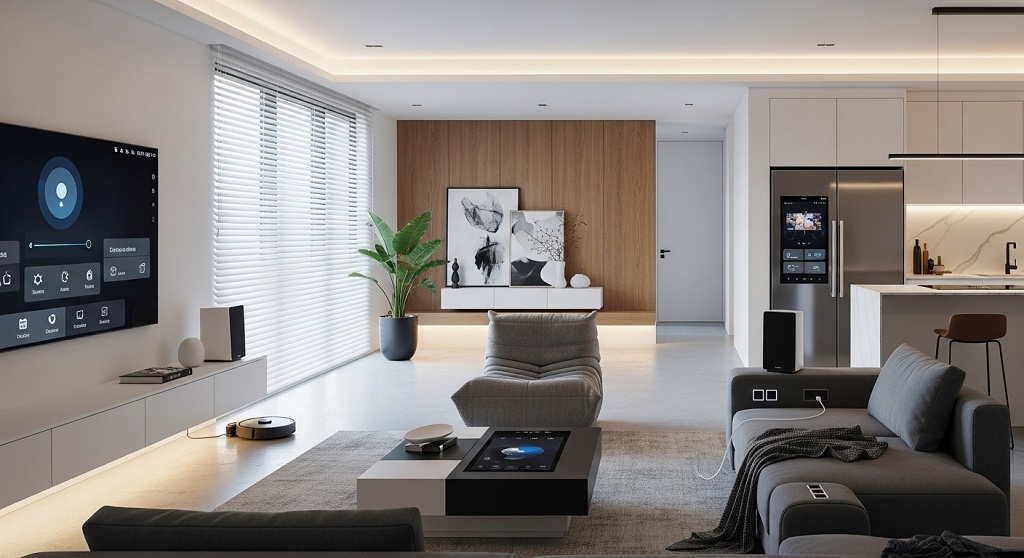
Smart home interior design is important in 2026 because homes are expected to improve efficiency, security, and convenience automatically. Integrated automation reduces electricity waste, supports remote control living, and prepares houses for future technologies while increasing long-term usability and resale value.
Modern homeowners face rising energy costs and increasing dependence on digital tools. Smart interiors solve both problems.
Automated lighting switches off unused rooms. Smart thermostats regulate cooling intelligently. Connected door systems improve entry security.
These improvements create measurable benefits:
- Lower electricity consumption
- Improved indoor comfort
- Higher safety standards
- Better property resale appeal
Buyers in 2026 increasingly expect smart infrastructure already installed. Homes without it often feel outdated.
Smart interior planning ensures technology blends naturally with furniture, wiring, and layout instead of appearing as afterthought additions.
How Does Smart Interior Design Work in Practice?
Smart interior design works by connecting lighting, climate systems, security devices, and appliances through centralized automation platforms controlled by apps, voice assistants, or sensors. These systems communicate with each other to adjust home conditions automatically based on schedules, occupancy, or environmental changes.
A connected interior operates through three main layers.
First is hardware. This includes sensors, switches, cameras, and controllers.
Second is software. Mobile apps manage routines and automation scenes.
Third is layout integration. Devices are positioned strategically during design planning.
Examples of automation scenes include:
- Lights dim automatically at night
- Temperature adjusts before arrival
- Doors lock after inactivity
- Curtains open with sunrise schedules
Instead of controlling devices individually, homeowners manage entire environments using predefined routines.
This approach increases efficiency without increasing daily effort.
Which Smart Devices Are Essential for Beginners?
Essential smart devices for beginners include smart lighting systems, voice assistants, automated plugs, security cameras, and smart thermostats. These entry-level tools provide immediate comfort improvements while building a foundation for advanced automation without requiring structural renovation.
Beginners should start with systems that provide the highest impact at the lowest complexity.
The most practical starting devices include:
- Smart LED lighting controls
- Voice assistant hubs
- Wi-Fi smart switches
- Smart door locks
- Energy monitoring plugs
These devices work independently but also support integration into full automation ecosystems later.
Starting small prevents unnecessary expenses while still improving daily convenience.
Once these devices are installed, homeowners can expand gradually into climate automation and advanced security systems.
What Are the Core Principles of Smart Home Layout Planning?
Smart home layout planning focuses on device placement, wireless coverage strength, accessibility, automation zones, and energy efficiency. Proper positioning ensures connected systems work reliably while maintaining a clean interior appearance without visible wiring clutter or technical disruption.
Technology placement affects performance as much as device selection.
Designers consider:
- Router coverage zones
- Sensor visibility angles
- Switch accessibility
- Appliance connectivity distance
Incorrect placement reduces automation reliability.
Smart interiors also separate automation zones such as:
- Living zone automation
- Sleep zone lighting control
- Security perimeter coverage
- Kitchen appliance control areas
This zoning structure improves response speed and reduces system conflicts.
How Does Smart Interior Design Improve Energy Efficiency?
Smart interior design improves energy efficiency by using automated lighting schedules, occupancy sensors, adaptive climate control, and appliance monitoring systems that reduce unnecessary electricity consumption. These features optimize power usage continuously without requiring manual adjustments from homeowners.
Energy waste usually happens through forgetfulness rather than necessity.
Smart interiors solve this automatically.
| Smart Feature | Energy Benefit | Impact Level |
|---|---|---|
| Motion sensor lighting | Turns lights off automatically | High |
| Smart thermostats | Optimizes cooling schedules | Very High |
| Smart plugs | Stops standby power waste | Medium |
| Automated curtains | Reduces indoor heat gain | Medium |
These improvements reduce long-term electricity costs significantly.
They also increase sustainability performance for modern housing standards.
Is Smart Home Interior Design Expensive to Implement?
Smart home interior design is not necessarily expensive because many entry-level automation tools are affordable and scalable. Homeowners can begin with small upgrades like lighting or plugs and expand gradually without replacing existing furniture or electrical infrastructure.
Cost depends on integration level rather than technology availability.
Entry-level upgrades often require minimal investment compared to structural renovation.
Budget-friendly starting strategies include:
- Installing smart bulbs instead of replacing fixtures
- Using wireless cameras instead of wired systems
- Adding plug-based automation instead of wall rewiring
- Using app-controlled switches before full automation hubs
This phased approach keeps costs manageable while delivering immediate improvements.
Over time, homeowners can expand automation across entire rooms.
How Can Beginners Start Designing a Smart Interior Step by Step?
Beginners can start designing a smart interior by identifying automation priorities, selecting compatible devices, improving Wi-Fi coverage, installing entry-level smart lighting systems, and gradually integrating climate and security controls into a centralized automation platform.
Smart interiors succeed when implemented strategically rather than randomly.
A simple beginner roadmap includes:
- Audit current lighting and appliance usage
- Upgrade router coverage if needed
- Install smart lighting first
- Add voice assistant control
- Integrate security monitoring
- Expand automation room by room
This structured sequence prevents compatibility issues.
It also ensures each upgrade improves daily usability immediately.
Conclusion: Should You Start Planning a Smart Interior in 2026?
Smart home interior design is no longer experimental technology. It is a practical approach to building efficient, secure, and comfortable living environments.
Instead of treating automation as decoration, modern interiors integrate technology directly into layout decisions.
This shift improves energy savings, simplifies routines, and increases long-term property value.
The best strategy is to start small. Upgrade lighting first. Improve connectivity next. Add security systems gradually.
Over time, these upgrades transform ordinary spaces into responsive living environments that adapt automatically to daily needs.
If you begin planning today, your home will remain compatible with future smart technologies rather than requiring expensive retrofitting later.
Start with one room. Add one device. Build your smart interior step by step.
Frequently Asked Questions
Is smart home interior design suitable for small apartments?
Yes. Smart lighting, compact sensors, and voice assistants work especially well in small apartments because they reduce manual control needs and maximize limited space efficiency without requiring structural renovation.
Do smart interiors increase property value?
Homes with integrated automation systems are more attractive to buyers because they offer improved security, energy savings, and convenience. This often increases resale competitiveness in modern housing markets.
Can smart devices work without internet access?
Some devices continue operating locally through internal automation hubs, but remote control features usually require internet connectivity for full functionality and monitoring access.
Are smart interiors difficult to maintain?
Maintenance is simple because most systems update automatically through apps. Occasional firmware updates and battery replacements are typically the only requirements for smooth operation.
Is professional installation necessary?
Entry-level devices such as smart bulbs and plugs do not require professional installation. Advanced climate systems or integrated security networks may benefit from expert setup.
Can smart interiors reduce electricity bills?
Yes. Automated lighting schedules, occupancy detection, and optimized cooling control significantly reduce unnecessary energy usage over time.
What is the first smart upgrade beginners should install?
Smart lighting is the best starting point because it improves comfort immediately, requires minimal setup effort, and integrates easily with future automation systems.
Read More Also: How to Remove Smoke Smell After Cooking: A Comprehensive Guide
Learn More: How to Renovate Small Classic Kitchen to Modern Kitchen
You May Like
Can You Use Push Fit Fittings on Copper Pipe? What You Need to Know