

Sleep is one of the most important things you can do for your health. Yet many people overlook one simple factor that affects sleep quality every single night: the pillow. What your head rests on matters more than most people realize. It affects your posture, your breathing, and even the air you inhale while you sleep.
Organic latex pillows have grown in popularity over recent years. They offer a natural alternative to pillows made with synthetic foam, chemical treatments, or mystery materials. However, with so many options on the market, choosing the right one can feel overwhelming. This guide walks you through everything you need to know, from understanding what latex actually is to spotting trustworthy certifications and avoiding common shopping mistakes.
What Is an Organic Latex Pillow
Latex is a milky sap that comes from rubber trees, specifically the Hevea brasiliensis tree. When harvested sustainably, it is a renewable resource. The sap is processed into a foam-like material that is soft, supportive, and naturally resilient.
An organic latex pillow is made from latex that has been grown and harvested without synthetic pesticides or fertilizers. The manufacturing process also avoids harsh chemicals. The result is a pillow that feels comfortable and contains far fewer harmful substances than conventional options.
There are two main types of latex processing: Dunlop and Talalay. Dunlop latex is denser and firmer. It is made by pouring the latex into a mold and baking it. Talalay latex goes through a more involved process that includes freezing, which creates a lighter and softer feel. Both types are used in pillows, and both can be organic. Your preference will depend on how you sleep and how much support you need.
Why Your Pillow Material Actually Matters
Most people spend between six and nine hours in bed each night. During that time, your face and airways are in close contact with your pillow. Conventional pillows are often made from polyester fill, memory foam, or down treated with chemicals. These materials can off-gas volatile organic compounds, also called VOCs, into the air you breathe while you sleep.
Additionally, synthetic materials tend to trap heat and moisture. This creates an environment where dust mites and mold can thrive. For anyone with allergies or asthma, this is a real concern.
Organic latex behaves differently. It is naturally breathable, which means air circulates through the material. It is also naturally resistant to dust mites, mold, and mildew. Therefore, it is a practical choice even for sleepers who do not have specific health concerns but simply want a cleaner sleep environment.
Key Features to Look for When Buying
Not all latex pillows labeled “natural” or “organic” are the same. Knowing what to look for protects you from misleading marketing claims.
Here are the most important features to evaluate:
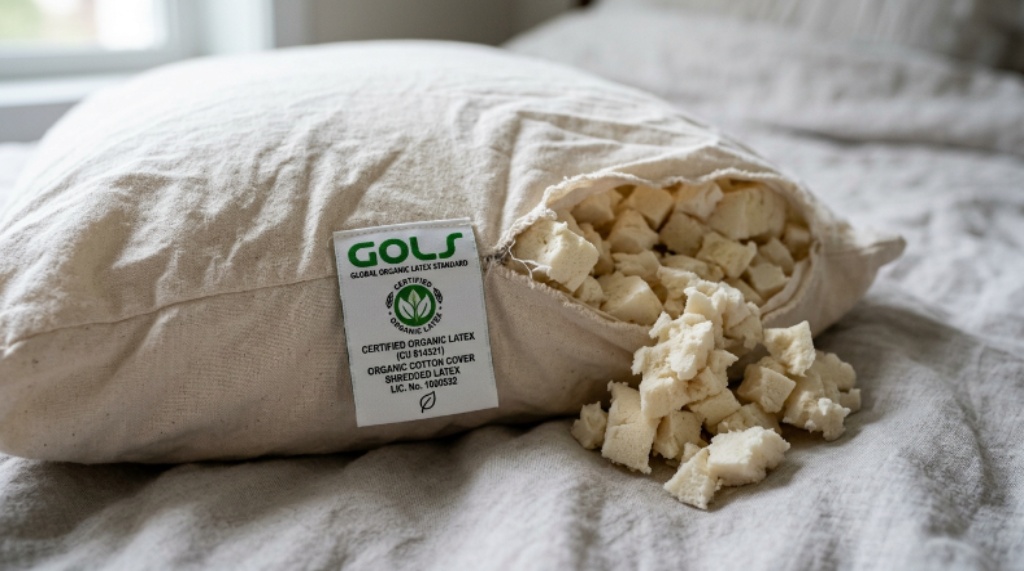
- Certification: Look for GOLS certification, which stands for Global Organic Latex Standard. This confirms the latex content is genuinely organic. GOTS, or Global Organic Textile Standard, applies to the fabric cover and indicates it meets organic textile requirements.
- Latex percentage: Some pillows blend natural latex with synthetic latex to cut costs. A truly organic option should contain a high percentage of natural latex, ideally above 95 percent.
- Pillow fill type: Shredded latex pillows allow you to adjust the loft by adding or removing fill. Solid latex pillows offer a fixed shape and are better for people who prefer consistent support.
- Cover material: The outer cover should be made from organic cotton or organic wool. These materials are breathable, soft, and free from synthetic treatments.
- Firmness level: Latex pillows come in soft, medium, and firm options. Side sleepers generally need more loft and firmness. Back sleepers do well with medium support. Stomach sleepers benefit from a softer, flatter pillow.
Understanding Certifications and What They Mean
Certifications exist because the word “organic” on a product label does not always carry legal weight. A company can market a pillow as natural or eco-friendly without meeting any specific standard. This is why third-party certifications matter so much.
GOLS certification is the gold standard for latex. It requires that the latex contain at least 95 percent certified organic raw material. It also sets limits on the use of chemicals during processing and requires fair labor practices at production facilities.
OEKO-TEX Standard 100 is another useful certification. It tests finished products for harmful substances, including pesticides, heavy metals, and formaldehyde. A pillow that carries this certification has been verified to be safe for contact with skin.
Additionally, some brands carry the Rainforest Alliance certification, which speaks to the environmental sustainability of rubber tree farming. This is particularly relevant if the environmental impact of your purchase matters to you. Choosing sustainable pillows with verified certifications is one of the most reliable ways to ensure you are getting what you pay for.
How Latex Pillows Support Better Sleep Posture
Support and alignment are central to sleep quality. A pillow that is too flat, too firm, or the wrong shape can strain your neck and shoulders. Over time, poor sleep posture contributes to morning stiffness, headaches, and disrupted sleep.
Latex naturally contours to the shape of your head and neck without bottoming out. Unlike a soft polyester pillow that quickly compresses under pressure, latex pushes back gently. This keeps your spine in a more neutral position throughout the night.
Furthermore, latex is resilient. It returns to its original shape quickly after you move. This means the support stays consistent whether you start the night on your back and shift to your side later. Sleepers who toss and turn benefit from this adaptive quality.
Comparing Organic Latex to Other Natural Sleep Products
The market for natural sleep products has expanded considerably. You may encounter pillows made from buckwheat, kapok, wool, or down. Each has its own set of benefits and drawbacks.
Buckwheat pillows are firm and adjustable, but many sleepers find them noisy and heavy. Kapok is a plant-based fiber that is soft and lightweight, though it compresses over time and loses loft. Wool pillows regulate temperature well and resist moisture, but they may feel too firm or too light depending on the fill amount. Down pillows are soft and luxurious, but they require significant maintenance, lose shape quickly, and are not suitable for people with feather allergies.
Organic latex stands out because it combines durability, natural resilience, temperature regulation, and hypoallergenic properties in one material. However, it is heavier than most alternatives and comes at a higher price point. For many sleepers, the long-term benefits justify the investment.
Price, Durability, and Long-Term Value
Organic latex pillows cost more than conventional pillows upfront. A quality option typically ranges from sixty to one hundred fifty dollars or more. This can feel like a significant spend on a single pillow.
However, the lifespan of a quality latex pillow makes the cost more reasonable over time. A well-made latex pillow can last three to five years or longer with proper care. Conventional pillows, by contrast, usually need replacing every one to two years as they lose shape and accumulate allergens.
To extend the life of your pillow, use a washable pillow protector over the cover. Spot clean the latex itself if needed, and allow it to air out occasionally. Avoid placing it in direct sunlight for long periods, as UV exposure can degrade the latex over time.
Red Flags to Watch for When Shopping
Shopping for any sleep product requires a little skepticism. Some brands use vague language to make products appear more natural than they are.
Watch out for pillows described only as “natural” or “plant-based” without a supporting certification. These terms have no regulated definition in the bedding industry. Similarly, be cautious of pillows that list latex as just one of many fill materials without specifying the percentage.
Price can also be a signal. Genuine organic latex is more expensive to source and produce. A pillow priced very low and marketed as fully organic is likely cutting corners somewhere. Checking for eco-friendly bedding certifications from recognized bodies is always a smarter move than relying on marketing language alone.
Conclusion
Choosing the right pillow is a small decision with a big impact on your nightly rest. Organic latex pillows offer a genuinely compelling combination of comfort, durability, health benefits, and environmental responsibility. They support proper sleep posture, resist allergens, and breathe well throughout the night.
The most important steps are to verify certifications like GOLS and OEKO-TEX, match the pillow loft and firmness to your sleep position, and look closely at what the cover is made from. Additionally, consider the long-term value rather than just the upfront cost. A quality organic latex pillow lasts significantly longer than cheaper alternatives and pays off in better sleep over time.
Therefore, if you are ready to invest in a cleaner, more supportive sleep environment, an organic latex pillow is one of the best places to start. It is a simple upgrade that most sleepers notice right away.
Frequently Asked Questions
Is an organic latex pillow good for people with allergies?
Yes. Organic latex is naturally resistant to dust mites, mold, and mildew, making it one of the best pillow choices for allergy sufferers. It does not harbor the common allergens that synthetic and down pillows tend to accumulate over time.
What is the difference between Dunlop and Talalay latex in pillows?
Dunlop latex is denser and firmer, making it a good choice for sleepers who need strong neck support. Talalay latex is lighter and softer due to its more elaborate manufacturing process. Both can be certified organic, and the right choice depends on your personal comfort preference.
How long does an organic latex pillow last?
A well-maintained organic latex pillow typically lasts between three and five years. Using a pillow protector and airing it out periodically can help extend its lifespan beyond that range.
Can I wash an organic latex pillow?
You should not submerge latex in water or machine wash it. Instead, spot clean any stains with a mild detergent and damp cloth, then allow the pillow to air dry fully. The removable cover can usually be washed according to its care label instructions.
How do I know if a latex pillow is truly organic?
Look for third-party certifications such as GOLS for the latex content and GOTS or OEKO-TEX for the cover fabric. These certifications are issued by independent organizations and require regular audits, making them far more reliable than unverified marketing claims on packaging.
You May Like

Memphis Home and Lifestyle Show 2026: Dates, Tickets, and Home Ideas