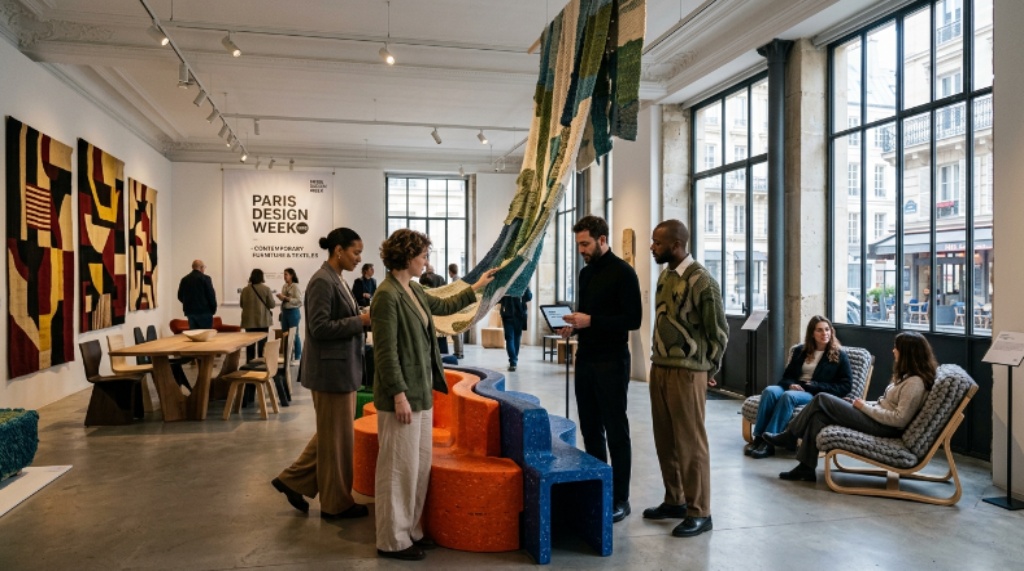
Paris Design Week is back, and the design world is buzzing. From September 10 to 19, 2026, the French capital transforms into a living showcase of creativity. Galleries, concept stores, studios, and landmark venues across the city open their doors to thousands of visitors. Whether you are a seasoned design professional or a curious newcomer, there is no better place to experience what is shaping the future of interiors, objects, and craft.
This year, the energy feels different. The theme “Pulse in Motion,” developed in partnership with trend agency NellyRodi, runs like a current through every showroom and installation. It is bold, it is optimistic, and it signals that design is no longer standing still.
A City That Becomes a Canvas
One of the most talked-about aspects of Paris Design Week is how it spills far beyond any single venue. More than 100 addresses across Paris take part. You will find exhibitions in the Marais, surprise installations in Saint-Germain, and gallery openings tucked behind discreet facades in the 7th arrondissement.
This year, the 3rd arrondissement is a particular focal point. Paris Design Week Factory has taken over the area, filling Espace Commines and the Galeries Joseph with the work of emerging designers. Additionally, the Bourdelle Museum is hosting a sensitive installation by designer Anthony Guerrée, proving that heritage spaces and contemporary design can speak to each other beautifully.
The city, therefore, becomes the exhibition itself. You do not just visit design — you walk through it.
The “Pulse in Motion” Theme Explained
So what does “Pulse in Motion” actually mean? The theme celebrates design as a living, breathing force. It rejects stillness. It embraces energy, movement, and sensory experience.
Studio Masquespacio, the Valencia-based design duo, was appointed as ambassador for this edition. They have created two major installations — one at the Maison & Objet fair at Paris Nord Villepinte and one across the city. They also designed the visual identity for the event, including the official poster, which presents a dual perspective image that reflects their 360-degree artistic approach.
The result is a design week that feels immersive from the first glance. Every element, from the signage to the showroom staging, carries the spirit of motion.
The Return of Craft and the Handmade
Perhaps the most discussed shift this year is the renewed love for craft. Across showrooms and galleries, handmade objects are being celebrated rather than hidden. There is a renewed reverence for the handmade, a more expressive use of color and light, and a sophisticated dialogue between historic French savoir-faire and modern design language.
This is not nostalgia. It is a deliberate choice. Designers are pushing back against the mass-produced and the generic. They are choosing slow processes, natural materials, and visible maker’s marks. A ceramic vessel that shows the pressure of a thumb. A textile with a stitch that is slightly irregular. These are not flaws — they are the point.
Lelièvre Paris made headlines by taking over La Pagoda, a historic Parisian landmark, to unveil three new collections. One of them, titled “Escales Lointaines,” weaves travel narratives through basketry-inspired textures and botanical references. Another, “Îles du Vent,” is the brand’s first indoor-outdoor collection, drawing on Caribbean light and tropical landscapes. The collections feel rich, textural, and deeply human.
Light as the Main Character
Lighting stepped out of the background this year, and people are talking about it. Across showrooms and galleries, light fixtures are being treated as bold sculptural objects rather than functional afterthoughts.
Rubelli’s 2026 collection “Luce,” meaning “light” in Italian, captures this shift well. It explores how light interacts with shape, color, and space. The collection treats fabric as an active participant in the environment — filtering and reflecting light in ways that shift throughout the day. It marks a clear departure from the house’s more traditional approach.
Elsewhere, lighting designers are playing with saturated colors and unusual proportions. A fixture is no longer just a source of illumination. It is a mood-setter, a focal point, and sometimes even a statement about the room itself. This lighting trend feels playful and atmospheric, capable of transforming a space through tone as much as through brightness.
Color, Pattern, and the Confidence to Go Big
Restraint is out. Confidence is in. Rich, saturated colors and boldly scaled patterns have been impossible to miss across the textile halls of Maison & Objet and throughout the Parisian showrooms.
From unapologetic prints to whimsical hand-stitched embroidery, textiles are sending a clear message: the era of safe, neutral interiors is fading. Designers are inviting people to live in spaces that feel genuinely personal, even joyful.
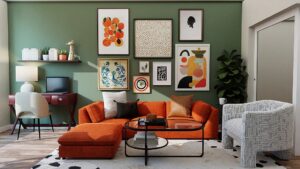
However, this is not maximalism for its own sake. The best presentations show that bold color works when it is chosen with conviction. A deep ochre wall, a coral velvet sofa, a geometric rug in midnight blue — these choices tell a story. They say something about the person who made them.
Little Greene’s collaboration with the National Trust, “In the Garden,” offers another take on this. The collection celebrates the people who shaped Britain’s great gardens, and it does so through a palette that is confident without being loud. It proves that boldness can be quiet too.

Emerging Designers Take the Stage
Paris Design Week Factory is one of the most exciting parts of the event. Often compared to Andy Warhol’s Factory, this showcase is devoted entirely to emerging designers with less than five years of professional experience.
This year, the Factory is divided into four thematic exhibitions: Collectible, Publishing (Editions), Craft, and a Special Focus on China. Each section highlights work that is original, produced within the last 18 months, and ready for the world to see.
What makes the Factory so compelling is the directness of it. There are no established names here, no familiar brands. Instead, you get the raw excitement of someone presenting their vision for the very first time. Some of these designers will go on to define the next decade of interiors. Therefore, paying attention now feels important.
The Past Reveals the Future
Running alongside the September events, Maison & Objet has also adopted the theme “Past Reveals Future” for its broader 2026 programming. The idea is that heritage and modernity are not opposites — they are partners.
This is visible everywhere. Archival revivals are one of the notable trends of the year. Design houses are reaching back into their own histories, reissuing classic pieces or reinterpreting them for a new context. The result is work that carries memory without feeling trapped by it.
Additionally, institutions across Paris are opening their private mansions and historic spaces to contemporary creators. When a centuries-old hôtel particulier becomes the setting for a new furniture collection, something interesting happens. The past does not overshadow the work — it elevates it.
Why the World Comes to Paris for Design
It is worth pausing to ask why Paris, specifically, commands this kind of global attention every year. The answer has something to do with the city’s particular relationship to style. Paris puts style above fashion, which is what makes the city so popular around the world. Style, unlike fashion, does not expire.
Paris Design Week also benefits enormously from its connection to Maison & Objet, the leading trade fair for home décor and interiors. The fair draws over 1,000 exhibitors from across the globe. It creates a density of design talent in the city that is simply unmatched anywhere else.
Furthermore, the event is genuinely inclusive. Professionals and members of the public alike are welcome at most venues. You do not need an industry badge to walk into a gallery opening or attend a workshop. That openness makes the week feel alive in a way that more exclusive events simply cannot.
Conclusion
Paris Design Week 2026 is more than a series of launches and exhibitions. It is a statement about where design is heading. The themes running through this year’s event — craft, light, bold color, emerging talent, and the dialogue between past and present — point to a future that is warmer, more personal, and more expressive than the interiors of recent years.
The “Pulse in Motion” theme captures it well. Design is alive. It moves. It responds. And for ten days in September, there is nowhere better to feel that than in the streets, showrooms, and galleries of Paris.
Whether you attend in person or follow from afar, the conversations happening at this year’s event are ones worth joining.
Frequently Asked Questions
When does Paris Design Week 2026 take place?
Paris Design Week 2026 runs from September 10 to 19, 2026. It is a 10-day event organized in connection with Maison & Objet, which takes place September 10 to 14 at Paris Nord Villepinte.
Is Paris Design Week open to the public?
Yes. Most events, gallery openings, and venue presentations are open to both design professionals and the general public. Some trade fair sessions at Maison & Objet require a professional ticket or registration.
What is the theme of Paris Design Week 2026?
The theme for the September 2026 edition is “Pulse in Motion,” developed with trend agency NellyRodi and brought to life by ambassador Studio Masquespacio. It celebrates bold, energetic, and forward-moving design.
What is Paris Design Week Factory?
Paris Design Week Factory is a curated showcase dedicated to emerging designers with fewer than five years of professional experience. In 2026, it is held in the Marais district at Espace Commines and Galeries Joseph, from September 10 to 14.
How many venues participate in Paris Design Week?
More than 100 venues across Paris take part each year, including galleries, schools, concept stores, studios, cultural centers, and historic private mansions. The event spreads across multiple arrondissements throughout the city.
Discover the Location on Google Maps:
You May Like
Practical Ways to Improve Productivity While Working From Home