Choosing non-toxic cookware is a critical decision for health-conscious individuals who want to minimize exposure to harmful chemicals while cooking. With growing awareness of the potential risks associated with certain cookware materials, the demand for safe, non-toxic options has surged. This article provides an in-depth exploration of how to select non-toxic cookware, covering its history, current state, key concepts, benefits, challenges, and future trends. It includes a review of popular options, answers to frequently asked questions, and a conclusion to guide your decision-making process.
History of Cookware Materials
Early Cookware: From Stone to Metal
Cookware has evolved significantly over millennia, reflecting advancements in technology and cultural priorities.
-
Stone and Clay (Prehistory–1000 BCE):
-
Used for their natural availability and heat resistance.
-
Non-toxic but fragile and limited in functionality.
-
Examples: Earthenware pots, stone griddles.
-
-
Bronze and Iron (1000 BCE–1800 CE):
-
Introduced durability and better heat distribution.
-
Iron was naturally non-toxic but prone to rusting.
-
Challenges: Heavy weight and maintenance needs.
-
Industrial Revolution and Modern Materials
The 19th and 20th centuries brought significant changes to cookware manufacturing.
-
Aluminum (Early 1900s):
-
Lightweight and affordable but raised concerns about leaching into food at high temperatures.
-
Often anodized to reduce reactivity.
-
-
Teflon and Non-Stick Coatings (1930s–Present):
-
Polytetrafluoroethylene (PTFE), branded as Teflon, revolutionized cooking with its non-stick properties.
-
Concerns emerged about perfluorooctanoic acid (PFOA), a chemical used in PTFE production, linked to health risks.
-
-
Stainless Steel (Mid-20th Century):
-
Durable, non-reactive, and resistant to corrosion.
-
Became a staple for safe cookware but often combined with other materials for better heat conduction.
-
Rise of Non-Toxic Awareness
By the late 20th century, health concerns about chemical leaching prompted a shift toward non-toxic cookware.
-
PFOA Phase-Out (2010s):
-
Manufacturers eliminated PFOA from non-stick coatings due to regulatory pressure.
-
Introduction of “PFOA-free” and ceramic-based non-stick options.
-
-
Consumer Demand:
-
Growing interest in natural materials like cast iron, glass, and pure ceramic.
-
Increased scrutiny of heavy metals (e.g., lead, cadmium) in cookware.
-
Current State of Non-Toxic Cookware
Defining Non-Toxic Cookware
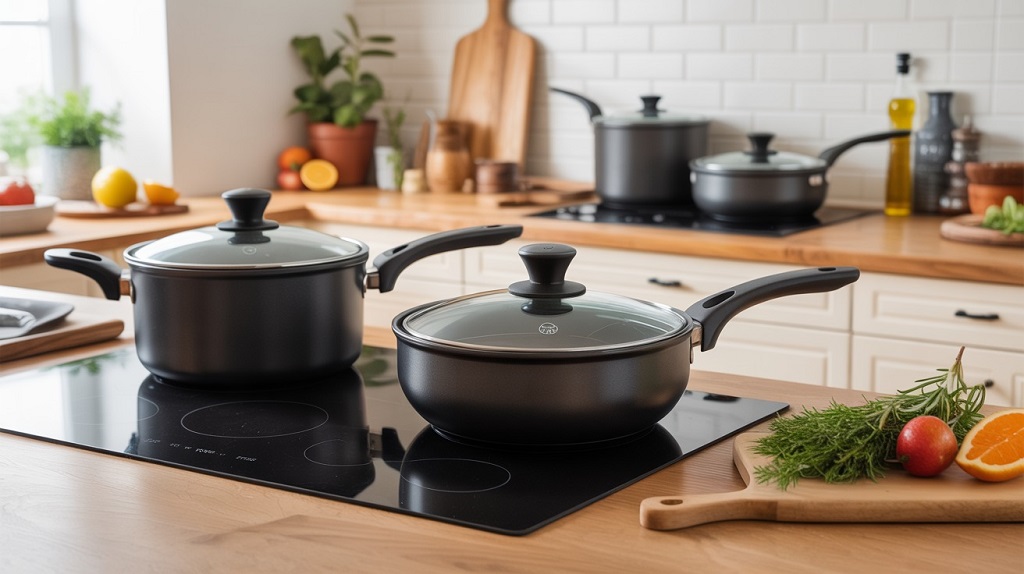
Non-toxic cookware is designed to minimize the release of harmful substances into food during cooking. Key considerations include material composition, manufacturing processes, and performance under heat.
-
Material Safety:
-
Avoids leaching of heavy metals, PFAS (per- and polyfluoroalkyl substances), or other toxins.
-
Examples: Stainless steel, cast iron, ceramic, glass.
-
-
Certifications:
-
Look for labels like “PFOA-free,” “PFAS-free,” or third-party certifications (e.g., FDA approval, Proposition 65 compliance in California).
-
-
Consumer Trends:
-
Preference for sustainable, eco-friendly brands.
-
Demand for transparency in sourcing and production.
-
Popular Non-Toxic Cookware Materials
Several materials dominate the non-toxic cookware market, each with unique properties.
-
Stainless Steel:
-
Pros: Non-reactive, durable, corrosion-resistant.
-
Cons: Poor heat conductivity unless paired with aluminum or copper cores.
-
Best for: Searing, sautéing, and everyday cooking.
-
-
Cast Iron:
-
Pros: Naturally non-stick when seasoned, retains heat well.
-
Cons: Heavy, requires maintenance to prevent rust.
-
Best for: Slow cooking, baking, and grilling.
-
-
Ceramic and Ceramic-Coated:
-
Pros: Non-stick, free of PTFE/PFAS, easy to clean.
-
Cons: Coating may wear over time with improper use.
-
Best for: Low- to medium-heat cooking, delicate foods.
-
-
Glass:
-
Pros: Completely non-reactive, safe for high temperatures.
-
Cons: Fragile, not suitable for stovetop cooking.
-
Best for: Baking and oven use.
-
-
Carbon Steel:
-
Pros: Lightweight alternative to cast iron, naturally non-stick when seasoned.
-
Cons: Requires seasoning and maintenance.
-
Best for: High-heat cooking, woks, and pans.
-
Table: Comparison of Non-Toxic Cookware Materials
|
Material |
Non-Toxic |
Durability |
Heat Conductivity |
Maintenance |
Best Use Cases |
|---|---|---|---|---|---|
|
Stainless Steel |
Yes |
High |
Moderate (with core) |
Low |
Sautéing, searing |
|
Cast Iron |
Yes |
High |
High |
High |
Slow cooking, baking |
|
Ceramic |
Yes |
Moderate |
Moderate |
Low |
Low-heat cooking, eggs |
|
Glass |
Yes |
Low |
Low |
Low |
Baking, casseroles |
|
Carbon Steel |
Yes |
High |
High |
High |
Stir-frying, high-heat |
Key Concepts in Choosing Non-Toxic Cookware
Understanding Chemical Risks
Certain chemicals in cookware can pose health risks, especially when heated.
-
PFAS (e.g., PFOA, PTFE):
-
Linked to cancer, thyroid issues, and immune system disruption.
-
Found in older non-stick coatings; newer “PFAS-free” options are safer.
-
-
Heavy Metals (e.g., Lead, Cadmium):
-
May leach from poorly made ceramics or enamels.
-
Long-term exposure linked to neurological and kidney damage.
-
-
Aluminum:
-
Uncoated aluminum can leach into acidic foods (e.g., tomatoes, citrus).
-
Anodized aluminum is safer due to its sealed surface.
-
Factors to Consider
When selecting non-toxic cookware, evaluate the following:
-
Material Composition:
-
Ensure the cookware is free of harmful coatings or additives.
-
Check for third-party testing or certifications.
-
-
Cooking Style:
-
High-heat cooking (e.g., searing) requires durable materials like stainless steel or cast iron.
-
Low-heat cooking (e.g., eggs) suits ceramic or non-stick options.
-
-
Maintenance Needs:
-
Cast iron and carbon steel require seasoning to maintain non-stick properties.
-
Stainless steel and ceramic are low-maintenance.
-
-
Budget:
-
High-quality non-toxic cookware can be expensive but offers long-term value.
-
Affordable options exist, but avoid cheap, untested brands.
-
-
Brand Reputation:
-
Research brands for transparency and safety commitments.
-
Examples: Le Creuset, Staub, GreenPan, Lodge.
-
How to Verify Safety
-
Read Labels:
-
Look for “PFOA-free,” “PFAS-free,” or “lead-free” claims.
-
Be wary of vague marketing terms like “natural” without specifics.
-
-
Check Certifications:
-
FDA approval, NSF certification, or compliance with EU safety standards.
-
Proposition 65 compliance for California residents.
-
-
Test for Quality:
-
Avoid cookware with uneven coatings or rough surfaces.
-
For ceramics, ensure the glaze is smooth and intact.
-
Benefits of Non-Toxic Cookware
Health Benefits
-
Reduced Chemical Exposure:
-
Minimizes ingestion of PFAS, heavy metals, or other toxins.
-
Especially important for pregnant women, children, and those with chronic illnesses.
-
-
Improved Food Safety:
-
Non-reactive materials preserve the flavor and nutritional value of food.
-
Prevents metallic or chemical tastes in dishes.
-
Environmental Benefits
-
Sustainable Materials:
-
Cast iron and stainless steel are recyclable and long-lasting.
-
Reduces waste compared to frequently replaced non-stick pans.
-
-
Eco-Friendly Production:
-
Many non-toxic brands prioritize ethical sourcing and low-impact manufacturing.
-
Practical Benefits
-
Versatility:
-
Suitable for various cooking methods, from stovetop to oven.
-
Compatible with induction, gas, and electric stoves (check compatibility).
-
-
Longevity:
-
High-quality non-toxic cookware lasts decades with proper care.
-
Example: Well-maintained cast iron can be passed down generations.
-
Challenges of Non-Toxic Cookware
Cost
-
Higher Upfront Investment:
-
Premium brands like All-Clad or Le Creuset can cost $100–$500 per piece.
-
Budget options may compromise on quality or durability.
-
-
Balancing Cost and Safety:
-
Cheap non-toxic cookware may lack certifications or use subpar materials.
-
Learning Curve
-
Maintenance Requirements:
-
Cast iron and carbon steel need regular seasoning to prevent rust and maintain non-stick properties.
-
Improper care can lead to sticking or damage.
-
-
Cooking Adjustments:
-
Non-stick ceramic requires lower heat to avoid damaging the coating.
-
Stainless steel may stick if not preheated properly.
-
Misinformation and Greenwashing
-
Vague Claims:
-
Terms like “eco-friendly” or “non-toxic” may be used without substantiation.
-
Always verify with third-party certifications.
-
-
Confusing Regulations:
-
Safety standards vary by country, complicating global purchases.
-
Example: EU bans certain PFAS, but some countries lag behind.
-
Future Trends in Non-Toxic Cookware
Innovations in Materials
-
Advanced Ceramic Coatings:
-
New formulations promise greater durability and heat resistance.
-
Example: Sol-gel ceramic coatings with improved scratch resistance.
-
-
Bio-Based Non-Stick:
-
Research into plant-based or mineral-derived non-stick surfaces.
-
Aims to eliminate synthetic chemicals entirely.
-
Regulatory Changes
-
Global PFAS Bans:
-
The EU and U.S. are phasing out PFAS in cookware by 2030.
-
Expect stricter testing and labeling requirements.
-
-
Heavy Metal Restrictions:
-
Increased scrutiny of lead and cadmium in ceramics and enamels.
-
Push for universal safety standards.
-
Consumer-Driven Trends
-
Transparency:
-
Brands are providing detailed sourcing and testing information.
-
Example: X posts from cookware brands sharing lab results.
-
-
Minimalist Cookware Sets:
-
Focus on multi-functional pieces to reduce clutter and waste.
-
Example: Single skillets that work for frying, baking, and roasting.
-
Review of Popular Non-Toxic Cookware Brands
Le Creuset (Cast Iron and Enameled Cast Iron)
-
Pros:
-
Exceptional durability and heat retention.
-
Non-reactive enamel coating, free of heavy metals.
-
Lifetime warranty.
-
-
Cons:
-
Expensive ($200–$400 per piece).
-
Heavy, not ideal for those with mobility issues.
-
-
Best For: Serious home cooks, oven-to-table cooking.
GreenPan (Ceramic Non-Stick)
-
Pros:
-
PFAS-free, lightweight, and easy to clean.
-
Affordable ($50–$150 per piece).
-
Even heat distribution with Thermolon coating.
-
-
Cons:
-
Coating may wear with high-heat or abrasive cleaning.
-
Not ideal for searing or high-temperature cooking.
-
-
Best For: Everyday cooking, health-conscious beginners.
All-Clad (Stainless Steel)
-
Pros:
-
Non-reactive, durable, and dishwasher-safe.
-
Excellent heat conductivity with aluminum core.
-
Made in the USA with rigorous safety standards.
-
-
Cons:
-
Pricey ($100–$300 per piece).
-
Learning curve to prevent sticking.
-
-
Best For: Professional-grade cooking, versatile use.
Lodge (Cast Iron)
-
Pros:
-
Affordable ($20–$60 per piece).
-
Naturally non-stick when seasoned.
-
Extremely durable and versatile.
-
-
Cons:
-
Requires regular maintenance.
-
Heavy and prone to rust if neglected.
-
-
Best For: Budget-conscious cooks, rustic cooking.
Frequently Asked Questions (FAQs)
1. Is non-toxic cookware worth the investment?
Yes, non-toxic cookware reduces health risks and lasts longer, offering better value over time. High-quality options like stainless steel or cast iron can last decades, offsetting initial costs.
2. Can I use non-toxic cookware on an induction stove?
Most non-toxic cookware (e.g., stainless steel, cast iron, carbon steel) is induction-compatible due to its magnetic properties. Check product specifications, as ceramic or glass may not work.
3. How do I know if my cookware is truly non-toxic?
Look for certifications like “PFOA-free,” “PFAS-free,” or FDA approval. Research the brand’s testing processes and avoid products with vague claims or no third-party verification.
4. What’s the safest way to clean non-toxic cookware?
Use mild dish soap and a soft sponge for stainless steel and ceramic. For cast iron, avoid soap; clean with hot water and a brush, then season with oil. Always follow manufacturer guidelines.
5. Are there any non-toxic non-stick options?
Yes, ceramic-coated cookware (e.g., GreenPan, Caraway) is a safe non-stick alternative, free of PTFE and PFAS. Ensure proper care to maintain the coating’s longevity.
Read More Also: Cheap DIY Garden Path Ideas: Transform Your Yard on a Budget
Conclusion
Choosing non-toxic cookware is an investment in your health, the environment, and your culinary experience. By understanding the history, materials, and safety considerations, you can make informed decisions that align with your cooking style and budget. While challenges like cost and maintenance exist, the benefits of reduced chemical exposure and long-lasting performance outweigh the drawbacks. As innovations and regulations evolve, the future of non-toxic cookware looks promising, with safer, more sustainable options on the horizon. Start by assessing your needs, researching reputable brands, and prioritizing certified, high-quality materials to build a kitchen that’s both safe and functional.
You May Like

Practical Ways to Improve Productivity While Working From Home