
Carpeted stairs are one of the hardest areas to keep clean in any home. Dust, pet hair, crumbs, and debris all settle deep into the fibers. Standard upright vacuums are too large and awkward to maneuver on each step. Canister models can work, but they are often heavy and cumbersome on a staircase. This is exactly why so many homeowners turn to a compact solution that fits the job perfectly.
Choosing the right vacuum for this task takes more thought than most people expect. The wrong pick leaves you frustrated, and your stairs still look dirty. However, the right one makes the job quick, easy, and even satisfying. This guide will help you understand what to look for so you can make a confident, informed decision.
Why Standard Vacuums Fall Short on Stairs
Most full-size vacuums are built for open floor space. They are designed to roll across wide rooms, not navigate narrow steps. When you try to use them on stairs, problems appear quickly. The hose may not reach comfortably. The body of the machine may tip over on the edge of a step. The suction head may be too wide to fit into corners.
Additionally, upright vacuums are heavy. Carrying one up and down a staircase while trying to clean is tiring. It also creates a safety risk. One misstep with a heavy machine in your hands can lead to a serious fall. Therefore, using a large vacuum on stairs is not just inconvenient. It can be genuinely dangerous.
Compact, lightweight vacuums solve all of these problems. They are easier to carry, easier to control, and purpose-built for confined spaces. However, not every small vacuum is created equal, and choosing the wrong one will still leave you with poor results.
Understanding Your Staircase Before You Shop
Before you buy anything, take a few minutes to assess your staircase. The layout of your stairs will directly influence the type of vacuum you need. Consider the following questions.
How wide are your stairs? Some staircases are very narrow, especially in older homes. A wider cleaning head will cover more ground per pass on spacious stairs. However, a narrow staircase needs a more compact attachment to reach the edges of each tread properly.
Are the stairs fully carpeted, or do they have bare edges? Some stairs have carpet runners down the center with exposed wood on the sides. This means you may need a vacuum that works well on both carpet and hard surfaces.
How deep is the carpet pile? Low-pile carpet is easier to clean and requires less suction. High-pile or shaggy carpet holds more debris and needs stronger airflow to pull dirt out of the fibers.
Do you have pets? Pet hair is particularly stubborn. It clings to carpet fibers and resists weak suction. If pets are part of your household, this becomes one of your most important buying considerations.
The Most Important Features to Look For
Once you understand your staircase, you can evaluate vacuums based on the features that matter most for your specific situation. Here is what deserves your close attention.
Suction Power
Suction is the most critical feature of any vacuum. On carpet, you need enough power to pull debris up from the fibers rather than just pushing it around. Look at the wattage or air watts listed in product descriptions. For carpeted stairs, aim for at least 50 air watts in a cordless model or higher if corded.
Keep in mind that suction power often drops in cordless models as the battery drains. Therefore, choose a model that maintains consistent suction throughout the cleaning cycle.
Weight and Ergonomics
A vacuum you will use on stairs needs to be light enough to hold comfortably in one hand. The other hand grips the railing for safety. Look for models under three pounds for handheld use. Additionally, check the shape of the handle. A well-designed grip reduces hand fatigue, especially during longer cleaning sessions.
Corded vs. Cordless
This is one of the most discussed choices when selecting compact stair cleaning tools. Corded models deliver consistent power and never run out of charge. However, the cord can get in the way on stairs, creating a tripping hazard.
Cordless models offer complete freedom of movement. They are easier to carry and position. The trade-off is battery life. Most compact cordless vacuums run between 15 and 30 minutes on a charge. For a single staircase in a home, this is usually more than enough time.
Attachments and Accessories
The right attachments make a significant difference on stairs. Look for a motorized brush roll attachment specifically designed for carpet. This spinning brush digs into fibers and loosens embedded debris that suction alone cannot remove.
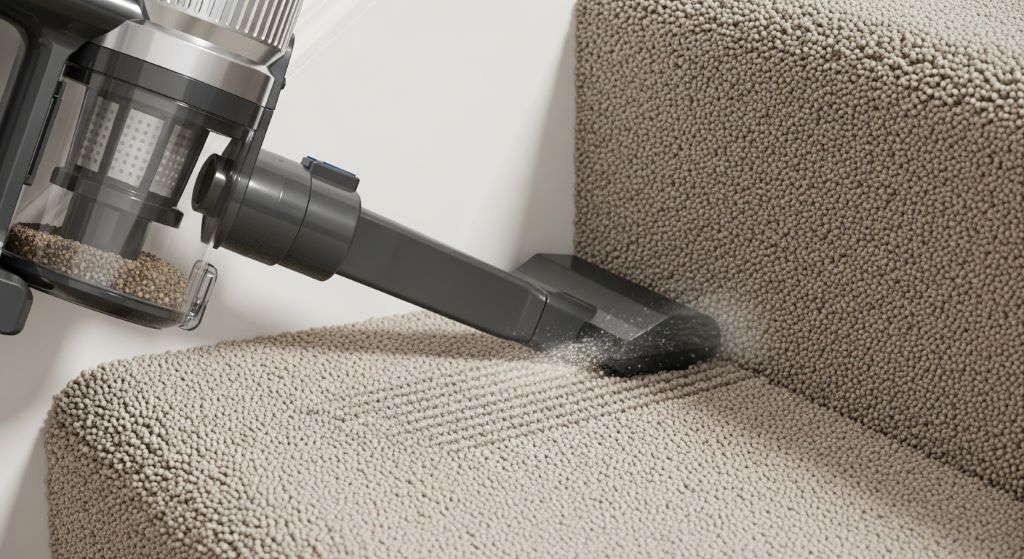
A crevice tool is also essential. Stairs have corners where the riser meets the tread. Dust and hair collect in these tight angles constantly. A narrow crevice tool reaches into those gaps easily. Additionally, an upholstery brush can help on carpeted risers that have soft textures similar to fabric.
Filtration System
A good filter prevents the vacuum from blowing fine particles back into the air. This matters especially on stairs, which are at face height when you are crouching to clean. Look for HEPA or HEPA-style filtration. These filters trap very small particles including dust mites, pollen, and pet dander.
If anyone in your household has allergies or asthma, filtration becomes a top priority rather than a bonus feature.
Dustbin Capacity and Ease of Emptying
Compact vacuums have small dustbins by nature. However, some are better designed than others. Look for a bin that is easy to remove and empty without creating a cloud of dust. A push-button release into a bin liner or directly into the trash is ideal. Avoid designs that require you to touch the collected debris to empty the container.
Types of Small Vacuums That Work Well on Stairs
There are several categories of compact vacuums that perform well on carpeted stairs. Each has its own strengths and limitations.
Handheld Vacuums
Handheld vacuums are the most popular choice for stairs. They are small, light, and require no setup. You simply grab the unit and start cleaning. Most come with a set of attachments stored in a charging dock. They are fast to deploy and easy to store.
The limitation is their dustbin size. Handheld models fill up quickly in heavily soiled areas. However, for regular maintenance cleaning, they are more than capable.
Stick Vacuums with Detachable Handheld Units
Many modern stick vacuums convert into handheld units by removing the wand and floor head. This gives you the best of both worlds. You can use the full stick vacuum on floors and detach the handheld portion for stairs. These models tend to have better suction and larger dustbins than dedicated handheld vacuums.
Additionally, they often include a motorized mini-brush attachment specifically designed for stairs and upholstery. This makes them an excellent all-around choice for households that want one machine to do multiple jobs.
Compact Canister Vacuums
Small canister vacuums sit at the top or bottom of the staircase while you clean with the hose and wand. They are heavier than handheld models, but they offer more consistent suction and a larger capacity. Some users prefer this approach because it keeps the motor unit stable and reduces hand fatigue.
However, managing the hose and cord on stairs requires more coordination. This style suits users who want power over portability.
How to Test Suction Effectiveness on Carpet
If you are shopping in a store, ask if you can test the vacuum on a carpet sample. Place a small amount of fine debris like baking soda on the surface. Run the vacuum over it once at a slow pace. A good vacuum will remove nearly all of it in a single pass.
If you are shopping online, use customer reviews as your testing ground. Look specifically for reviews that mention carpeted stairs. People who have tested a mini vacuum cleaner on their own staircase will tell you honestly whether it performed well or disappointed them.
Pay attention to reviews that mention specific carpet types similar to your own. A vacuum that works well on low-pile berber may struggle on thick plush carpet. Therefore, matching the review context to your home situation gives you the most useful insight.
Tips for Cleaning Carpeted Stairs Effectively
Choosing the right vacuum is only half the battle. How you clean also affects the results. Here are some practical tips to get the most out of your compact vacuum on stairs.
- Always clean from the top step downward. This ensures that any debris dislodged from higher steps falls onto steps you have not yet cleaned.
- Use overlapping strokes. Do not just run the vacuum straight down the center of each tread. Overlap each pass by about half the width of the cleaning head to ensure full coverage.
- Clean the risers as well as the treads. The vertical surfaces of stairs collect dust and pet hair just like the horizontal ones. Many people skip the risers entirely and wonder why their stairs still look dusty.
- Use the crevice tool for edges and corners before using the main cleaning head. This prevents debris from being pushed into corners as you work.
- Clean your stairs at least once a week if you have pets or heavy foot traffic. Regular maintenance prevents debris from embedding deeply into carpet fibers.
Budget vs. Premium: What Does Spending More Actually Get You?
There is a wide price range in the compact vacuum market. Entry-level models start around $30, while premium options can exceed $200. Understanding what separates them helps you decide where to draw the line.
Budget models are often adequate for light use. If you have low-pile carpet, no pets, and clean your stairs weekly, a less expensive model may serve you well for years. However, they often have weaker suction, cheaper filters, and less ergonomic designs.
Mid-range models in the $60 to $100 range tend to offer the best balance of performance and value. They typically include motorized brush heads, HEPA filtration, and better battery life. For most households, this is the sweet spot.
Premium models offer superior suction, longer battery life, and more durable construction. They are worth the investment if you have thick carpet, multiple pets, or very heavy household traffic. Additionally, premium brands often provide better warranties and customer support.
Brands Worth Considering for Stair Vacuums
Several brands have built strong reputations for compact, stair-friendly vacuum models. Dyson is well known for powerful cordless technology. Their handheld models offer strong suction and excellent filtration, though they come at a higher price point.
Black and Decker has been a reliable name in handheld vacuums for decades. Their models are affordable, widely available, and generally well-reviewed for basic stair cleaning tasks.
Shark offers strong mid-range options, particularly their detachable stick vacuum models. These are popular among pet owners for their strong suction and effective brush rolls.
Bissell is another solid choice, particularly for pet hair. Their compact models include specialized pet hair attachments and are priced competitively. Therefore, they represent excellent value for households with animals.
Conclusion
Keeping carpeted stairs clean does not have to be a chore you dread. The right compact vacuum transforms the task from difficult to manageable. The key is choosing a model that matches the specific demands of your staircase.
Start by assessing your staircase layout, carpet type, and whether you have pets. Then prioritize suction power, weight, attachments, and filtration when comparing models. Consider whether a corded or cordless design suits your workflow better. Additionally, think about long-term value rather than just the upfront price.
Whether you choose a handheld unit, a convertible stick vacuum, or a compact canister, the right tool will make stair cleaning fast and effective. With the guidance in this article, you are now ready to shop with clarity and confidence. Your stairs will thank you.
Frequently Asked Questions
1. How often should I vacuum carpeted stairs?
For most households, once a week is sufficient. However, if you have pets or young children, cleaning every three to four days will prevent heavy buildup. Regular maintenance is always easier than deep cleaning after debris has embedded into the carpet fibers.
2. Can a mini vacuum cleaner handle thick carpet on stairs?
Yes, but you need to choose carefully. Not all compact models have the suction power needed for thick or high-pile carpet. Look specifically for a motorized brush roll attachment and a model rated for carpet use. Reading reviews from users with similar carpet types will also give you a realistic expectation of performance.
3. What is the best attachment for cleaning stair corners?
A crevice tool is the most effective attachment for stair corners. It has a narrow, elongated design that fits into the tight junction between the tread and riser. Use it before running your main cleaning head to loosen and collect debris from those hard-to-reach angles.
4. Are cordless vacuums powerful enough for carpeted stairs?
Modern cordless technology has improved significantly. Many cordless compact models now deliver suction comparable to corded vacuums for short cleaning sessions. For a standard home staircase, a quality cordless vacuum will handle the task comfortably. However, if you have very long staircases or extremely soiled carpet, a corded option may provide more consistent results.
5. How do I know when to replace my stair vacuum?
Signs that it is time for a replacement include noticeably reduced suction even after cleaning filters, a burning smell during use, cracked or broken attachments, and an inability to hold a charge in cordless models. Additionally, if you find yourself going over the same areas multiple times to get clean results, the motor or brush roll may be wearing out. Among various stair cleaning tools available today, upgrading to a newer model is often more cost-effective than repairing an old one.
Related Topics:
How to Install Shingles on a Gable Roof: Step-by-Step Guide for Homeowners (2025)
How to Understand Rope Strength Ratings Before Buying
You May Like
Can You Use Push Fit Fittings on Copper Pipe? What You Need to Know