
Key Takeaways
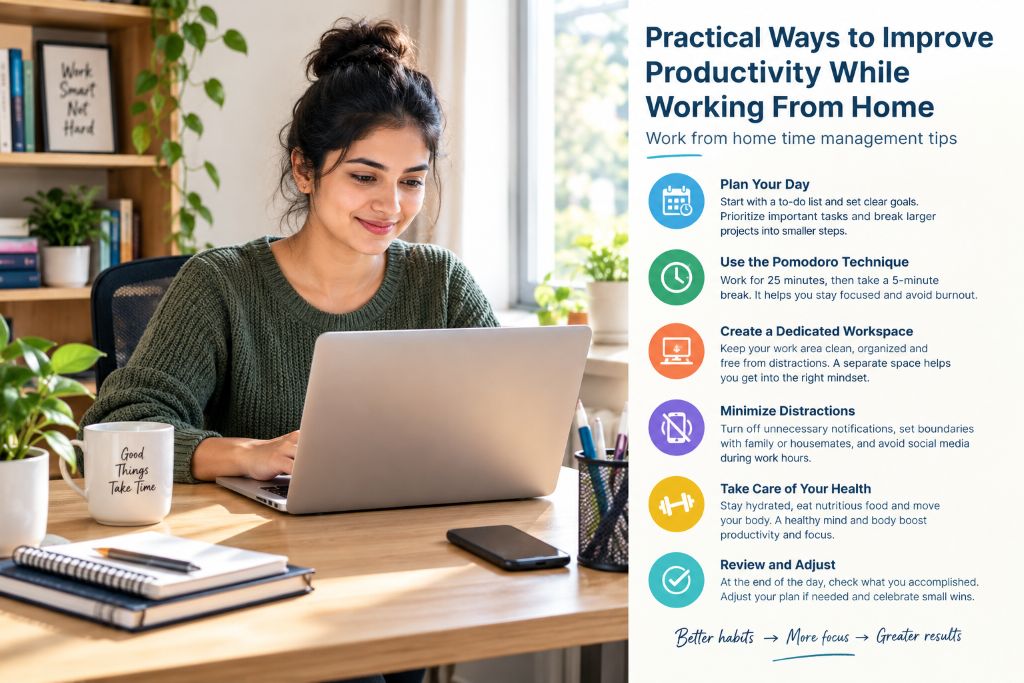
- Use one dedicated workspace to signal your brain that it is time to work.
- Pick your top three tasks each morning and block time for them.
- Silence alerts, because interruptions cost you more than 20 minutes of focus.
- Take regular breaks, move your body, and sleep at least seven hours.
- End your workday at a set time to avoid burnout.
Remote work offers freedom, but it also brings new challenges. Distractions are close, and your boss is not. However, the right habits can turn your home into a strong place to work. According to a Stanford study led by economist Nicholas Bloom, call center employees who worked from home were 13 percent more productive than their office peers. Therefore, working from home can succeed when you build the right system. This guide shares practical steps you can use today.
Create a Dedicated Workspace
Your environment shapes your focus. A working couch or bed blurs the line between rest and work. As a result, your brain struggles to switch into work mode.
Choose a spot that you use only for work. A spare room is ideal. However, a quiet corner of a dining room also works. Consistency is the key. When you sit there, your mind learns that it is time to focus.
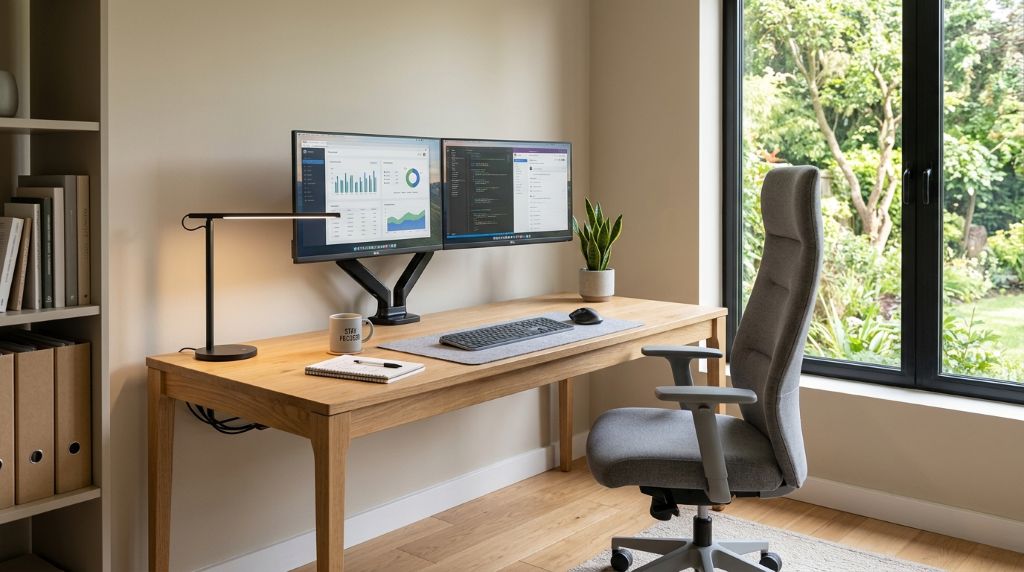
Comfort matters too. Poor posture leads to back pain and tired eyes. Consequently, your energy drops faster. Use these simple setup tips:
- Chair: Pick one with good back support and keep your feet flat on the floor.
- Screen: Place the top of your monitor at eye level, about an arm’s length away.
- Light: Sit near a window, because natural light helps you stay alert.
- Tools: Keep your notebook, charger, and water within reach.
Additionally, keep your desk tidy. Clutter competes for your attention. Spend two minutes at the end of each day clearing your desk. Then you can start fresh the next morning. Finally, agree on quiet hours with the people you live with. A simple sign on your door can protect your focus.
Plan Your Day With Clear Priorities
Without a manager nearby, your day can drift. A simple plan prevents that. Therefore, spend ten minutes each morning deciding what matters most.
Start by writing down your top three tasks. These are the jobs that move your work forward. Everything else is secondary. Moreover, this short list keeps you from feeling overwhelmed by a long to-do list.
Next, use time blocking. This method means giving each task a set slot on your calendar. For example, you might write reports from 9:00 to 11:00. Then you might answer emails from 11:00 to 11:30. As a result, you always know what to do next.
Consider these planning habits:
- Do hard work first. Most people have more energy in the morning, so tackle demanding tasks early.
- Group similar tasks. Answer all emails at once instead of checking them all day.
- Set a realistic limit. Plan for about six hours of focused work, and leave space for surprises.
- Review at day’s end. Note what you finished and move the rest to tomorrow.
In addition, share your plan with your team. Clear updates build trust. They also reduce the need for constant check-in messages.
Protect Your Focus From Distractions
Distractions are the biggest enemy of home productivity. Laundry, snacks, and social media all call your name. However, research shows that interruptions do real damage. According to Gloria Mark, a professor at the University of California, Irvine, it takes about 23 minutes to fully return to a task after an interruption. Therefore, even short breaks in focus add up quickly.
You can cut distractions with a few direct steps:
- Silence your phone. Place it in another room during deep work sessions.
- Turn off alerts. Mute email and chat notifications while you focus.
- Use website blockers. Free browser tools can block social media for set hours.
- Set boundaries. Tell family or roommates when you are not available.
Additionally, try the Pomodoro method. You work for 25 minutes, then rest for five. After four rounds, take a longer break. This method makes big tasks feel smaller. Furthermore, the timer creates a light sense of urgency.
Meanwhile, be kind to yourself. Nobody stays focused all day. If you lose your flow, simply restart with the next short block. Progress matters more than perfection.
Take Breaks and Look After Your Health
Long hours without rest hurt your output. Your brain needs recovery time to stay sharp. Therefore, breaks are part of the work, not a waste of time.
Movement is especially helpful. A Stanford study by Marily Oppezzo and Daniel Schwartz found that walking raised creative thinking by an average of 60 percent. So, take a short walk when you feel stuck. Even five minutes around your home can clear your mind.
Sleep is just as important. The Centers for Disease Control and Prevention advises adults to get at least seven hours of sleep each night. Without enough rest, focus and memory both suffer. Consequently, late-night work often leads to a poor next day.
Try these healthy habits:
- Stand up and stretch every hour.
- Drink water throughout the day.
- Eat a proper lunch away from your desk.
- Step outside for fresh air and daylight.
- Finish work at a set time each evening.
Finally, protect your personal time. Remote work can stretch into the night if you let it. A clear end to your day helps you rest. In turn, you return the next morning with more energy.
Conclusion
Improving productivity while working from home does not require big changes. Instead, small habits make the biggest difference. Build a dedicated workspace, plan your day, guard your focus, and care for your health. Together, these steps create a steady and healthy routine. Remember that research supports this approach. Remote workers can perform very well when they have structure and rest. For more ideas on creating a comfortable and productive home environment, events like the Memphis home and lifestyle show 2026 can also offer useful inspiration.
Start today. Pick one tip from this article and try it for a week. Then add another. Share your favorite tip in the comments, and subscribe to our newsletter for more practical work-from-home advice.
Frequently Asked Questions
How many hours should I work from home each day?
Most people stay effective with about six hours of focused work inside a standard workday. Add breaks and light tasks to fill the remaining time.
What is the best way to avoid distractions at home?
Use a dedicated workspace, silence your phone, and mute alerts. Also tell others in your home when you need quiet time.
Does working from home really increase productivity?
It can. A Stanford study by Nicholas Bloom found a 13 percent performance gain among home-based call center staff. Results still depend on habits and setup.
How can I stay motivated while working alone?
Set small daily goals, track your progress, and reward yourself after finishing key tasks. Regular contact with coworkers also helps.
What tools help with remote productivity?
Calendar apps, task managers, and website blockers work well. Video and chat tools also keep communication clear. Choose only a few tools to avoid clutter.
You May Like

Memphis Home and Lifestyle Show 2026: Dates, Tickets, and Home Ideas