
The best way to wash hotel sheets in Boston, MA, combines proper sorting, commercial detergent, controlled temperatures, and complete drying. For stubborn stains, the best way to bleach bedding depends on fabric type and care instructions. Hotel laundry can consume roughly 16% of a property’s water use, while commercial loads may handle large linen volumes efficiently.
Start With Proper Hotel Linen Sorting
First, separate hotel sheets before placing anything inside a washing machine. Sorting protects white linens from colored items, towels, uniforms, and heavily soiled fabrics.
Boston hotels may handle cotton, cotton blend, microfiber, and specialty bedding throughout the same shift. Therefore, check every item’s care label before selecting a wash program.
Keep these groups separate:
- White bed sheets and pillowcases
- Colored or patterned bedding
- Heavily stained linens
- Bath towels and washcloths
- Delicate or specialty fabrics
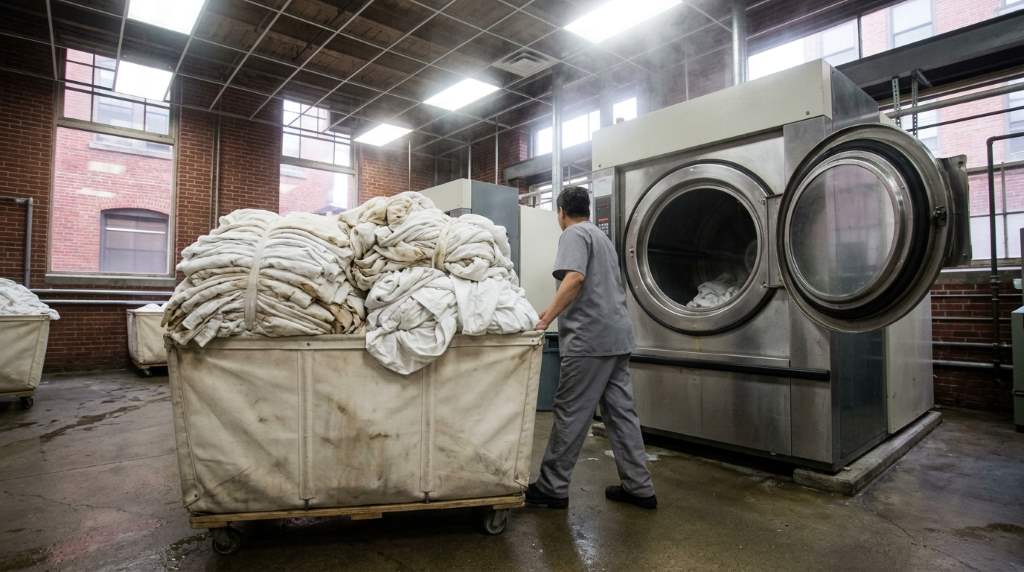
Next, shake out each sheet to remove loose debris before washing. Also, check for hair, tissues, small objects, and other materials trapped inside folds.
Prepare Sheets Before the Main Wash
Pre treatment often determines whether hotel sheets emerge truly clean. Begin by inspecting stains under good lighting, especially around collars, edges, and sleeping areas.
Blood, makeup, food, body oils, and beverage stains require different treatment methods. For example, cold water usually works better than hot water for fresh blood stains.
Apply a suitable commercial stain remover directly to affected areas. Then allow the product to work according to its label instructions.
Before treating large quantities, test the product on an inconspicuous fabric area. This step reduces the risk of discoloration or fabric damage.
Proper bedding care also complements the overall sleeping environment. For example, a modern king bedroom design benefits from clean, bright linens that maintain a polished appearance.
Handle Stains According to Their Source
Protein stains need different treatment than grease or cosmetic marks. Avoid using high heat before removing protein based stains because heat can set them permanently.
For oil based marks, use a suitable laundry pretreatment product. Meanwhile, oxygen based cleaners can help brighten many washable white fabrics without harsh chlorine exposure.
Always follow the linen manufacturer’s instructions before applying bleach or concentrated chemicals. Never mix chlorine bleach with ammonia, acids, or other incompatible cleaning products.
Select the Right Wash Temperature
Wash temperature should match the fabric, soil level, and hotel’s sanitation procedures. Many white cotton hotel sheets tolerate warm or hot commercial washing when their labels allow it.
However, hotter water does not automatically produce cleaner bedding. Excessive heat can weaken fibers, shrink fabrics, and increase energy consumption.
Use these general guidelines:
- Lightly soiled cotton: Use a warm commercial cycle when permitted.
- Heavily soiled white cotton: Use a hot cycle when the label allows it.
- Colored bedding: Use cooler settings that protect dye stability.
- Delicate fabrics: Follow the manufacturer’s recommended temperature.
Boston’s municipal water generally provides suitable conditions for routine laundry operations. Still, detergent dosage should follow actual water conditions and the product manufacturer’s directions.
For professional facilities, calibrated dispensing systems can improve consistency across repeated loads. They also reduce accidental overuse that can leave detergent residue behind.
Use Commercial Laundry Detergent Correctly
Hotel sheets need reliable cleaning chemistry because guests introduce sweat, body oils, cosmetics, and other soils. Select detergent specifically designed for commercial linen applications.
Do not assume extra detergent produces cleaner sheets. Excess product can leave residue, create dullness, and interfere with fabric softness.
Follow the detergent manufacturer’s dosing instructions for load size and soil level. Additionally, adjust dosing when your laundry equipment automatically controls chemical delivery.
Use compatible products for specific needs:
- Main detergent: Removes general soil and organic residue.
- Oxygen cleaner: Helps brighten suitable white fabrics.
- Chlorine bleach: Provides whitening when fabric instructions permit.
- Fabric conditioner: Use only when hotel linen procedures allow it.
- Neutralizer: Helps control residual alkalinity after washing.
Load the Washer Without Overcrowding
Proper loading gives detergent, water, and mechanical action enough room to clean every sheet. Overloaded machines can leave hidden soil and detergent residue.
Instead, follow the washer’s recommended capacity for the specific linen type. Commercial equipment often provides load guidelines based on dry fabric weight.
A balanced load should move freely during the wash cycle. Consequently, avoid packing sheets tightly into the drum or filling it beyond manufacturer recommendations.
Before starting the machine, close zippers and fasteners on compatible bedding. Also, avoid combining sheets with items that can create excessive lint.
Modern commercial laundry equipment can improve water and energy efficiency through programmable cycles. However, operators should prioritize cleaning performance rather than simply selecting the shortest cycle.
Run a Complete Wash and Rinse Cycle
A complete cycle usually includes washing, rinsing, and controlled extraction. Each stage plays a separate role in producing clean, fresh hotel bedding.
The main wash removes soil through chemistry, temperature, water, and mechanical action. Rinsing then removes suspended soil and remaining cleaning chemicals.
Insufficient rinsing can leave sheets feeling stiff or irritating against sensitive skin. Therefore, use the machine’s recommended rinse settings for the detergent system.
Watch for these warning signs:
- Persistent detergent smell
- Slippery or stiff fabric
- Gray or yellow appearance
- Visible stains after washing
- Excessive suds during rinsing
If these problems appear repeatedly, review detergent dosing and machine settings. Also inspect whether the facility needs equipment maintenance or updated wash formulas.
Know When a Second Wash Makes Sense
Do not automatically rerun every sheet that looks slightly imperfect. First identify whether the issue involves staining, residue, discoloration, or incomplete drying.
Rewash genuinely soiled linen using the appropriate treatment process. However, repeated unnecessary washing can increase fiber wear and operating costs.
When sheets repeatedly fail quality checks, investigate the underlying laundry process. A consistent problem often indicates incorrect dosing, overloading, poor rinsing, or equipment issues.
Dry Hotel Sheets Thoroughly and Safely
Drying deserves as much attention as washing because damp linen can develop unpleasant odors quickly. Remove sheets promptly after the extraction cycle finishes.
Use a commercial dryer setting recommended for the fabric and linen manufacturer’s instructions. Avoid excessive temperatures because they can cause shrinkage and weaken fibers over time.
Dry sheets until they reach a completely dry condition without excessive heat exposure. Then remove them promptly to reduce wrinkles and unnecessary tumbling.
For better results, avoid mixing lightweight sheets with much heavier textiles. Different drying rates can cause some items to overheat before the entire load becomes dry.
After drying, fold sheets immediately in a clean handling area. Keep freshly processed linen away from dirty laundry, floors, carts, and damp surfaces.
Keep Pillows and Bedding Accessories Clean
Sheets represent only one part of a hotel’s bedding system. Pillows, protectors, blankets, and mattress covers also require appropriate cleaning schedules.
Before washing a pillow, inspect its material, construction, and care label. Some pillow types require specialized cleaning rather than a standard commercial wash cycle.
For example, hotels may use different pillow constructions for various guest preferences. A contour pillow comparison guide can help explain why construction affects cleaning requirements.
Protectors can reduce direct soil exposure on pillows and mattresses. Nevertheless, housekeeping teams should still follow established cleaning and replacement procedures.
Natural materials also need careful handling because excessive heat or aggressive chemicals can damage their structure. Always follow the product’s care instructions before applying any treatment.
Prevent Cross Contamination in Hotel Laundry
Clean laundry should never contact dirty linen during collection, transportation, or storage. Establish separate workflows for soiled and freshly processed materials.
Use dedicated laundry carts whenever possible. Clean carts regularly, and prevent bags containing used sheets from touching finished linen.
Staff should also maintain clean hands and appropriate protective practices during soiled linen handling. Follow the property’s infection prevention procedures for higher risk situations.
Keep these areas clearly separated:
- Dirty linen collection
- Stain treatment
- Washing and drying
- Clean linen folding
- Finished linen storage
Additionally, keep clean sheets inside a dry, protected storage area. Avoid placing folded linen directly on floors, exposed shelves, or unclean carts.
Store Clean Sheets Correctly
Correct storage protects the cleaning work you completed in the laundry room. Fold sheets consistently so housekeeping staff can identify sizes quickly.
Store clean linen in a dry, ventilated location away from chemicals and cleaning equipment. Keep storage shelves clean and inspect them regularly for dust or moisture.
Use a first processed, first used system when practical. This approach helps prevent older clean linen from remaining untouched for extended periods.
Housekeeping teams should also check folded sheets before placing them into guest rooms. Remove any item showing stains, damage, excessive wrinkles, or unusual odor.
Build a Reliable Boston Hotel Laundry Routine
Boston hotels face busy occupancy periods, seasonal changes, and demanding housekeeping schedules. A written laundry process helps staff maintain consistent results during high turnover.
Create a simple standard operating procedure covering sorting, stain treatment, washing, drying, folding, storage, and inspection. Then train every laundry employee to follow the same sequence.
Track recurring problems instead of relying only on visual checks. Useful records can include rejected sheets, stain types, chemical usage, wash temperatures, and machine maintenance.
For properties using premium bedding, cleaning procedures should protect both hygiene and appearance. Bedding that remains attractive after repeated washing supports a more consistent guest experience.
Comfort also depends on the pillow selected for each bed. Hotels evaluating materials can review organic latex pillow benefits before setting cleaning and replacement procedures.
Simple Quality Check Before Room Placement
Before sending sheets to housekeeping, perform a quick inspection under adequate lighting. Check both sides because stains can remain hidden inside folds.
Use this final checklist:
- Confirm complete dryness.
- Check for visible stains.
- Check for detergent residue.
- Inspect seams and edges.
- Check for unusual odors.
- Confirm the correct sheet size.
- Fold and store the sheet properly.
If a sheet fails inspection, remove it from the clean linen supply immediately. Then send it through the appropriate treatment or replacement process.
Common Hotel Sheet Washing Mistakes to Avoid
Several simple mistakes can reduce cleaning quality and shorten linen life. Fortunately, most problems disappear when staff follow consistent procedures.
Avoid these common errors:
- Overloading the washer
- Using excessive detergent
- Ignoring care labels
- Mixing heavily soiled linen with lightly soiled loads
- Using excessive dryer temperatures
- Leaving damp sheets inside machines
- Storing clean linen in damp areas
- Skipping final visual inspections
Furthermore, avoid treating every stain with the same chemical. Matching treatment to the stain and fabric usually produces safer, better results.
When Boston Hotels Should Use Professional Laundry Services
Some properties lack the equipment, staff, or space required for high volume linen processing. In those cases, a commercial laundry provider can handle washing, drying, finishing, and delivery.
Professional services can also help properties manage seasonal occupancy changes. Before outsourcing, review cleaning standards, linen handling procedures, turnaround times, and quality controls.
Ask potential providers about their wash formulas and linen separation practices. Also confirm how they protect clean sheets during transportation and storage.
A good laundry partner should provide consistent results rather than simply returning clean looking linen. The service should also support the hotel’s sanitation procedures and operational requirements.
Conclusion: Keep Hotel Sheets Clean, Fresh, and Guest Ready
Washing hotel sheets in Boston, MA requires more than running bedding through a washing machine. Sort linens correctly, pretreat stains, use suitable detergent, control temperatures, rinse thoroughly, and dry completely.
Most importantly, create a repeatable laundry process that every housekeeping employee can follow. Start using these steps today, then inspect your linen results regularly to improve quality and reduce unnecessary fabric wear.
FAQs
What temperature should hotels use for washing sheets?
Hotels should use the temperature recommended for their sheet fabric, soil level, detergent system, and sanitation procedures.
Can hotel sheets go into a hot dryer?
Hotel sheets can use commercial dryers when their care instructions permit the selected temperature and drying cycle.
Should hotels use bleach on white sheets?
Hotels can use compatible bleach products when the sheet manufacturer permits them and staff follow chemical safety procedures.
How often should hotel sheets get washed?
Hotels should wash guest sheets after each guest stay and follow stricter schedules when specific circumstances require them.
Why do freshly washed sheets sometimes smell bad?
Lingering odors often result from incomplete drying, excessive detergent, poor rinsing, contaminated equipment, or delayed laundry processing.
You May Like

Fix Wobbly Photo Frames Fast in Miami, FL