
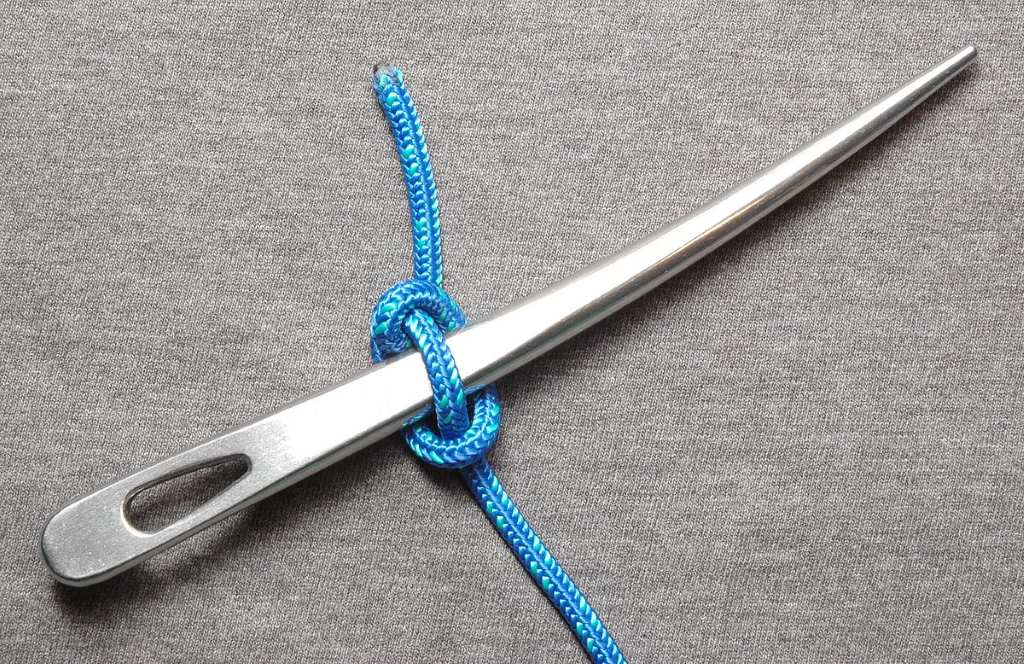
In the vast world of knots, some take center stage with their intricate beauty and complex structures. Yet, nestled amongst them is a humble, often overlooked knot that plays a pivotal role in ropework: the marlinspike hitch. Far from a mere sailor’s tool, this simple yet versatile knot has a rich history and a wide array of practical applications.
A Hitch with a Nautical Past
The marlinspike hitch traces its origins to the age of sail, where mariners used it in conjunction with a marlinspike – a tapered metal tool – to exert greater tension on ropes than human hands alone could manage. The knot, essentially a half hitch around the marlinspike, served as a temporary handle, allowing sailors to haul lines taut with ease. The knot’s name pays homage to this historical use, even though marlinspikes themselves have become less common in modern ropework.
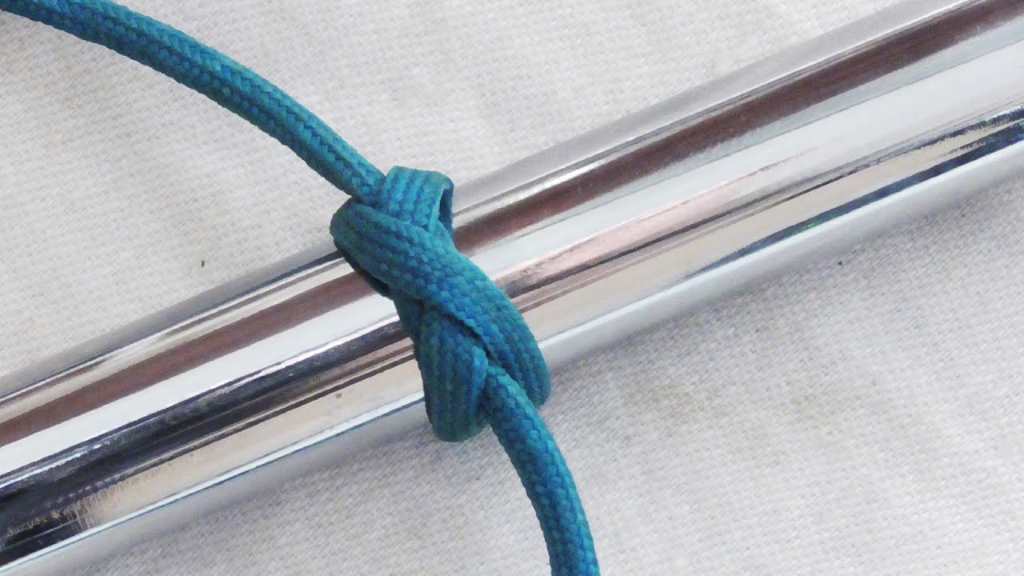
The Anatomy of a Marlinspike Hitch
The marlinspike hitch’s elegance lies in its simplicity. It consists of a loop passed over a rod (or any cylindrical object), with the working end tucked under the standing part and brought back over the rod. This creates a secure hold that tightens under tension but releases effortlessly when the pressure is removed. It’s a non-jamming knot, meaning it won’t get stuck under load, making it ideal for temporary applications.
Versatile Applications
- Knot Tightening: One of the primary uses of the marlinspike hitch is to tighten other knots. By inserting a rod through the hitch and twisting, considerable leverage can be generated, ensuring knots are securely fastened. This is particularly useful for knots like the trucker’s hitch or constrictor knot, which require significant tension to hold effectively.
- Hammock Camping: Hammock enthusiasts frequently utilize the marlinspike hitch to adjust the length of their whoopie slings – adjustable rope suspensions used to hang hammocks. The hitch’s easy adjustability and secure grip make it perfect for fine-tuning hammock height and comfort.
- Rope Ladders: In survival or emergency situations, the marlinspike hitch can be employed to create makeshift rope ladders. By passing the rope through the hitch and securing it around rungs or branches, a quick and safe means of ascent or descent can be established.
- Pulling and Tensioning: Beyond its nautical roots, the marlinspike hitch finds use in various pulling and tensioning scenarios. Arborists, for instance, might use it to secure lines during tree rigging operations. Similarly, campers could employ it to create a taut clothesline or guy line for a tent.
- Knot Tying Aid: The marlinspike hitch can also serve as a clever aid in tying other knots. For instance, by passing the working end through the hitch in specific ways, variations of the bowline knot can be formed, showcasing the knot’s versatility in ropework.
The Marlinspike Hitch vs. Other Knots
While other knots, like the taut-line hitch or prusik knot, might offer similar functionalities, the marlinspike hitch boasts several advantages. Its ease of tying and releasing, even under load, sets it apart. It’s also a relatively low-profile knot, meaning it won’t snag or catch on objects as easily as bulkier alternatives. Additionally, its non-jamming nature ensures it won’t become a hindrance when it’s time to untie, much like how a clean carpet enhances a room’s appearance without drawing undue attention.
A Knot for the Modern World
Though its nautical origins might seem distant, the marlinspike hitch remains a relevant and practical knot in today’s world. Its adaptability across various domains – from camping and climbing to arboriculture and even DIY projects – underscores its enduring value. Whether you’re a seasoned sailor, an avid outdoors enthusiast, or simply someone who appreciates the art of ropework, the marlinspike hitch is a knot worth mastering. Its simplicity, versatility, and rich history make it a true unsung hero in the world of knots.
You May Like

Practical Ways to Improve Productivity While Working From Home